The Limits of Private Property
The story of Costa Rica's most prolific environmental attorney, who authored 36 books and built the doctrinal architecture the Sala Constitucional uses as routine, even as the next generation of jurists quietly stopped citing her by name.
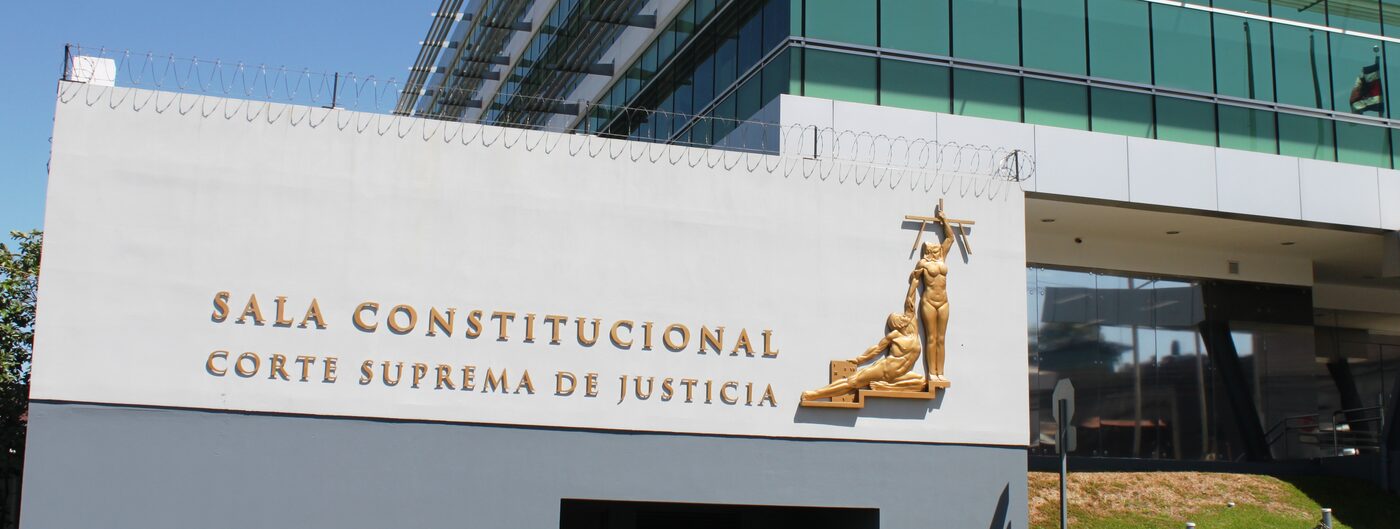
On 14 January 2009, seven magistrates of the Sala Constitucional in San José sit to decide the recurso de amparo against the Coco-Ocotal aqueduct expansion in Guanacaste. SETENA had approved the project. The aqueduct draws from the Sardinal aquifer in a region where local wells were running dry and where no hydrogeological study had ever been completed. Ana Virginia Calzada presides ad interim over a panel of seven. Two magistradas suplentes complete it: Rosa María Abdelnour and Roxana Salazar Cambronero. Salazar drafts the opinion.
The panel votes con lugar. They annul SETENA's environmental viability. They order SENARA to complete a hydrogeological study within six months. They invoke the principio precautorio to order the closure of illegal wells. They direct AyA to provide the Sardinal community with information and a path to citizen participation. And they write a sentence that becomes operational doctrine in Costa Rican water law: in cases of uncertainty about water resources, the community's priority of access prevails over patrimonial, commercial, and tourism interests.
Salazar is sitting as magistrada suplente. The Sala Constitucional has seven titulares; she is one of the rotating alternates called when one of those seven cannot sit. She has been in that role since 2005. The doctrinal framework that makes this ruling possible (Article 50 of the Constitution read in correlation with Article 89, the right to a healthy environment as a third-generation human right, the constitutional foundation for limiting private property in the name of conservation) is doctrine she had spent twenty years writing into existence, mostly in books printed through a small NGO press in San José.
How she came to draft that ruling is the story of an architecture built quietly across two decades.

The Limits of Private Property
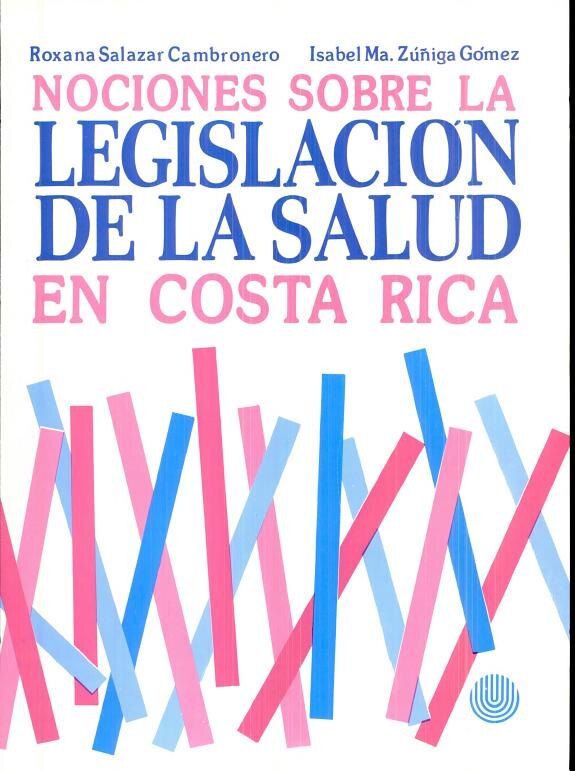
In 1989 two NGOs were constituted in Costa Rica that, in Sterling Evans's words, were "formed to concentrate on legal aspects of environmental problems": CEDARENA (the Centro de Derecho Ambiental y de los Recursos Naturales) and Fundación Ambio. Ambio's director from founding day was Roxana Salazar Cambronero, then thirteen years out of her Licenciatura en Derecho at the Universidad de Costa Rica (1976) and three years out of a master's at Cornell in environmental policy and natural-resources management (1986). Her first book, Nociones sobre la legislación de la salud en Costa Rica, co-written with Isabel María Zúñiga Gómez, came out the same year through EUNED.
A year later, in 1990, the Sala Constitucional handed down a ruling that would shape every environmental law passed in Costa Rica for the next thirty years. The Asamblea Legislativa had reformed the Ley Forestal in 1986, giving the Dirección General Forestal real authority over private forested land. The logging industry and landowners challenged the reform. The Sala annulled it on a procedural ground that turned on the Constitution's distinction between ordinary law and law that "limits private property": the latter required a two-thirds supermajority of the Asamblea. The 1986 reform had passed with 37 votes. The Constitution required 38. The 1969 predecessor law was reincarnated; agencies were stripped of the authority they had just been given.
Salazar wrote the canonical interpretation. On page 163 of her 1991 Legislación y ecología en Costa Rica, published through Editorial Libro Libre, she explained why the ruling, superficially a defeat for conservation, was in her reading a doctrinal affirmation. The Sala had not held that the state could not limit private property for environmental ends. It had held that doing so required the procedural seriousness of a supermajority. The bar to limit private property for conservation existed; the bar was high. Sterling Evans, writing his conservation history of Costa Rica a few years later, cited that page directly and added an unusually candid footnote thanking Salazar and Leonel Núñez, director of the Archives of the Legislative Assembly, for explaining the matter to him.
The contrast with Luis Fournier sharpens the picture. Fournier, the UCR biologist who had served on the original 1960s forestry-law committee, told Evans the ruling was based "more on the letter of the law than on the spirit in which it was made." His view was that the Sala had bound the legislature to a procedural technicality that defeated the policy intent. Salazar's view was the opposite. The procedural technicality was the doctrinal point. The constitutional protection of private property functioned as a discipline imposed on conservation policy: legislatures would have to do harder, slower, more deliberate work to limit it.
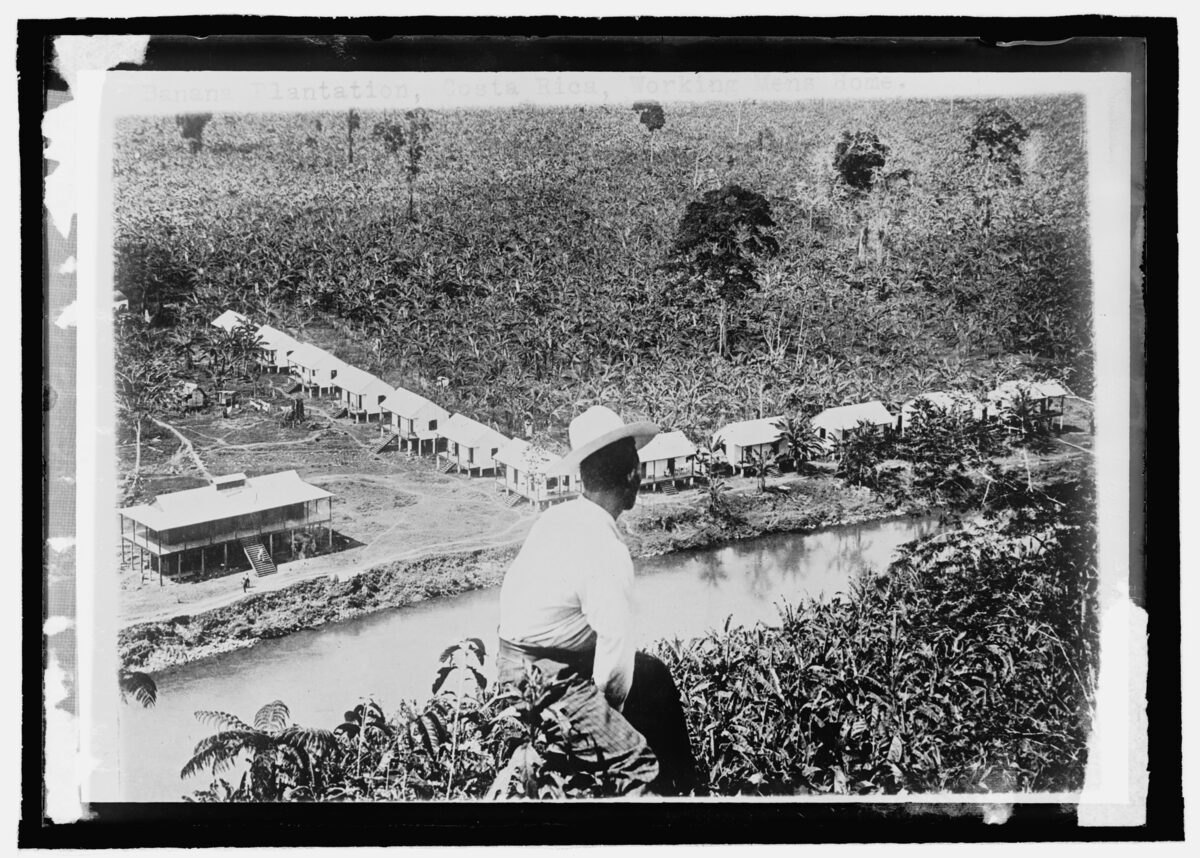
This was the question Fundación Ambio's first decade was built around. Pesticide abuse in the banana industry, where, by Evans's account, Ambio was "especially attentive." Hazardous-waste regulation. Solid-waste management law. Voluntary certification schemes that could substitute for regulatory teeth where the supermajority bar made those teeth politically unreachable. The most visible product of that period was the ECO-O.K. Banana Project, which Ambio co-led with the Rainforest Alliance from roughly 1992 to 1994. Plantations meeting the code of conduct, with restrictions on rainforest clearing, greenways along roads and rivers, pesticide protocols, and waste management, earned an ECO-O.K. seal applied directly to certified bananas. Evans observed that Chiquita was "especially vigorous" in investing in changes to meet the standards.
The institutional connections from this period are worth recording. Fundación Ambio was a founding member of FECON, the Federación Costarricense para la Conservación del Ambiente, which Evans describes as bringing together nineteen member organizations to coordinate the Costa Rican environmental movement. Ambio's international affiliation was with what Evans calls the Canadian Association of Environmental Attorneys, now known as the Canadian Environmental Law Association. The choice of affiliation says something about Ambio's orientation toward practical legal advocacy.
Editorial Fundación Ambio
Salazar's bibliography functioned, by sheer volume, as the practitioner-side reference library for Costa Rican environmental law in the 1990s and 2000s. Thirty-six books in twenty years, 1989 to 2008. Most published through her own press, the Editorial Fundación Ambio Colección Ambiente y Derecho. Most now out of print, available only in libraries and as worn copies on used-book shelves in San José.
The titles that came to function as canonical references emerged in the first half of the 1990s. Legislación y ecología en Costa Rica (Libro Libre, 1991), the work Evans's footnotes return to again and again, covering forestry constitutional doctrine, water law, ZMT coastal regulation, private nature reserves, tourism regulation, and environmental education. El derecho a un ambiente sano (Libro Libre, 1993), the book that established the Article 50 doctrinal frame in a way that judges and lawyers could pick up and cite. Actividad bananera en Costa Rica: Análisis legal e institucional (Fundación Ambio, 1993), the foundational legal-institutional text on banana-industry environmental regulation, written during the period when the chemical-poisoning lawsuits against Standard Fruit and Chiquita were becoming an international story. Manual de derechos humanos y ambiente (Fundación Ambio, 1994; expanded edition 1995), the move that connected environmental rights to the broader human-rights frame.
In 1995 Salazar co-edited Biodiversidad: Políticas y legislación a la luz del desarrollo sostenible with Jorge A. Cabrera-Medaglia and Álvaro López Mora. The volume is doctrinally important not for its content alone (by the time it appeared, biodiversity legislation in Costa Rica was already converging on what would become Ley 7788 in 1998) but because of who Cabrera-Medaglia became. He went on to lead Costa Rica's biodiversity-law work for the next thirty years: a principal scholar on Ley 7788, a Convention on Biological Diversity negotiator, and the figure most often cited today on access and benefit-sharing under the CBD and its Nagoya Protocol. In 1995 he was at the beginning of his career. Salazar co-edited that volume with him. The relationship is the clearest documented link between her work and the next generation.
The reach extended into English-language scholarship. In 2004 she contributed Chapter 22, "Environmental Law of Costa Rica: Development and Enforcement," to Gordon Frankie, Alfonso Mata, and S. Bradleigh Vinson's Biodiversity Conservation in Costa Rica: Learning the Lessons in a Seasonal Dry Forest, published by University of California Press. The chapter presents the legal framework for biodiversity protection in Costa Rica through the Organic Environmental Law, Forestry Law, Biodiversity Law, Wildlife Protection Law, and Water Law. It was her most widely-read piece in English.
The 2001 Código ambiental internacional, co-written with Ricardo Zeledón Z. and published through Editorial Porvenir, was the closest she came to a desk-reference compendium: 382 pages compiling Costa Rica's environmental code in relation to its international obligations. UNEP took her on in 1996 to write La responsabilidad por el daño ambiental as Document No. 5 of its Serie Documentos sobre Derecho Ambiental. The International Centre for Trade and Sustainable Development and United Nations University commissioned her in 1999 for the Central American perspective on trade and environment.
Her academic-journal track ran in parallel. Ten articles in Revista Judicial of the Corte Suprema de Justicia between 1987 and 1994 on water conservation, pesticides, environmental standing, marine pollution, the ZMT, and soil and forest resources. An article in Revista de Ciencias Jurídicas UCR in 1990 on water-conservation legislation. An article in Revista de Ciencias Ambientales UNA in 1999 with Max Valverde on biotechnology and biosafety law, published as Ley 7788 was being implemented. Seven essays in Ambientico between 2000 and 2011. Her CV lists a co-authorship on world agriculture and soil erosion in BioScience in April 1987, her earliest international peer-reviewed publication on record, the year after Cornell. A 1996 contribution to the Journal of Ethnopharmacology on intellectual-property rights and the Convention on Biological Diversity in Costa Rica.
By the time she reached the bench in 2005, she had written more on Costa Rican environmental law than any other practicing attorney in the country.
This is what doctrinal foundation looks like when the writer does not have a university chair to write from. It happens in NGO presses, accumulates in libraries, and enters the working language of a legal culture even when it never reaches the footnotes.
The Frame
Her doctrine is consolidated, by 2008, into two short essays. The 2008 essay in Ambientico No. 181, "Derechos humanos y ambiente en Costa Rica," and the 2011 essay in Ambientico No. 210, "Seguridad jurídica, derecho ambiental, inversión y Crucitas." Together they are the most compressed statement of the architecture she had spent twenty years building.
The anchor is constitutional. Article 50 declares the right to a healthy and ecologically balanced environment. Article 89 declares the state's duty to preserve cultural patrimony and natural beauties. The Sala Constitucional's Voto 6240-93 read them together: the state duty in Article 89 implies the individual right in Article 50. From this reading flow several doctrinal moves that Salazar treats as one architecture.
She places environmental rights in the third generation of human-rights doctrine, the so-called solidarity rights, alongside development, peace, self-determination, common heritage of humanity, and communication. "Los derechos humanos se han clasificado en tres generaciones... En estos derechos humanos de tercera generación encontramos el derecho al desarrollo, a la paz, a la libre determinación de los pueblos, al patrimonio común de la humanidad, a la comunicación y a un ambiente sano." (Human rights have been classified into three generations... In these third-generation human rights we find the right to development, peace, self-determination of peoples, the common heritage of humanity, communication, and a healthy environment.) The classification matters because third-generation rights are collective rather than individual. They are rights the state has a duty to protect across populations, and they reframe environmental degradation as a violation of solidarity rather than a private grievance.
From the third-generation frame she derives the doctrine of environmental discrimination. The right to equality before the law, she argues, is violated when pollution and environmental degradation fall disproportionately on certain population sectors. The Spanish-language formulation is exact: "está en el derecho de igualdad ante la ley, que es afectado por la manera desproporcionada en que ciertos sectores de la población soportan la carga ambiental, esto significa discriminación ambiental." (It is in the right of equality before the law, which is affected by the disproportionate way certain sectors of the population bear the environmental burden; this is what environmental discrimination means.) This is environmental-justice doctrine, recognizable to readers familiar with the U.S. or South African environmental-justice traditions, written into Costa Rican constitutional discourse in 2008.
A second extension: the right to inviolability of the domicile, traditionally read narrowly as protection against state entry without warrant, she reads broadly. Citing Voto 2671-95, she argues the right extends to "inmisiones desmesuradas," external disturbances that cross the threshold of the home without the inhabitant's consent. Noise, smells, vibrations, chemical exposures. The doctrinal move extends spatial privacy rights into environmental conditions.
A third extension: state omission is a constitutional violation, not only state action. Citing Voto 6322-2003, the injury to the environmental right occurs "tanto por acción como por omisión." Allowing companies to operate without health permits. Failing to verify sonic controls in bars and discotheques. Looking the other way when wastewater treatment is absent. The state's failure to enforce existing law, she argues, is itself a violation of the right to a healthy environment. Doctrinally this matters because it shifts the burden. Enforcement is constitutionally required, and citizen denuncias of state omission are constitutionally cognizable.
A fourth extension reaches the private sector. Indirect corporate liability flows through direct state liability. "Una autorización administrativa a una empresa para funcionar es para ejercer una actividad en forma lícita, sin realizar un uso extensivo o abusivo del permiso otorgado y sin alterar o dañar la vida de los demás." (An administrative authorization for a company to operate is for the lawful exercise of an activity, without extensive or abusive use of the permit granted and without altering or harming the lives of others.) The state's responsibility for granting permits creates a chain of responsibility that runs through to the company that holds them. A permit is a conditional authorization. The state can revoke it when the conditions are not met, and the company holding the permit bears the consequences.
The architecture is held together by a closing principle that Salazar repeats in different formulations across her later writing. "Defender el derecho a un ambiente sano no es estar contra el desarrollo económico respetuoso de los derechos humanos de los individuos o las empresas, sino que es exigir que prevalezca la protección ante actividades económicas no sostenibles e incompatibles con la calidad de vida." (Defending the right to a healthy environment, she argues, means demanding that protection prevail over economic activities that are unsustainable and incompatible with quality of life. It accommodates economic development that respects the human rights of individuals and companies.) The test is sustainability and compatibility with quality of life. Economic use as such is permitted.
That is the doctrine the Sala IV uses today.
A Suplente on the Bench
In 2005 Salazar joined the Sala Constitucional as magistrada suplente. The role is structurally different from that of a propietaria. The seven propietarios sit on every case. The suplentes are called when one of the seven is recused, ill, traveling, or otherwise unable to sit. A suplente does not know in advance which cases she will sign. The body of work that emerges is shaped by the rotation rather than by a coherent jurisprudential program. Twelve years of intermittent panel service is a different kind of judicial career than twelve years on the propietaria bench, and it is harder to follow on the public record. The Sala's votos are signed by the panel that day, and the suplente's signature drops in and out.
Voto 262-2009 of 14 January 2009 is the highest-profile ruling she drafted, the case that opens this article: the Sardinal aqueduct, the precautionary principle, and the operational sentence on community water priority over commercial use. The panel of seven, Salazar as redactora, found for the amparo on Articles 50 and 9 of the Constitution.
Her docket was whatever the rotation handed her. She sat as ponente on a Hospital México labor amparo well outside her authored field, which the propietarios trusted her to draft anyway (Sentencia 2009-014776); she was redactora on a Liberia stormwater costs ruling (Resolución 15772-2010) and a signatory on a Caribbean coastal-development amparo over Marina Resort Moín (Voto 01476-2013). When her 2005 term came up for renewal in 2013, she reapplied.
In 2011, while still a suplente, she published a piece that demonstrated her willingness to critique the body she sat on. The Crucitas open-pit gold-mining concession had become the major environmental litigation of the period. On 16 April 2010 the Sala IV had handed down Voto 6922-2010, rejecting the amparo against the concession. Eight months later, on 24 November 2010, the Tribunal Contencioso Administrativo read a verdict annulling the concession itself; the integral Sentencia 4399-2010 followed on 14 December 2010. The environmental movement celebrated the TCA ruling. Legal scholars read the Sala IV's reasoning as a major intervention in environmental jurisprudence. Salazar's intervention in Ambientico 210, in March 2011, was about the Sala IV's reasoning rather than the project's substance. She did not defend the project. She argued that the Sala had ruled on questions of legality, administrative-law questions about whether the permits had been properly issued, when its jurisdiction is constitutionally limited to questions of constitutionality. "En el caso Crucitas, la Sala Constitucional resolvió no solo cuestiones de constitucionalidad, sino también temas de legalidad, aunque no le corresponde." (In the Crucitas case, the Constitutional Chamber resolved not only constitutional questions but also questions of legality, although that is not within its purview.) Her diagnosis of where the failure actually lay was direct: "se cumplieron y aprobaron los permisos requeridos. ¿Qué falló? Las razones que motivaron a los funcionarios públicos a aprobar permisos, talvez con debilidades." (The required permits were complied with and approved. What failed? The reasons that motivated public officials to approve permits, perhaps with weaknesses.) The permits were complied with and approved. What failed was administrative judgment in SETENA and the line ministry. She located the failure in the executive branch. She was sitting on the Sala when she published this critique of the Sala.
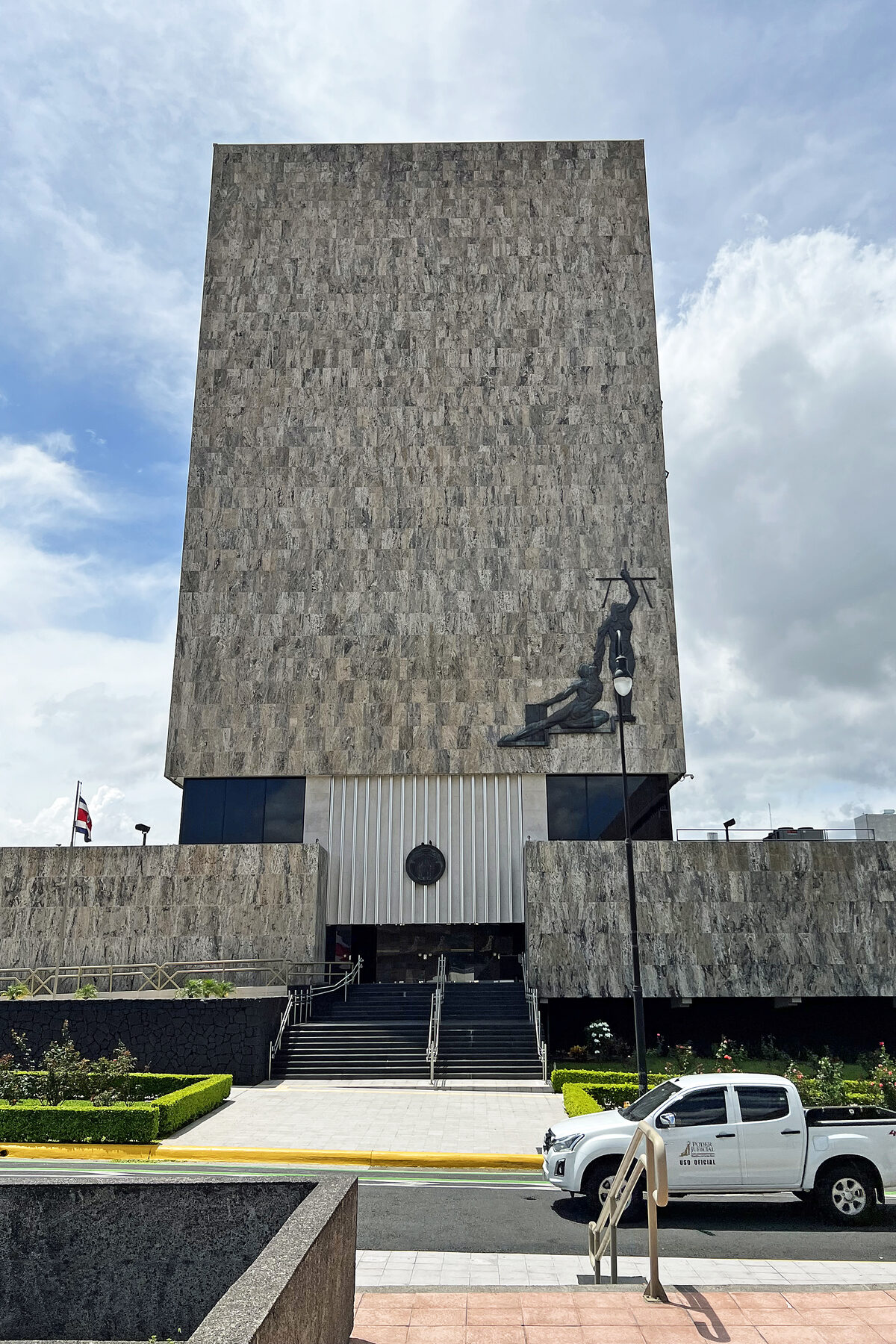
In December 2017 the Asamblea voted on a new round of suplentes. Salazar received three votes. Thirty-eight were required. She did not return to the bench.
The Other Front
The conventional Costa Rican environmentalist of the 1990s focused on what could be conserved: parks, corridors, species. Salazar focused, in parallel, on what could rot. Institutions, processes, public information, electoral integrity. In 1996, the same year Sterling Evans interviewed her for The Green Republic, she became president of Transparencia Internacional Costa Rica. She held the role for a decade, through 2006.
In practice the role placed her at the editorial center of Costa Rica's anti-corruption work during a period when the country's reputation for clean institutions was beginning to crack. In 2003 and 2004 she contributed Costa Rica chapters to TI's Global Corruption Report: election-campaign monitoring in 2003, "El caso de Costa Rica" in 2004, both published from Berlin. In December 2004 she edited Corrupción: una visión desde la sociedad civil through TI Costa Rica. In 2007, after stepping down, she co-authored "Increased transparency helps curb corruption in Costa Rica" with José Pablo Ramos for the Global Corruption Report 2007 on judicial-system corruption. TI's 2003 annual report listed her as the Costa Rica chapter contact.
The Costa Rican political backdrop during her TI tenure is worth noting. Two former presidents were facing graft charges by the end of her presidency: Rafael Ángel Calderón Fournier and Miguel Ángel Rodríguez. The ICE-Alcatel and Caja-Fischel cases were dominating the news in 2004 and 2005. Costa Rica was simultaneously celebrated abroad as the green republic and reckoned at home as a country where its highest political figures had taken bribes. Salazar's TI work was inside that reckoning.
At a moment when most environmental movements were arguing for stronger laws, Salazar's transparency work identified the structural reason laws were not being enforced. Her writing on the Sala IV's Crucitas ruling makes the same diagnosis by other means: the law was on the books; what failed was administrative will.
The hinge into the present comes in 2020. Salazar is by then a member of the AyA Junta Directiva, where she sits from approximately 2018 through 2022. In 2020 ARESEP, the public-services regulator, flagged a set of billing errors at AyA: the utility was calculating monthly water consumption from prior months rather than from meter readings, and computing six-month averages where regulation required twelve. At a November 2020 board meeting, Salazar raised the issue directly with then-AyA presidenta Yamileth Astorga. CRHoy preserved the exchange.
Salazar asked, "Errores en la facturación, ¿no se dieron errores?" (Errors in the billing, weren't there errors?) Astorga answered, "No, ¿cuáles errores?" (No, what errors?)
Salazar walked her through ARESEP's findings: the consumo-from-prior-months method, the six-month-versus-twelve-month average. The exchange was small, polite, and devastating.
This is the natural extension of her transparency work into the utility-regulatory space. An environmental attorney sitting on a public-utility board, asking the same accountability question she had asked of anti-corruption institutions twenty years earlier. Laws exist; whether the institutions that administer them do their job is another matter.
After the Robe
In December 2017 Salazar left the Sala IV. The conventional next move for a former magistrada with her doctrinal range would have been the major environmental fights of the late 2010s and early 2020s: Crucitas reopening as Industrias Infinito's lawyers pressed renewed claims after the 2010 ruling, the Bolsón aquifer in Guanacaste, Las Baulas, the Reventazón hydroelectric impacts, the carbon-market frameworks under REDD+, the 30x30 commitments under the Global Biodiversity Framework. She does not appear to have written on any of them. Instead, she turned to a different terrain.
From 2018 onward she sat on the AyA Junta Directiva. From at least 2020 she was the legal spokesperson for Asociación Costa Rica Saludable, an NGO whose central project is the front-of-package food-labeling law, Proyectos 22.065, 23.861, and 24.588, the iterative legislative attempts to require black warning seals on processed foods exceeding nutritional thresholds for sugar, fat, saturated fat, trans fat, sodium, and calories. In October 2024, when the food industry argued at an Asamblea Legislativa hearing that Costa Rica must wait for Central American regional regulation under SICA before adopting front-of-package labels, Salazar published a refutation in Delfino: "no existe obstáculo, impedimento o requisito legal regional que obligue a los Estados parte del Sistema de Integración Centroamericana (SICA) a esperar reglamentos centroamericanos en materia de salud pública, tal como es el EFAN." (There is no regional legal obstacle, impediment, or requirement obliging the member states of the Central American Integration System to wait for Central American regulations on public-health matters such as front-of-package warning labeling.) The industry was using regional-harmonization rhetoric to delay national-level public-health regulation. Salazar's role was to remove that argument from the table. In February 2025 the legislative commission rejected and archived the labeling bill.
By March 2025 she held another seat, representing the Colegio de Abogados de Costa Rica before CONIS, the Consejo Nacional de Investigación en Salud, which oversees the ethics of human-subjects medical research in Costa Rica.
Her recent Delfino columns trace a philosophical thread. "Consumidor Sostenible" (11 March 2020) frames sustainable consumption as cradle-to-grave, farm-to-fork, polluter-pays, the same trilogy she had advanced in Ambientico 130 in 2004, now tied explicitly to SDG 12 and ECOSOC's 1999 Observación General 12 on the right to adequate food. "La ética en la selección de personal" (June 2022) extends her transparency framework into HR ethics. "Hacia la formulación de efectivos códigos de ética" (7 October 2024) lays out the institutional-design questions for ethics codes that bind rather than decorate.
The connection back to the earlier work is doctrinally clean. The consumer is the citizen is the inhabitant. The right to a healthy environment, the right to know what is in food, the right to expect honest public administration: for her, these are doctrinally one. She has not publicly explained why she stayed out of the Crucitas reopening or the Bolsón aquifer. Her current work is in regulatory architecture being built now, and her writing platform is the Delfino column, no longer the books she stopped publishing in 2008.
What the Next Generation Does Not Cite
The collective volume Derecho Ambiental del Siglo XXI, edited by Mario Peña Chacón (Editorial Isolma, 2019), is the principal reference for the UCR Maestría en Derecho Ambiental, Costa Rica's flagship graduate program in environmental law. It does not cite Roxana Salazar anywhere across the contributions of its twelve jurists. Peña Chacón's El Proceso Ambiental en Costa Rica, the companion volume on procedural environmental law, does not cite her either. The recent published work of Álvaro Sagot Rodríguez, Lis Méndez Henríquez, and Jorge Cabrera Medaglia, her 1995 co-editor, does not foreground her work. When these works acknowledge anyone, they name institutions and programs, never her.
The doctrinal vocabulary those textbooks use traces back through her books. Article 50 read in correlation with Article 89: El derecho a un ambiente sano (1993). Third-generation environmental rights: Manual de derechos humanos y ambiente (1994). State-omission liability: Ambientico 181 (2008). The precautionary principle as operational order: her 2009 signature on Voto 262-2009. The constitutionality of limitations on private property: Legislación y ecología en Costa Rica (1991), page 163. The legislative framework the maestría program teaches emerged through laws she participated in shaping. Her CV lists involvement in formulation of the comprehensive solid-waste management law, hazardous-waste regulations, the water resource law, the forest law, an environmental code, and the constitutional environmental guarantees. The legislative record rarely names individual drafters, so that involvement rests on her own account. But the doctrine those texts articulate is recognizable as hers.
There is no scandal here. Costa Rican legal scholarship has its own patterns. Citation tends to track court votos rather than book authors. The votos do not name their underlying treatises. The doctrinarian whose work shapes a generation of jurisprudence can disappear from the footnotes while remaining visible in every line of reasoning. The pattern is not unique to her, and identifying it is not an indictment of the scholars who carry it forward.
But the doctrine came from somewhere. It came from books printed by a small NGO press in San José, written by an attorney who in 2026 is still arguing for food-labeling rights in her seventies.
Resources & Further Reading
Books by Salazar
Co-authored with Isabel María Zúñiga Gómez. Salazar's first book.
The work Sterling Evans cites repeatedly across forestry constitutional doctrine, water law, ZMT coastal regulation, private reserves, tourism regulation, and environmental education. Page 163 is the canonical reference on the 1990 Sala IV forestry-law annulment doctrine.
El derecho a un ambiente sano (Editorial Libro Libre, 1993)
The book that established the Article 50 doctrinal frame for the right to a healthy environment in a form lawyers and judges could pick up and cite.
Actividad bananera en Costa Rica: Análisis legal e institucional (Editorial Fundación Ambio, 1993)
The foundational legal-institutional text on banana-industry environmental regulation, written during the period when the chemical-poisoning lawsuits against Standard Fruit and Chiquita were becoming an international story.
Manual de derechos humanos y ambiente (Editorial Fundación Ambio, 1994; expanded 1995)
The move that connected environmental rights to the broader human-rights frame.
Biodiversidad: Políticas y legislación a la luz del desarrollo sostenible (Fundación Ambio, 1995)
Co-edited with Jorge A. Cabrera-Medaglia and Álvaro López Mora. The documented co-editorial link to the next generation of Costa Rican biodiversity-law scholarship.
Co-written with Ricardo Zeledón Z. 382 pages compiling Costa Rica's environmental code in relation to its international obligations.
Chapter 22. Salazar's most widely-read piece in English. DOI 10.1525/9780520937772-023.
Books About Her Work
The principal external source on Salazar's 1990s work, based on a 23 July 1996 interview in San José. Evans cites page 163 of her 1991 Legislación as the canonical reference on the 1990 forestry-law annulment doctrine.
Key Articles
The consolidated statement of Salazar's environmental human-rights doctrine: third-generation rights, environmental discrimination, inmisiones desmesuradas, state-omission liability, indirect corporate liability.
Her procedural critique of the Sala IV's Crucitas ruling, written while she was sitting on the Sala as magistrada suplente.
Her contemporaneous analysis of Voto 8019-00, the Caribbean petroleum exploration case where the Sala annulled MINAE's adjudication to MKJ XPLORATION / Harken Energy for failure to consult indigenous communities.
Her 2000 critique of the agricultural legislative package as ignoring Costa Rica's Convention on Biological Diversity commitments.
The early statement of her cradle-to-grave, farm-to-fork, and polluter-pays framework, later extended in her 2020 Delfino column.
Her Día Mundial del Consumidor column tying sustainable consumption to SDG 12 and outlining Fundación Ambio's work on front-of-package warning labeling.
Her most recent Delfino column, on institutional-design questions for ethics codes.
Co-authored with José Pablo Ramos for the 2007 TI report on judicial-system corruption.
Sala IV Jurisprudence
The Sardinal aqueduct case. Salazar drafted the opinion as redactora, sitting as magistrada suplente. The ruling annulled SETENA's environmental viability, ordered closure of illegal wells under the precautionary principle, and declared community water priority over commercial use.
The Sala IV's Crucitas amparo ruling. The Sala rejected the amparo against the Industrias Infinito open-pit gold-mining concession. Salazar's 2011 Ambientico critique was aimed at the Sala's reasoning in this and related rulings.
The Tribunal Contencioso Administrativo's ruling annulling the Crucitas concession itself. The TCA, not the Sala IV, performed the substantive annulment.
The full Tribunal Contencioso Administrativo judgment annulling the Crucitas concession (expediente 08-001282-1027-CA). The verdict was read on 24 November 2010; the integral sentence is dated 14 December 2010.
Labor-rights amparo against the Director General of Hospital México. Salazar served as ponente.
Resolución 15772-2010, Sala Constitucional, 24 September 2010
Costs ruling involving the Municipalidad de Liberia and the Ministerio de Salud over inadequate stormwater drainage. Salazar served as redactora.
Voto 01476-2013, Sala Constitucional, 30 January 2013
Amparo by Marina and Resort Moín S.A. against MINAE. Salazar among the signatories alongside Armijo, Cruz, Castillo, Rueda, Rodríguez, and Hernández.
Organizations
Constituted in 1989. Salazar has served as Directora Ejecutiva from founding to the present.
Salazar served as Presidenta from 1996 through 2006.
The NGO advocating for Costa Rica's front-of-package food-labeling law. Salazar has served as legal spokesperson from c. 2020 to the present.
Salazar currently serves as representante propietaria of the Colegio de Abogados de Costa Rica. CONIS oversees the ethics of human-subjects medical research.
Records Salazar's bar admission in 1977 with carné 1587 in the historical list of women admitted to the Costa Rican bar since Ángela Acuña Braun (1925).
Press Coverage
The CRHoy account of the Junta Directiva exchange in which Salazar confronted then-AyA presidenta Yamileth Astorga about ARESEP-flagged billing errors.
The December 2017 Asamblea Legislativa suplente election round in which Salazar received three votes of the thirty-eight needed.
Salazar's refutation of the food industry's argument that Costa Rica must wait for SICA regional regulation before adopting front-of-package warning labels.
Publishes the 2013 inhibitoria signed by Salazar Cambronero, Pacheco Salazar, and Abdelnour Granados on the constitutionality action against the suplente reglamento.
Primary Source
The single most comprehensive primary document on her education, experience, and full publication list.
Related Profiles
The UCR biologist whose disagreement with Salazar over the 1990 forestry-law annulment Sterling Evans treats as the defining authority-voice contrast of the period.