The Librarian of Life
Selling the rainforest to save it: Rodrigo Gámez-Lobo's ambitious business model failed, but his catalog of 3.5 million specimens survived.
Imagine a library, not of books, but of life. Each species is a unique volume, each gene a sentence, containing wisdom millions of years in the making. Now, imagine this library is on fire.
This was the scene facing Costa Rica in the 1980s. The lush, vibrant rainforests, home to 5% of all species on Earth, were disappearing at one of the fastest rates in the world. The fires of deforestation, lit for cattle ranching and agriculture, were turning this living encyclopedia to ash. The world, it seemed, was happy to mourn the loss, but unwilling to pay the cost of saving it.
Into this crisis stepped a man with an audacious idea. A man who looked at the burning library and didn't just see a tragedy, but an asset. His name was Rodrigo Gámez-Lobo, a quiet virologist who would try to change the economics of conservation.
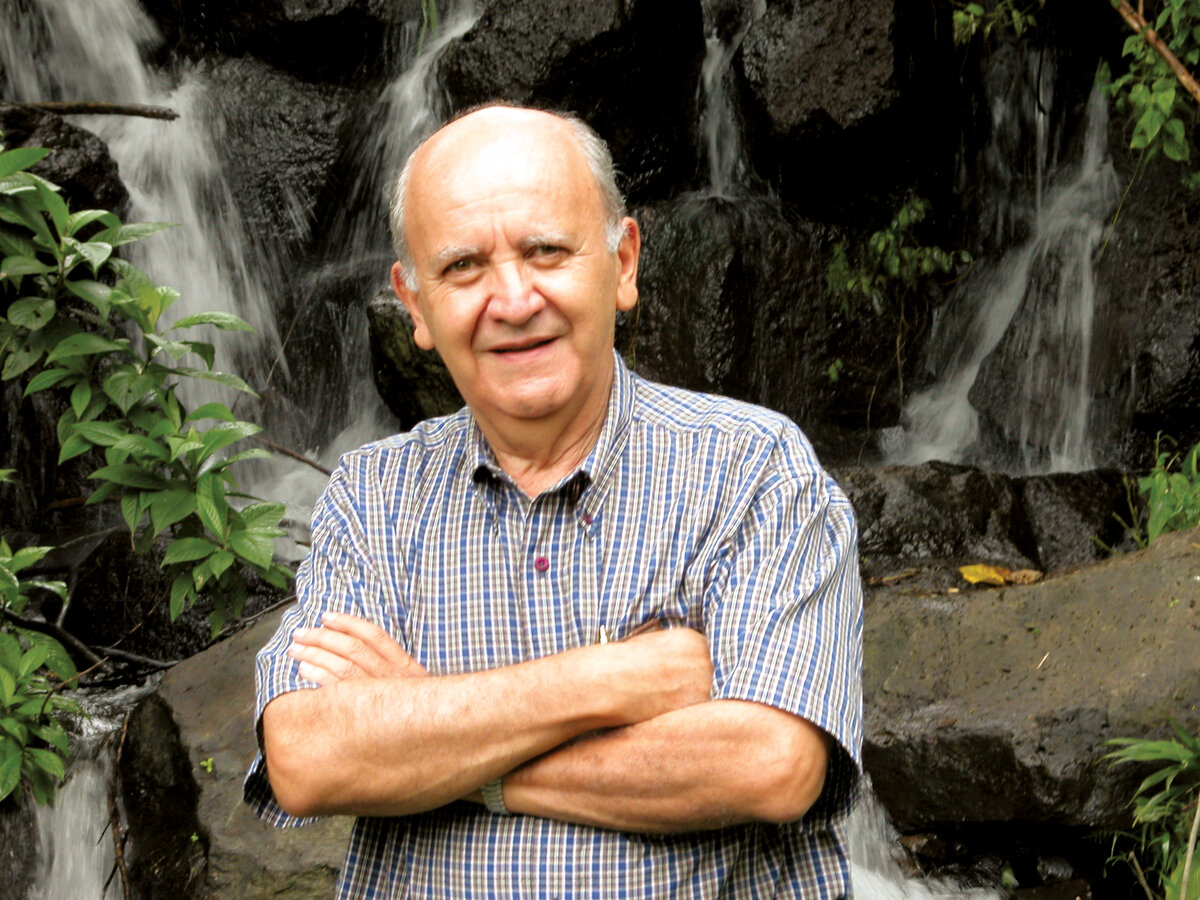
A Rural Boy from Esparza
Rodrigo Gámez-Lobo was born in 1936 in Esparza, a small town in the province of Puntarenas on Costa Rica's Pacific coast. His parents, Uladislao Gámez Solano and Consuelo Lobo, encouraged him to love nature from an early age. Growing up in rural Costa Rica during the late 1930s and 1940s, the young Rodrigo was surrounded by the country's rich agricultural landscape, an environment that would shape his entire life's work.
In 1954, at age 18, he entered the Faculty of Agronomy at the University of Costa Rica. His undergraduate thesis focused on the microorganisms that cause plant diseases: viruses, fungi, and bacteria. Even then, he was fascinated by the invisible forces that could devastate a crop, or save it. He graduated as an agricultural engineer (ingeniero agrónomo) in 1959.
His talent caught the attention of his professors, who encouraged him to pursue advanced studies in the United States. In 1967, he completed his doctorate in Plant Virology at the University of Illinois. He returned to Costa Rica armed not just with knowledge, but with a conviction: that rigorous science could solve real-world problems.
In 1969, just two years after his return, he discovered the maize rayado fino virus, a pathogen devastating corn crops across Central America. It was world-class work. For over three decades (1958-1990), he served as a research professor at the University of Costa Rica, rising through the ranks to become Head of the School of Plant Sciences, Vice-Rector for Research, and Director of the Cellular and Molecular Biology Research Center. He published extensively on viruses affecting basic food crops in Central America, insect transmission, and molecular characterization.
By the mid-1980s, Rodrigo Gámez-Lobo was a respected virologist, a pillar of Costa Rican science. But he was about to make a pivot that would define his legacy and reshape how the world thought about paying for conservation.
The Meeting of Two Minds: Gámez and Janzen
In 1986, President Oscar Arias appointed Gámez-Lobo as his Biodiversity Advisor when the Ministry of Natural Resources was established. It was in this role that he met the man who would become his partner in revolution: Daniel Janzen.
Dan Janzen was an American ecologist who had been working in Costa Rica since the 1960s, studying everything from tropical caterpillars to the intricate relationships between plants and insects. He was relentless and convinced that Costa Rica's biodiversity was both priceless and largely unknown. His wife, Dr. Winnie Hallwachs, shared his obsession and would become a key architect of the parataxonomist training methodology they were about to develop.
The relationship between Gámez-Lobo and Janzen was complementary. Gámez-Lobo had the institutional knowledge, the political connections, and the credibility within Costa Rica. Janzen had the experience in tropical forest research, the international scientific network, and, crucially, the grant-writing expertise. As Gámez-Lobo later admitted with characteristic humility, "I did not know the first thing about applying for grants."
Together, they developed a radical proposition. Costa Rica's protected areas depended on international charity, and those donations could dry up at any moment. What if, instead, the country's biodiversity could pay for its own protection? What if they cataloged every species, then sold access to that genetic information to pharmaceutical and agricultural companies searching for new drugs and crops? The rainforest held chemical compounds worth billions. A comprehensive national biodiversity institute could inventory it all, broker deals with corporations, and use the profits to fund conservation forever. It was audacious. It was controversial. And Gámez-Lobo believed it was the only sustainable path forward.
In 1988, Janzen returned to Costa Rica with news: the international community was ready to finance a national commitment to understand, manage, and sustainably use biodiversity. Janzen "strongly recommended the establishment of this leading-edge research institute that would be the first of its kind in the world."
When the Costa Rican government rejected their initial proposal as "unrealistic," Gámez-Lobo resigned his advisory position and, together with Janzen, established INBio as a private organization. The rejection stung, but Gámez-Lobo understood the problem: Costa Rica hadn't yet embraced the concept of profiting from nature conservation. As he later reflected, the officials found the idea "excellent, but too abstract." They secured funding from the MacArthur Foundation ($800,000), and with Janzen's help, attracted support from the Netherlands, Norway, Canada, Spain, and the World Bank.
Janzen's role didn't stop at fundraising. He invited journalists to see what they were doing, turning INBio into a global symbol almost overnight. He directed the biodiversity inventory, designed information systems, and facilitated cooperation between international scientists. But perhaps his most important contribution was philosophical. Janzen insisted that conservation couldn't be a charity case. It had to be rigorous, data-driven, and economically viable. Gámez-Lobo, the pragmatic virologist, agreed completely.
The Green Republic's Dilemma
In the 1980s, conservation was a rich world's game. It was built on a model of "fences and fines": drawing a line around a piece of land, calling it a national park, and begging for international donations to protect it. Gámez-Lobo saw this as a fool's errand. How could a small, developing nation like Costa Rica, struggling with foreign debt, afford to be the world's zookeeper?

He argued that the country was "sitting on a gold mine" of genetic and chemical information, but it lacked the key. It didn't have an inventory. "We have to know what we have," was his mantra, "before we can know what it's worth. And if we can show its worth, we can fund its protection forever."
This was the idea at the heart of INBio. It was to be a national effort to "save, know, and use" biodiversity. Gámez-Lobo was betting that the rainforest could be more than a spiritual treasure; it could be a pharmaceutical, agricultural, and chemical resource worth protecting for economic reasons.
As Gámez-Lobo framed it, the goals were "both simple and complex": INBio wanted to "realize a society in harmony with nature." But beyond scientific research, "the realization of our dream would require a system that would allow local residents to participate in the activities not as observers, but as organizers." This wasn't charity for nature; it was an investment in a future where conservation and development could coexist because communities had a direct stake in protecting what they knew.
The Barefoot Taxonomists
The first problem was monumental: knowing. How do you catalog an estimated 500,000 species, most of them tiny insects, fungi, and microbes, with only a handful of PhD-level taxonomists in the entire country?
Gámez-Lobo's solution was practical: he created the parataxonomist program, championing a methodology developed by Janzen and Hallwachs.
He didn't look to the universities; he looked to the countryside. He recruited and trained local people: farmers, housewives, hunters, and taxi drivers who lived on the borders of the national parks. Janzen and his wife, Dr. Winnie Hallwachs, trained the first cohort in January 1989, with Hallwachs leading much of the instruction. The program was intensive: a five to six month course meeting 10-14 hours per day, five days a week, totaling over 1,000 hours of training in entomology, herpetology, ornithology, and field botany. They taught everything from taxonomy to how to safely operate a chainsaw. Additional cohorts received training through 1992, after which parataxonomists themselves took over the training, passing their expertise to new recruits.
These parataxonomists became the frontline soldiers of biodiversity. They were paid a salary, giving them a direct and stable economic stake in the forest's survival. Suddenly, the forest wasn't just a patch of trees to be cleared for cattle; it was a source of skilled employment. They weren't just collecting bugs; they were building a national identity around "knowing our own." In a few short years, this team of passionate amateurs discovered thousands of new species and built one of the most comprehensive tropical biodiversity collections on Earth.
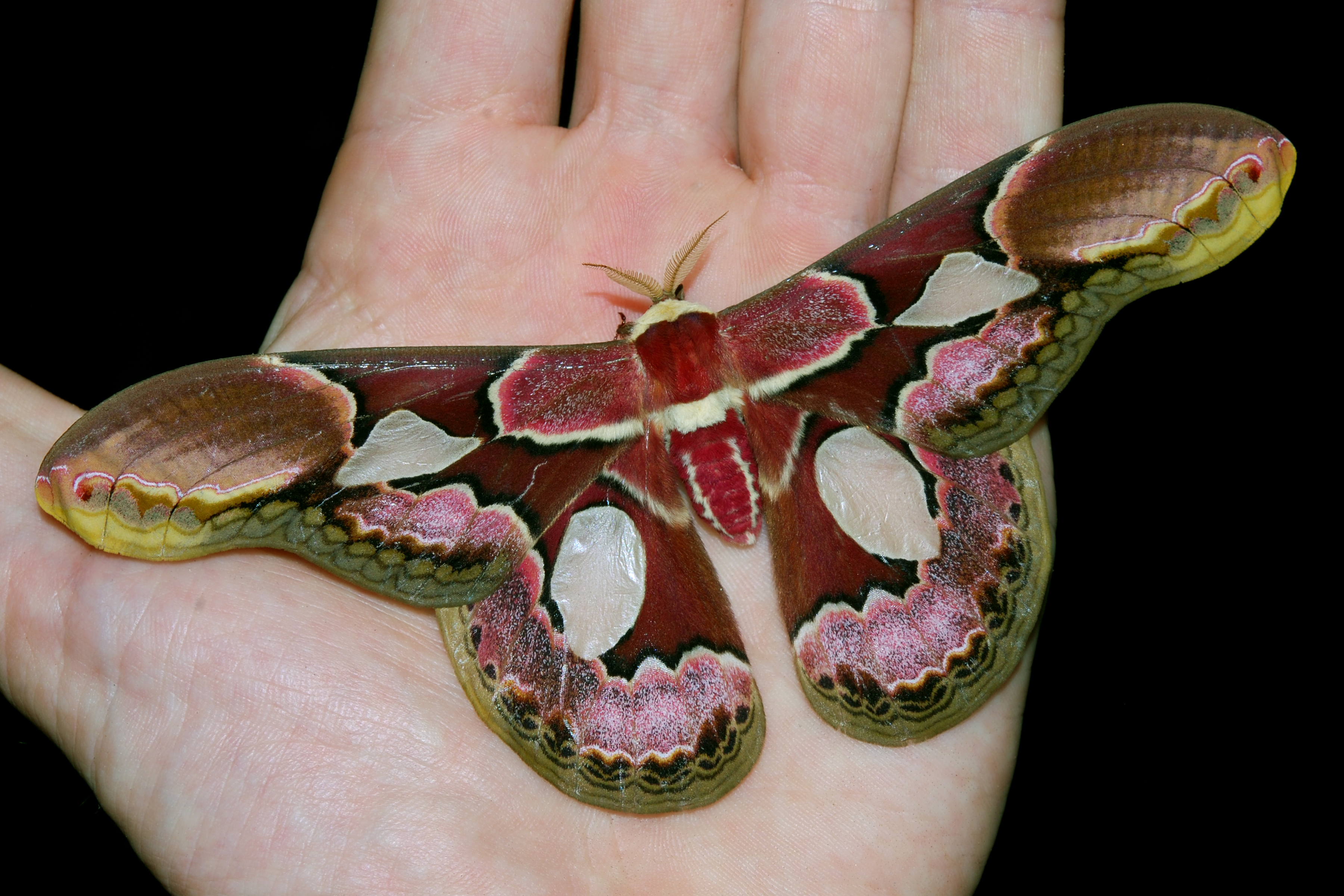
The dedication was extraordinary. In the early years, when INBio struggled with budget constraints, some parataxonomists worked second jobs to support their families while collecting specimens as unpaid volunteers in their remaining hours. They believed in the mission enough to sacrifice sleep. But they weren't alone. Gámez-Lobo built INBio on international cooperation: roughly 450 volunteer scientists from around the world contributed work valued at $2.5 million annually, identifying specimens, training locals, and building the taxonomic expertise that Costa Rica lacked. This wasn't charity. It was a global scientific community recognizing that if Costa Rica could build this catalog, it would serve as a model for every other tropical nation facing the same problem.
As soon as training began in early 1989, parataxonomists started generating huge numbers of high-quality mounted specimens. By 2015, INBio had become Latin America's second-largest biological collection: 3.5 million specimens, fully digitized. The institute produced over 2,500 scientific articles, 250 books, and 316 convention presentations. In Área de Conservación Guanacaste alone, parataxonomists helped identify 10,000 new species. And the program created upward mobility: former parataxonomists moved into government research-permitting positions and INBio's curatorial posts, building institutional capacity that lasted beyond the institute itself.
The Philosophy of Bioliteracy
But Gámez-Lobo's vision extended beyond specimen collection. At the heart of his intellectual framework was a concept he called "bioalfabetización," or bioliteracy.
For Gámez-Lobo, bioliteracy meant learning to "read and comprehend the different processes that occur in nature, using ecosystems as learning classrooms and each component of biodiversity as open books." It was education not from textbooks, but from direct contact with living systems. He believed that Costa Ricans, from schoolchildren to farmers to policymakers, needed to become fluent in the language of their own land.
This wasn't romantic environmentalism. It was strategic. A bioliterate nation, he argued, would make better decisions about agriculture, development, and conservation because it would understand the true costs and benefits. It would see a forest not as empty space waiting for cattle, but as a complex library of genetic information, ecological services, and economic potential.
INBio's education programs brought students into the field, trained teachers to use nature as a classroom, and built public awareness campaigns around the value of biodiversity. The goal was to transform the culture, making conservation as fundamental to Costa Rican identity as coffee or soccer.
But Gámez-Lobo was also a pragmatist. He understood that education alone wouldn't save the forest. People needed to eat. Communities needed jobs. And that's where the real business model came in.
Cashing in on Creation
Cataloging was the first step. The next was more controversial: selling access to what they'd found. This was bioprospecting.
The pitch was simple. The chemical compounds and genetic codes hidden in Costa Rica's flora and fauna held the potential for new drugs, natural pesticides, and industrial enzymes. INBio would act as the national broker. It would provide pharmaceutical, chemical, and agricultural companies with meticulously cataloged samples of plants, insects, and microbes.
In return, the companies would pay an upfront fee for access. But they also had to agree to share a percentage of royalties from any future discovery. If a beetle from a Costa Rican rainforest led to a new cancer-fighting drug, a piece of the profit would flow directly back to Costa Rica.
The most famous deal, announced on September 19, 1991, was with the pharmaceutical giant Merck & Co. Merck paid INBio a flat $1.135 million for a two-year collaborative research agreement, plus equipment donations worth $135,000 for chemical extraction. In exchange, INBio would provide plant, insect, and soil samples. Any royalties from drugs developed from these samples (estimated at 1-3%, though never publicly disclosed) would be split equally between INBio and Costa Rica's Ministry of Natural Resources. Ten percent of INBio's payment, $100,000, went directly to the national parks for conservation area maintenance.
For the first time, a developing nation was negotiating the value of its "genetic resources" as a sovereign asset, rather than letting foreign scientists plunder them for free as "the common heritage of mankind."
The Merck deal, and the global attention it attracted, gave INBio instant fame. Gámez-Lobo's vision was celebrated in conservation circles worldwide. The proceeds went back into INBio's operations: supporting the parataxonomists and building the institute's research capacity. But the agreement was abandoned in 2011, and the challenge remained: could they replicate this success at scale?
The Answer: No
They couldn't. The hard truth is that discovering a blockbuster drug from a jungle plant is like finding a needle in a global haystack. The process takes decades and has a very high failure rate.
No major, billion-dollar drug ever emerged from the INBio-Merck deal. INBio signed a handful of other agreements with companies like Diversa and Bristol-Myers Squibb, but these were much smaller, often confidential, and generated minimal revenue. The "gold" Gámez-Lobo had promised proved elusive.
The fundamental problem was economic. Genetic resources were "so vast as to seem unlimited," making them inherently cheap. With millions of undiscovered species globally, pharmaceutical companies had numerous alternatives. If Costa Rica demanded too much, Merck could simply prospect elsewhere. Scarcity determines value, and biodiversity's very abundance undermined its price.
Critics also lined up. Some accused him of "bio-piracy" in reverse, of selling off the national patrimony even if he got a good price for it. They asked uncomfortable questions about the ethics of "commodifying" life and putting a price tag on a sunset.
Collapse
The bioprospecting model never materialized as Gámez-Lobo had hoped. By the 2000s, new technologies like synthetic chemistry and genomic sequencing made random bioprospecting obsolete. International regulations, ironically inspired by INBio's own model, made benefit-sharing agreements so legally complex that pharmaceutical companies lost interest.
Without corporate revenue, INBio depended on donor funding. Then Costa Rica's economic success became a problem. As the country prospered in the 1990s and 2000s, international donors concluded it no longer qualified as a poor nation deserving aid. The decline of international cooperation for middle-income countries hit hard. INBio's donor funding had peaked at $4 million in 1999; by 2007, it had dropped to just $79,000. The 2008 global financial crisis accelerated the collapse. By 2012, INBio's budget had fallen to $300,000. The institute declared economic bankruptcy in 2013.
The Costa Rican government never stepped in. Gámez-Lobo watched as INBio was trapped in a fatal catch-22. "We never received support from the government," he explained. "Every year we saw reductions in our operations." But the lack of government commitment made donors skeptical: "Donors asked, 'If what you do is so important to the government, where is their support?'"
Looking back on the collapse, Gámez-Lobo didn't characterize it as a failure of the conservation model itself. Rather, he argued that "what was demonstrated is that it wasn't viable to try to do all this in an entity that generates its own resources, because by the nature of the activity it is typically a State function." The work of cataloging and protecting national biodiversity, he came to believe, was fundamentally a government responsibility—not something a private institute could sustain through commercial partnerships alone.
In March 2015, INBio transferred its collection of 3.5 million biological specimens to the state: the National Museum, the University of Costa Rica, and the National University. The INBioparque filed for bankruptcy in 2016 and closed.
Gámez-Lobo continued to advocate for his vision until the end. In later interviews, he argued that biodiversity remained "natural capital" and insisted that "the best means to conserve biodiversity is to take advantage of the opportunities it offers to improve human quality of life." He received numerous awards including the Premio Príncipe de Asturias for Scientific and Technical Research (1995) and Costa Rica's highest civilian honor, the Premio Magón (2011). He remained active in the Academia Nacional de Ciencias, where he had been a member since 1992.
On March 1, 2025, Rodrigo Gámez-Lobo died at age 88.
The bioprospecting model failed. But the collection exists: 3.5 million specimens documenting Costa Rican biodiversity, now distributed across the country's research institutions. And the parataxonomist methodology that Gámez-Lobo championed, training local people to catalog their own ecosystems, influenced conservation programs throughout the tropics.
References & Further Reading
Biographical & Memorial Coverage
Memorial from UCR documenting Gámez-Lobo's pioneering role as the university's first Vice Rector of Research in 1974, following reforms that created the research vice-rectorate structure.
Obituary from Costa Rica's leading newspaper honoring Gámez-Lobo as the "father" of INBio, documenting his death on March 1, 2025 and lifelong contributions to biodiversity science.
Official biography from the National Academy of Sciences where Gámez-Lobo was a member since 1992, documenting his complete academic and conservation career.
Personal memorial recognizing Gámez-Lobo's 1983 Bernardo Houssay Prize for his work on bean and corn viruses and his later founding of the Center for Research in Cellular and Molecular Biology at UCR.
Official documentation of Gámez-Lobo's Premio Magón, Costa Rica's highest cultural honor, recognizing 50 years of scientific work including 40 environmental awards and 120+ publications.
Academic Career & Plant Virology
Gámez's foundational work characterizing the maize rayado fino virus, discovered in 1969, which led to creation of the genus Marafivirus within the family Tymoviridae, approved by the International Committee on Taxonomy of Viruses in 1985.
Comprehensive review of the MRFV group of plant viruses affecting basic food crops in Central America, documenting insect transmission by leafhoppers and molecular characterization.
Research documenting virus transmission mechanisms by the leafhopper vector Dalbulus maidis, critical for understanding disease spread in Central American maize crops.
Profile of Gámez's PhD work at University of Illinois (1967) and three-decade career (1958-1990) as research professor at UCR studying viruses of basic food crops in Central America.
INBio & the Bioprospecting Experiment
Detailed reporting on INBio's financial collapse, including Gámez-Lobo's reflections: "Costa Rica became a consumer economy, and we were left out," explaining how donor withdrawal caused budget collapse from $5M to $300k annually.
Analysis of INBio's crisis documenting Gámez-Lobo's statement: "We never received support from the government. Every year we saw reductions in our operations," highlighting failure of government to fund biodiversity infrastructure.
Documentation of March 2015 transfer of 3.5 million specimens to National Museum, UCR, and Universidad Nacional, marking formal end of INBio's 25-year mission as Latin America's second-largest biological collection.
Comprehensive overview of INBio's October 1989 founding, the 1991 Merck deal ($1.135M), parataxonomist program, Atta database system with GPS-coded specimen locations, and 2016 INBioparque bankruptcy.
Business school case study analyzing INBio as social enterprise model, examining Gámez-Lobo's strategy to make biodiversity conservation financially self-sustaining through bioprospecting revenue.
Documentation of INBioparque's 2015 transfer to government partnership (Environment, Education, Culture ministries) after welcoming 1.5 million visitors over 15 years, including extensive student education programs.
The Merck Deal & Bioprospecting Debate
Foundational WRI publication co-edited by Gámez-Lobo examining the Merck-INBio model as groundbreaking template for biodiversity benefit-sharing, with chapters on research management policies and sustainable development.
Gámez-Lobo's own reflections on INBio's first decade, articulating his philosophy that "the best means to conserve biodiversity is to take advantage of the opportunities it offers to improve human quality of life."
Academic analysis documenting that Merck terminated the INBio agreement and gave away collections in 2011, with no blockbuster drugs emerging, and Costa Rica's earnings never approaching $300M annual coffee export revenues.
Critical examination of bioprospecting's failure, noting most innovative partnerships like Merck-INBio "came to an end without achieving tangible results," challenging the commodification of nature approach.
Parataxonomists & Community Science
Janzen's theoretical framework for the parataxonomist model that Gámez-Lobo implemented at scale, explaining how training Costa Rica's rural populace overcame shortage of PhD taxonomists for ambitious national inventory.
Documentation of parataxonomist programs examining INBio's 1989 partnership with ACG, where local experts stationed at 11 field sites spent decades documenting butterflies, moths, and parasites for DNA barcoding with University of Guelph.
Case study documenting parataxonomist training details: intensive 5-6 month courses meeting 10-14 hours daily, totaling 1,000+ hours covering entomology, herpetology, ornithology, and field botany, with first cohort trained by Janzen in January 1989.
Early assessment of INBio's parataxonomist training structure: 6-month courses in entomology, herpetology, ornithology and field botany, with continuous on-the-job apprenticeship to curators and international taxonomists.
Overview of parataxonomy methodology showing how INBio's program produced 2,500+ scientific articles, 250 books, and 316 convention presentations by 2015, with former parataxonomists advancing to government permitting positions and curatorial roles.
All-Taxa Biodiversity Inventory (ATBI)
Overview of ATBI concept originally developed by Janzen for Costa Rica, attempting to document and identify all biological species in defined areas including habitat, abundance, behavior, and genetic diversity data.
NSF-funded protocols for INBio's ATBI of Area de Conservación Guanacaste, documenting detailed sampling methodologies combining standardized multi-taxon and individual taxon-centered approaches with molecular analysis.
Gámez-Lobo's own description of INBio's ATBI work with Janzen, implementing avant-garde barcoding of plant and insect specimens in ex situ collections to catalog Costa Rica's estimated 500,000 species.
DNA Barcoding & International Collaboration
Documentation of INBio-ACG partnership with University of Guelph's Biodiversity Institute of Ontario for DNA barcoding, with moth specimens couriered to Guelph for sequencing and recording in BOLD public database.
Overview of Costa Rica's barcoding of ~500,000 specimens representing ~50,000 species since mid-2000s with Centre for Biodiversity Genomics, with INBio collection now deposited in Museo Nacional after 2015 transfer.
Documentation of Paul Hebert's pioneering DNA barcoding technology and ongoing $180M global initiative building on INBio's specimen foundation, using short standardized genetic regions for species identification across all life stages.
Scientific paper documenting barcoding accuracy during identification of ~100,000 specimens representing ~3,500 morphologically defined species, added to taxonomic identification process in 2003.
Costa Rica's Biodiversity Law & Access-Benefit Sharing
Recognition of Costa Rica's 1998 Biodiversity Law (No. 7788) embracing CBD's three objectives: conservation, sustainable use, and fair/equitable benefit-sharing from genetic resources utilization.
Analysis of law's long development process establishing prior informed consent requirements, cultural objection rights for indigenous communities, and access permits for bioprospecting (max 3 years, non-transferrable).
Full legal text documenting regulations on access to genetic resources, intellectual property rights associated with traditional knowledge, and benefit-sharing mechanisms that codified principles from INBio-Merck experience.
Analysis of Costa Rica's 650+ ABS permits including two for commercialization of genetic resources, noting country signed but hasn't ratified Nagoya Protocol yet maintains robust domestic ABS implementation.
Critical Perspectives: Biopiracy & Indigenous Rights
Critical analysis noting Merck/INBio agreement "ignores the rights and roles of indigenous peoples," with at least one indigenous reserve within INBio collecting area and indigenous peoples hired as para-taxonomists.
Examination of Costa Rican coalition of environmental organizations, academics, indigenous peoples and peasants (Network for Coordination on Biodiversity) questioning whether bioprospecting brought promised benefits or assisted appropriation of genetic assets.
Academic analysis of contradiction: indigenous groups still being sold back patent-protected medicines based on knowledge and biological resources that have long been part of their cultural repertoires.
Major Publications & Edited Volumes
Comprehensive reference with Gámez-Lobo's introductory remarks, bringing together world's foremost experts on Costa Rican ecology covering geology, soils, climate, and terrestrial/freshwater/marine ecosystems across country's full ecological diversity.
Gámez-Lobo's retrospective analysis of two centuries of Costa Rican biodiversity history and prospects for the tricentennial, one of his final major publications before his death in 2025.
Comprehensive listing of Gámez-Lobo's scholarly output spanning 50+ year career, including plant virology papers (1979-1986), biodiversity strategy contributions (1992), and conservation policy publications.
Awards & Recognition
Biennial international prize co-organized with CBD Secretariat and Japan's Ministry of Environment, recognizing Gámez-Lobo's "successful model for conservation and sustainable use of biodiversity" including inventorying, bioprospecting, policy, and capacity building.
Costa Rica's highest civilian honor, shared with choreographer Rogelio López López, recognizing jury's expanded cultural concept encompassing both artistic and scientific practices, honoring Gámez-Lobo's 50-year career.
Pax Natura Foundation recognition citing Gámez's "pioneering work in biodiversity conservation, environmental education and humanitarian ideals have inspired an entire generation," presented July 3, 2012 in Costa Rica.
OAS Inter-American Prize in Sciences awarded to Gámez-Lobo for his studies on bean and corn viruses, particularly the maize rayado fino virus discovery that established new virus family.
Conservation Green Globe Award recognizing Gámez's dedication to environmental conservation and sustainability through INBio's innovative bioprospecting and biodiversity inventory work.
Honorary doctorate from Centro Agronómico Tropical de Investigación y Enseñanza recognizing Gámez-Lobo's contributions to tropical agricultural research and biodiversity science where he previously worked in virology.
Spain's prestigious Prince of Asturias Award for Scientific and Technical Research awarded to INBio under Gámez-Lobo's directorship, recognizing institution's contributions to biodiversity science and conservation methodologies.
Joint recognition of Janzen and INBio (founded by Gámez-Lobo) for contributions to biodiversity conservation, with Gámez accepting award alongside Janzen for parataxonomist methodology and inventory work.