The Minister: How René Castro Salazar Built Costa Rica's Conservation State
René Castro Salazar created SINAC, orchestrated the passage of both the Forest and Biodiversity Laws, and built the payment system that made conservation financially sustainable.
René Castro Salazar considered himself a pure environmentalist. Then they sent him to Corcovado.
The assignment was straightforward: remove the illegal gold miners and settlers who had invaded the national park. Castro went with the conviction of a conservationist, ready to protect the mountain from those who were damaging it. What he encountered instead was a shock.
The miners lived in tents. They ate poorly. They had no access to health care. Their poverty was extreme. Castro later recalled his reaction: "I went with the spirit of removing those damaging the mountain and experienced shock seeing their extreme poverty, living in tents, eating poorly and without health."
This moment crystallized everything he had been learning. Isolated environmentalism, he realized, was not viable in a developing country. You could not simply tell desperate people to stop using the forest. They had no alternative. The forest would always lose a competition against survival. Castro had spent years studying environmental economics at Harvard, learning how to make forests financially competitive with cleared land. Corcovado showed him why that work mattered.

The Revolutionary's Son
René Castro Salazar was born on August 25, 1957, in San Luis, Missouri. His father, René Castro Hernández, was an engineer. His mother, Giselle Salazar Jirón, was a teacher. But the family heritage that would define him was political, not professional.
Castro would later state with pride: "Yo soy hijo de una persona que fue a la Revolución con José Figueres." His father had risked his life in Costa Rica's 1948 civil war, fighting alongside the man who would become the country's transformative president. That revolution abolished the military and redirected national resources toward education and social investment. The next generation's revolution would be environmental.
Castro grew up in Liberia, the capital of Guanacaste province, before moving to San José to continue his studies. Guanacaste in the 1960s and 1970s was ground zero for Costa Rica's deforestation crisis. Cattle producers eliminated the region's tropical dry forests to supply beef to U.S. troops during the Vietnam War. By the end of the 1970s, only plains and scattered green patches remained where there had once been intact forest. A child growing up in Liberia during those years would have witnessed the transformation firsthand. The forests of his home region simply disappeared.
As a student, Castro watched a shift begin. In 1975, plans for a new highway to the Caribbean, one of the first in Central America, drew opposition from citizens at the public universities, mainly from biology and the social sciences. For the first time in the country's history, the government had to compromise, compensating an infrastructure project by establishing conservation areas including Braulio Carrillo National Park.
At the Universidad de Costa Rica, Castro proved himself not as an activist but as a political operator. In 1978, at age 21, he was elected president of the student federation. He represented the Partido Liberación Nacional, the social democratic party his father had fought for in 1948, defeating a coalition of left-wing groups. He was not an idealist. His student years trained him to understand coalitions, power, and how to build winning majorities. These skills would prove essential.
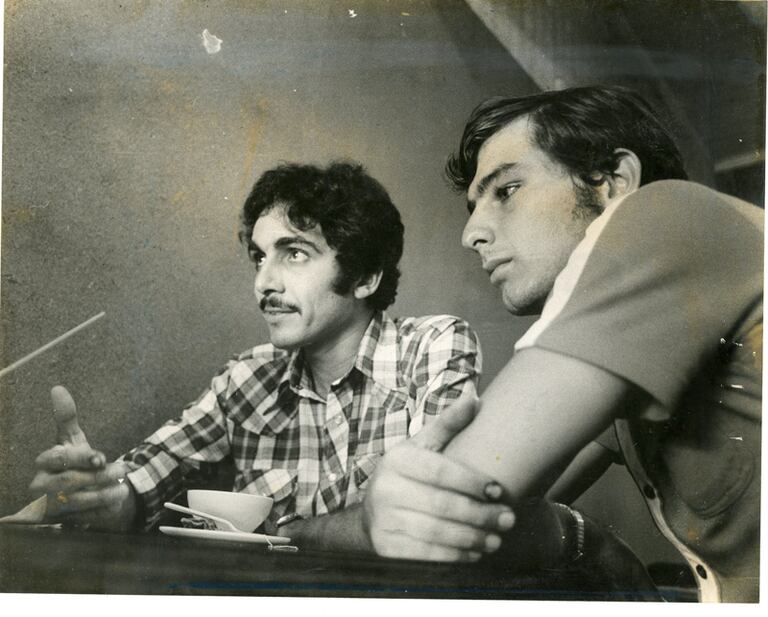
Castro earned a Bachelor's degree in Civil Engineering from the Universidad de Costa Rica, grounding him in the practical realities of land, infrastructure, and physical construction. An engineer understands how a farmer clears a field. An engineer knows the physical work of transforming landscape.
By age 25, Castro held two extraordinary positions simultaneously: President of the Municipal Council of San José, the legislative body governing the nation's capital, and Vice Minister of the Interior under President Luis Alberto Monge. How does someone so young secure this kind of power? Castro was not an unknown entity when Luis Alberto Monge took office in May 1982. His student federation victory had already proven he could win contested elections and build coalitions. His father had fought in the 1948 civil war alongside José Figueres, the revolutionary who founded modern Costa Rica and the PLN. Monge himself was one of the party's founding members in 1951. When the PLN swept back into power in February 1982 with a landslide 58.8% of the vote and a commanding 33-seat majority in the 57-seat Legislative Assembly, the party had the political capital to install trusted loyalists in key positions. Castro—with his Civil Engineering degree from UCR, his proven political skills, and his family's revolutionary credentials—was the ideal PLN asset: a technócrata who was both politically reliable and technically proficient.
From 1982 to 1986, Castro served in both roles concurrently. These were not ceremonial positions. Costa Rica was facing what official planning documents described as "the worst period that the economic history of our country remembers." Simultaneously, the Contra war against Nicaragua's Sandinista government was spilling across the northern border. As Vice Minister of the Interior, Castro was responsible for domestic security, national police, and the coordination between the national government and all of Costa Rica's municipalities. A 1985-1986 government report shows him delivering legislation to the Legislative Assembly regarding extraordinary work risks for police forces "due to the problems occurring on the northern border." As President of the Municipal Council, he led San José—the nation's capital and most important local government—through economic crisis and fiscal austerity. His engineering background became directly applicable: public works, infrastructure planning, service provision, and the complex budgeting these tasks require during a period when the national agenda demanded "reducción del gasto público."
The arrangement was unusual but not accidental. The Ministry of the Interior coordinates with all municipalities. The San José Municipal Council is the most important local government in the country. By placing the same person in both positions, the Monge administration created an efficient channel: when the national government needed to coordinate policy with the capital, it was communicating directly with the head of the capital's legislative body. These roles trained Castro in what would become his signature skill: the unglamorous mechanics of governance. Budgets. Bureaucracy. Negotiation. The management of competing political factions during a period of profound national crisis. He was learning how the Costa Rican state actually worked—from both the national executive side and the local legislative side—simultaneously.
After leaving government in 1986, Castro worked as a professor at INCAE, the Central American Institute of Business Administration, and as a consultant for the United Nations, World Bank, and Inter-American Development Bank. He also served as Secretary General of the Partido Liberación Nacional. During this period, he pursued his Harvard degrees, ultimately completing his Doctor of Design with a focus on environmental economics. This combination would prove rare: an engineer who understood the physical realities of land use, an economist who could design financial mechanisms, and a political operative who knew how to navigate the machinery of the Costa Rican state.
He would later describe himself as "una persona empecinada, insistente y terca." Stubborn. Persistent. Obstinate. When asked if others had noted his difficulty acknowledging errors, he responded with self-aware humor: "Claro, si me lo dijo la maestra del kínder." Of course. His kindergarten teacher told him so.
The Ministry of Ideas
In 1994, President José María Figueres Olsen appointed René Castro Salazar as Minister of Environment and Energy. Castro inherited a crisis. Costa Rica's forest cover had dropped to a historic low of 21 percent by 1987. As recently as the late 1970s, approximately 50,000 to 55,000 hectares of forest were being cleared annually. The scale of loss was staggering.
The old command-and-control approach had proven insufficient, and the most prominent alternative was worse. Congressman Ottón Solís, then a member of Castro's own Partido Liberación Nacional, had proposed a bill known as "CULPA," an acronym meaning roughly "you can cut only the trees planted now." It would impose a total ban on natural forest logging and replace it with incentives for plantations. Castro's team studied the proposal and concluded the likely result would be the opposite of what Solís intended: landowners would clear-cut natural forests and replace them with commercial plantations. The ban would accelerate the destruction it meant to prevent.
Castro, working with advisors like Raúl Solórzano, turned instead to academic papers that portrayed the problem differently: as competing land uses. Cattle ranching provided reliable income. A standing forest provided zero. The forest would always lose that economic competition.
Castro's solution had to be financial. He needed to build a system that made conservation economically competitive. But to build something this radical, he needed the right team. And first, he had to fix a broken bureaucracy.
Three separate agencies within the Ministry of the Environment shared responsibility for forest protection: the National Parks Service, the Wildlife Directorate, and the Forestry Directorate. The dysfunction was absurd. Carlos Manuel Rodríguez later described how forest fires exposed the problem: "There were dry forests, and every year there was a forest fire issue. Almost every year, the same thing happened: A fire would begin in the wildlife refuge, and you've got 5 ground staff at the wildlife refuge. You've got a national park right next to it with 35 staff. The 5 guys go like crazy trying to stop the fire, and then you have the 35 guys waiting on the line dividing both areas because it was not their responsibility." Nils Solórzano, the scientist Castro would recruit to fix this mess, put it more bluntly: the three directorates were "totally uncoordinated and fighting [each other] for financial resources."
In 1994, Castro began merging them into what would become the National System of Conservation Areas, or SINAC. To manage the complex bureaucratic reorganization, Castro delegated operational authority to Nils Solórzano, former director of the Tropical Science Center, instructing the agency directors to report to him. In 1995, Solórzano suggested Carlos Manuel Rodríguez to be his second-in-command and lead the operational work of consolidating protected areas. Rodríguez would be appointed Director of the National Parks Service, the de jure title, while functioning as the hands-on manager for all protected areas across the entire merger.
There was a problem. Rodríguez was Castro's counterpart in the Partido Unidad Social Cristiana (PUSC), the main opposition party. Worse, he was the nephew of Miguel Ángel Rodríguez, the PUSC presidential candidate who had just lost to Figueres in the 1994 election by a razor-thin margin of 50% to 48%. To many in the Figueres administration, bringing the losing candidate's nephew into a high-ranking position was unacceptable. Nevertheless, Castro persuaded President Figueres to move forward with the appointment, based on Rodríguez's reputation and Solórzano's endorsement. It was a technocratic hire, not a political one.
Rodríguez brought his own origin story. He had watched his grandfather's farm in the Orosi Valley collapse after government tax policy forced the clearing of cloud forest for dairy cattle. The new business failed. The coffee crop suffered. Rodríguez had learned the same lesson Castro learned at Corcovado: misaligned economic incentives destroy both nature and livelihoods.
Rodríguez was a lawyer by training and a political operator by choice. His father had advised him to study law rather than biology. Studying law would teach him about the "social contract," the "rules of the game," and "how societies organize themselves." Rodríguez had taken that advice and become Costa Rica's first environmental lawyer.
The partnership was clear. Castro provided the economic vision and political protection. Rodríguez provided the legal architecture. Together, they would draft the Forestry Law that would transform Costa Rica's approach to conservation.
The Battle for Law 7575
The Forestry Law debate was fierce. The timber industry, traditionally the most powerful interest group, wanted to maintain access to natural forests for logging. The agriculture sector saw forests as obstacles to development. The conservation sector demanded complete protection.
Into this debate stepped Franz Tattenbach, an economist who directed FUNDECOR, an NGO working in Costa Rica's central volcanic region. The organization had been running pilot programs since 1992, making payments to farmers who chose to conserve their forests. Farmers earned payments for forest protection and additional revenue from sustainable timber harvests. The dual income stream proved that forests could compete economically with cattle ranching. By 1994, the NGO had built critical trust with hundreds of small and medium landowners, demonstrating that a market-based, landowner-centric model could work. This was the proof of concept Castro needed.
Castro appointed Tattenbach to two key government positions: head of the newly created Office of Joint Implementation, Costa Rica's vehicle for international climate finance, and special envoy for climate change. With this official mandate, Tattenbach joined the inner circle designing the new forestry law. To counter rival proposals in Congress, he worked with his staff and SINAC's lawyers to draft an alternative. On the blackboards of the organization's offices in San José, they sketched out a plan to compensate forest owners—through a tax on fossil fuel consumption—for the environmental services they provided by conserving and managing forests. It was workshop legislation, built collaboratively in real time.
Castro and Rodríguez crafted a compromise. The timber industry would lose access to natural forests. The law would prohibit land use change in natural forest covered land. But in exchange, the industry would gain substantial government support for commercial timber plantations. Plantation owners would receive payments, tax exemptions, and access to credits through a new national forest fund.
Rodríguez recalled that the logging companies ultimately had to accept the deal: "The logging companies had to accept [the new proposal]... a land-use-change ban was very consistent with the sustainable logging they were preaching." It was a pragmatic capitulation. The industry had spent years advocating for sustainable forestry practices. Now the law was calling their bluff, making sustainability mandatory while compensating them for the transition. The large sawmills, which had depended on cheap, lightly regulated raw material from natural forests, were effectively put out of business. Some relocated to other Central American countries.
The law explicitly recognized four environmental services that forests provide: carbon fixation to mitigate greenhouse gases, hydrological services to protect water supplies, biodiversity protection to conserve genetic resources and habitats, and scenic beauty for tourism and recreation. For the first time, the state legally defined the value of a standing tree.
The law then created the mechanism to pay landowners for providing those services. This was the Payment for Environmental Services program, or Pago por Servicios Ambientales. Landowners would sign five-year contracts with the National Forestry Financing Fund, FONAFIFO. In exchange for annual cash payments, landowners would protect their forests.
The hardest fight was over funding. Castro and Tattenbach proposed financing the program through a tax on fossil fuel consumption—specifically, earmarking a portion of the existing fuel tax collected by RECOPE, Costa Rica's state-owned petroleum monopoly. The minister of finance proved surprisingly receptive. As Castro recalled, "Gasoline and diesel were already expensive in Costa Rica, but at the same time, [a fuel tax] was the most-efficient tax collection method the government had because they collected it at the distribution company." The deal was elegant: the finance minister could increase tax revenue, and Castro would get his program funded. To build legislative support for increasing the fuel tax, Castro mobilized rural communities that wanted to attract PES money. "The minister of finance needed support from the public to increase the fuel taxes. We gave him that," Castro said.
The biggest obstacle proved to be neither Congress nor the timber industry. It was the media. Traditional media outlets feared the government was inventing another state program to distribute subsidies. Castro personally visited most media leaders and every leader of the opposition, in Congress and outside it, to reframe the proposal. The key distinction he pressed: this was not a subsidy. It was a payment for a service. If the landowner did not provide the service, the landowner did not get the money.
On April 16, 1996, the Forestry Law passed. For the first time in Costa Rican history, it was more profitable to conserve a forest than to destroy it.
Implementation began in 1997, and the response exceeded all expectations. According to Oscar Sánchez, who became director of FONAFIFO's PES program, setting payment levels became "the biggest sources of conflict. All of the landowners wanted them to be more." The Tropical Science Center had valued environmental services using international studies and opportunity costs, recommending annual payments of $58 per hectare for forest conservation—comparable to cattle ranching profits but far below crop farming. The payments were never going to satisfy everyone, but they changed the economic calculus.
Demand overwhelmed the system immediately. SINAC's subregional offices recorded applications on a first-come, first-served basis, so landowners began camping outside offices to secure their place. "In some cases, people waited in line for a whole day and night in order to be first in line the following day," recalled Carlos Barrantes, who worked at the Sarapiquí office. The program received two or three times more applications than it could accept. FONAFIFO had to suspend its mass-media promotion campaign. "We had to suspend it because of the avalanche of applications we received," Sánchez said. The problem wasn't generating interest. The problem was having enough money to meet it.
The institutional design behind this scramble was deliberate. SINAC wanted to control all forestry programs, but Castro kept FONAFIFO separate. SINAC's staff were park rangers and biologists, effective at managing protected areas but ill-suited to working with farmers and rural communities. Castro consolidated leftover donor trust funds into a single entity that became FONAFIFO's backbone, operating first as a private trust from late 1994, two years before the law gave it public status. The arrangement generated infighting, but it meant that the agency administering payments to private landowners was built for that purpose from the start.
The timing was precarious. Costa Rica had just become a middle-income country, and international donor funding was disappearing faster than anyone expected. Foreign aid that had financed the National Parks Service for decades, covering eighty percent of the payroll and all land acquisition, evaporated. Castro improvised. He raised National Park entrance fees from one dollar to fifteen, provoking uproar from the tourism industry. He negotiated the price down to six dollars, but even that was a sixfold increase. Two domestic revenue streams emerged from the transition: visitor fees for public conservation areas and fuel tax revenue for private landowners under PES. The entrance fee would not be raised again until 2014, when Castro returned as Environment Minister for a second term.
The money would come, but not from where Castro had planned. The Ministry of Finance never delivered the one-third fuel tax allocation that the 1996 law had promised. This is where Tattenbach's role as special envoy became critical. At the time, the Norwegian government was seeking to invest in alternative energy in Costa Rica to offset Norway's carbon emissions. Knowing the new forestry law was in the works, Tattenbach convinced the Norwegians to fund PES instead. In 1996, Costa Rica and Norway signed one of the world's first carbon offset transactions: Norway purchased 200,000 tons of carbon at $10 per ton, yielding $2 million for forest preservation. Tattenbach had a choice: use the money for his organization's joint implementation projects or direct it toward the new national program. "I was hopeful that we could have a national reform," he later recalled. "We didn't go for the easier thing; we were thinking more long term."
During the program's critical first year in 1997, FONAFIFO received no fuel tax money at all. The $2 million from Norway's carbon credit purchase became FONAFIFO's lifeline, providing the capital to fund the first wave of contracts. Without Tattenbach's successful negotiation, the new law would have created an institutional vehicle with a restriction on logging but no compensation payments to make compliance politically viable. Over the following years, Castro's team cobbled together financing from World Bank loans, bilateral agreements, private hydroelectric companies purchasing watershed protection, and eventually, a revised fuel tax provision. In 2001, Law 8114 replaced the failed promise with a smaller but enforceable guarantee: 3.5 percent of fuel tax revenue, allocated automatically to FONAFIFO. The ambitious original plan had failed, but the program survived on pragmatic adaptation. The revised fuel tax provision, combined with diversified revenue streams, would become the reliable engine powering Costa Rica's PES program for decades.
The program was not perfect. Early evaluations found modest conservation effects, and critics noted equity challenges: high transaction costs favored large landowners over small farmers. But Castro understood the PES program as political strategy, not just economic policy. The payments reduced opposition to land-use restrictions and established the social norm that standing forests have value. The program adapted over time—indigenous community participation rose from 3 percent to 26 percent between 1997 and 2012—demonstrating that the model could evolve to address its shortcomings while maintaining political support.
Beyond Forests: Constitutional Rights and Biodiversity
The 1996 Forestry Law was not Castro's only environmental victory. It was the centerpiece of a systematic four-part strategy to erect an entirely new legal framework for conservation. The Figueres administration had adopted "sustainable development" as its core organizing principle, and Castro executed this vision through a carefully sequenced legislative agenda that built from constitutional foundations to specific regulations.
First came the constitutional foundation. In 1994, Castro's administration helped push through a reform to Article 50, establishing that "every person has the right to a healthy and ecologically balanced environment." Environmental protection became a fundamental constitutional right, providing the legal authority for everything that followed. Second came the regulatory mechanism. The 1995 Organic Law of the Environment transformed the old Ministry of Natural Resources, Energy and Mines into the modern Ministry of Environment and Energy, and established mandatory Environmental Impact Assessments for development projects. Third came the economic incentive: the 1996 Forestry Law's prohibition on land-use change paired with the PES program to pay for compliance.
But a critical gap remained. While the forestry law protected trees and ecosystems, it did not regulate a new economic frontier: the genetic and biochemical resources hidden inside those forests. This gap had been dramatically exposed in 1991, when Costa Rica's National Biodiversity Institute (INBio) signed a pioneering agreement with the U.S. pharmaceutical corporation Merck. The deal granted Merck exclusive access to biological samples for drug testing in exchange for $1 million upfront, equipment, and royalty promises. The agreement sparked both euphoria—some predicted bioprospecting earnings could rival coffee exports—and controversy. Critics called it "biopiracy," arguing that a private NGO was selling the national patrimony to foreign corporations without legal authority or mechanisms to ensure benefits returned to the communities whose traditional knowledge made the discoveries possible.
The INBio-Merck deal created what observers called a "regulatory vacuum." Costa Rica needed a law to reassert state control over genetic resources and create a framework for fair benefit-sharing. In 1996, Congressman Luis Martínez Ramírez, president of the Legislative Assembly's Environmental Commission, formally initiated a bill to fulfill Costa Rica's obligations under the UN Convention on Biological Diversity, which the country had ratified in 1994. He requested technical support from the World Conservation Union's regional office, linking the domestic legislative process to international expertise.
The drafting process became a model of participatory lawmaking. Civil society activists Vivienne Solís Rivera and Patricia Madrigal Cordero led the technical work, joined by Carlos Manuel Rodríguez in his role as Director of National Parks and later as Costa Rica's Head of Delegation to the Convention on Biological Diversity. The process included intensive negotiations with two critical stakeholder groups: the National Indigenous Board and the National Small Farmers' Board. These community organizations achieved a structural victory: they secured permanent voting seats on the new National Commission for Biodiversity Management (CONAGEBIO), the regulatory body the law would create. For the first time, the communities whose knowledge and lands were at stake would have formal power within the state apparatus governing biodiversity.
The Biodiversity Law introduced a revolutionary legal concept: "sui generis community intellectual rights." Traditional knowledge does not fit Western intellectual property law, which requires individual inventors and written documentation. The law solved this by creating a parallel system. Community rights would be "recognized by the simple existence of the cultural practice or knowledge," requiring "no previous declaration, formal recognition or official registration." This meant indigenous and local communities' knowledge was legally protected outside the patent system entirely—a profound attempt to decolonize intellectual property law in the context of biodiversity.
On April 23, 1998, in the final days of the Figueres administration, the Biodiversity Law passed the Legislative Assembly. It was promulgated on April 30 and entered into force on May 27, 1998—just days before Castro left office and the opposition administration took power. The law was revolutionary in scope and ambition. It formalized SINAC, giving legal authority to the conservation area system Castro had been building since 1994. It declared wildlife and genetic resources "public domain" and "of public interest," establishing that even on private land, biodiversity belongs to the people of Costa Rica, held in trust by the state. This meant property rights could not override the public's interest in protecting endangered species and ecosystems.
The law created CONAGEBIO to regulate access to genetic resources, ending the regulatory vacuum that had allowed private entities like INBio to operate without state oversight. It completed Castro's economic architecture for conservation by adding an Access and Benefit Sharing (ABS) framework to complement the PES program: one mechanism to pay for the services forests provide, another to regulate and share benefits from the products they contain. And it granted SINAC sweeping authority to "protect, supervise and administer ecosystems" not just in national parks but on private lands where protected species occur, giving conservationists powerful legal tools to challenge destructive development. The law earned international recognition, receiving the Future Policy Gold Award in 2010 as one of the world's most comprehensive implementations of the Convention on Biological Diversity.
The Global Stage
Castro's career did not end with his first ministerial term in 1998. He returned to the Costa Rican cabinet as Minister of Foreign Affairs in 2010, and again as Minister of Environment and Energy from 2011 to 2014. In 2016, he ascended to the global stage as Assistant Director-General at the UN Food and Agriculture Organization, where he led the Climate, Biodiversity, Land and Water Department.
Meanwhile, the model he and Rodríguez built went global. Mexico launched its own national-scale PES program, now one of the largest in the world. Vietnam's Payments for Forest Environmental Services scheme, rolled out in 2008, followed the Costa Rican design. FONAFIFO actively embraced its role as a laboratory, receiving delegations from countries including Morocco and Peru eager to learn the model.
During his second term as Environment Minister, Castro concluded that natural forest recovery had reached its practical limit. With 52 percent of the country's territory under natural forest and only half a percent in plantations, the remaining growth potential, perhaps another six percent, could only come through agroforestry: shade-grown coffee, silvopasture systems combining cattle with trees, and similar integrated land uses. This led to the development of Nationally Appropriate Mitigation Actions for forestry-coffee and cattle-forestry combinations, a recognition that the next phase of Costa Rica's reforestation would look different from the first.
By 2014, Costa Rican taxpayers had invested $500 million in the program, 80 percent from domestic sources. Castro used this figure to press the international community: Costa Rica had the moral authority to demand global action on forests and climate. "Don't tell us there is no money," he said.
Castro's philosophy continued to evolve. At FAO, he championed sustainable wood use, arguing that a dining table or construction beam made from sustainable wood is a form of carbon storage that displaces more fossil fuel-intensive products like metal, plastic, and concrete. His later work pushed to expand the PES model to incorporate social impact alongside ecological metrics, addressing the equity critiques that had emerged from the first generation of implementation.
The critiques of Costa Rica's PES design are valid and important. The additionality problems, the equity challenges, the questions about whether payments went to forests that would have been protected anyway—these are legitimate concerns raised by serious researchers. But they are the arguments of a new generation of policymakers, economists, and conservationists, all of whom are still building on the foundation Castro laid. They have the luxury of debating optimization because Castro proved the fundamental concept could work.
Castro's achievement was not the construction of a perfect system. His achievement was proving that conservation could compete economically with poverty. He saw gold miners living in tents in Corcovado and understood that moral arguments would never persuade them to leave. He watched his grandfather's farm fail after government policy forced him to clear cloud forest. And he built a financial architecture that changed the economic equation. The forests of Costa Rica are recovering not because Ticos suddenly became more environmentally conscious, but because Castro made standing forests more valuable than cleared pastures. That was his revolution: making conservation the rational economic choice.
Castro's political career was not without controversy. His later tenure as Foreign Minister in 2010-2011 was marked by tensions over Nicaragua's Calero Island incursion (though Costa Rica ultimately prevailed at the International Court of Justice), and personal conduct controversies periodically surfaced during his decades in public life. Costa Rican media would later characterize him as "the politician who survives scandals." Yet his environmental legacy during the 1994-1998 period remains transformative and well-documented. The systems he built—SINAC, the forestry law, the PES program—would outlast the controversies and prove more durable than any individual politician's reputation.
References and Further Reading
Primary Legal Documents
The landmark forestry law that prohibited land-use change in natural forests and created the Payment for Environmental Services (PES) program, establishing for the first time that it was more profitable to conserve a forest than to destroy it.
Law No. 7788 of April 30, 1998, on Biodiversity. Promulgated April 30, 1998, entry into force May 27, 1998. Formally consolidated SINAC with legal authority, created CONAGEBIO, established Access and Benefit Sharing framework, and introduced sui generis community intellectual rights. Received the Future Policy Gold Award in 2010 as one of the world's most comprehensive implementations of the Convention on Biological Diversity.
Law No. 7412 of June 3, 1994, establishing the right to a healthy and ecologically balanced environment as a fundamental constitutional right. This constitutional foundation provided the legal authority for all subsequent environmental legislation during the Castro era.
Law No. 7554 of October 4, 1995. Transformed the Ministry of Natural Resources, Energy and Mines (MIRENEM) into the modern Ministry of Environment and Energy (MINAE), and established mandatory Environmental Impact Assessments for development projects, creating the regulatory mechanism for sustainable development.
Historical & Biographical Sources
Interview with Castro during his transition from Minister of Foreign Affairs to Minister of Environment in 2011, including biographical details and the Corcovado awakening story that transformed his understanding of conservation and poverty.
Profile of Castro as a political survivor who remained in office through multiple controversies, including character quotes describing himself as "una persona empecinada, insistente y terca" (stubborn, persistent, obstinate) and the kindergarten teacher anecdote about acknowledging errors.
Comprehensive biography including childhood in Liberia, Guanacaste, revolutionary family heritage, education at Universidad de Costa Rica and Harvard, and career trajectory from student federation president to UN Assistant Director-General.
Official FAO biography documenting Castro's role as Assistant Director-General leading the Climate, Biodiversity, Land and Water Department from 2016, including his global advocacy for sustainable wood use and expanded PES models incorporating social impact.
UN profile documenting Castro's contributions to sustainable development and his role in global environmental policy forums, demonstrating how Costa Rica's PES model influenced international conservation finance.
Government Records & Political History
Official annual report from the Ministry of the Interior documenting Vice Minister Castro's work on police force legislation and border security during the Contra war. Primary source confirming Castro's role delivering law projects to Legislative Assembly "due to the problems occurring on the northern border."
National Development Plan documenting "the worst period that the economic history of our country remembers" during the Monge administration, providing context for Castro's dual mandate as Vice Minister of Interior and President of San José Municipal Council during the national economic crisis.
February 7, 1982 election results documenting PLN's landslide victory with 58.8% of vote and 33-seat majority (out of 57) in Legislative Assembly, providing political context for Castro's appointment and the party's capacity to install trusted loyalists in key positions.
Documentation of the severe economic depression inherited by the Monge administration, including currency devaluation, debt crisis, and fiscal austerity measures that defined the environment in which Castro learned "the unglamorous mechanics of governance."
Municipal Code establishing the structure and functions of the Concejo Municipal (Municipal Council) and the election of its President by peer Regidores, explaining the institutional framework for Castro's role governing San José while simultaneously serving as Vice Minister of Interior.
Biography of President Monge, one of PLN's founding members in 1951, documenting his relationship with the Figueres family and the party's revolutionary heritage that connected Castro's father's participation in the 1948 civil war to his son's political career.
Academic analysis of Costa Rica's proclaimed neutrality during the 1982-1986 period, documenting the security tensions on the northern border with Nicaragua during the Contra war that defined Castro's responsibilities as Vice Minister of Interior managing domestic security and police forces.
PES Program Development & Implementation
Comprehensive case study documenting Castro's ministerial work, Tattenbach's role at FUNDECOR, Rodriguez's bipartisan appointment, Norwegian carbon credit negotiation, and the political dynamics of passing Law 7575. Primary source for understanding how the PES program was conceived, drafted, and implemented.
Interview with Castro explaining PES program inception and implementation during his 1994-1998 ministerial term, including his strategy for mobilizing rural communities to support fuel tax increases and his partnership with the Minister of Finance.
Second interview with Castro conducted on December 16, 2014, during his second term as Environment Minister. Covers the origins of the CULPA rival proposal, media opposition during the legislative battle, SINAC-FONAFIFO institutional separation, National Park entrance fee increases, the transition from donor to domestic funding, and Castro's assessment that forest recovery had reached its practical ceiling at 52 percent.
Interview with Tattenbach on FUNDECOR's pilot programs (1992-1994) demonstrating that forests could compete economically with cattle ranching, his role drafting the forestry law on blackboards in San José offices, and negotiating Norwegian funding that became FONAFIFO's lifeline when fuel tax revenue failed to materialize.
Official government documentation of the PES program structure, contract mechanisms, payment levels, and evolution from 1997 to present, demonstrating how the program has adapted to address equity challenges while maintaining political support.
Academic Publications by Castro & Team
Co-authored paper by Castro and Tattenbach detailing the carbon credit and PES mechanisms, explaining how Costa Rica pioneered market-based conservation finance through the Norwegian carbon offset transaction and the fuel tax-funded payment system.
Comprehensive World Bank analysis of Costa Rica's forest policy evolution and the role of FUNDECOR as pilot organization, documenting how Tattenbach's NGO work from 1992-1994 provided the proof of concept that Castro needed to build political support for Law 7575.
Biodiversity Law & Access and Benefit Sharing
First-hand account by the civil society architects of the biodiversity law detailing the participatory drafting process, community negotiations with the National Indigenous Board and National Small Farmers' Board, and creation of sui generis community intellectual rights that recognized traditional knowledge outside the Western patent system.
Recognition of Law 7788 with Future Policy Gold Award as one of the world's most comprehensive implementations of the Convention on Biological Diversity, validating Castro's systematic four-part legal strategy from constitutional rights (1994) to biodiversity governance (1998).
Academic analysis of how Costa Rica implemented CBD obligations through Law 7788, including detailed discussion of Congressman Luis Martínez Ramírez's role initiating the bill in 1996 and the World Conservation Union's technical support for the legislative process.
CBD technical paper documenting the 1991 INBio-Merck agreement that exposed the "regulatory vacuum" allowing private entities to commercialize genetic resources without state oversight, creating the political imperative for Law 7788's Access and Benefit Sharing framework.
Academic Evaluations of PES Program
World Bank evaluation finding statistically significant but modest effects on forest conservation, noting additionality challenges but confirming that the program successfully reduced opposition to land-use restrictions by establishing the social norm that standing forests have value.
Found payments have limited immediate effects, with conservation impacts realized through land use changes with considerable lag, suggesting the program functions as much as political strategy as immediate conservation intervention.
Comprehensive review noting equity challenges and land tenure as primary factor excluding the poor from PES benefits, documenting the critiques that drove program evolution including increased indigenous community participation from 3% to 26% between 1997 and 2012.
Ecomarkets II project results documenting that program adaptations increased participation of small and medium-sized landholders by 120.7% between 2008-2014, demonstrating the model's capacity to evolve while maintaining political support.
Comprehensive national-level evaluation providing empirical evidence for both the program's conservation impacts and its role as political mechanism for building broad support for forest protection policies.
Forest Recovery & Global Replication
Contemporary analysis documenting Costa Rica's forest recovery from a historic low of 21% coverage in 1987 to nearly 60% today, attributing the transformation to the national park system and payment for ecosystem services programs that made conservation economically competitive with destructive land uses.
Historical data compilation with multiple primary sources documenting forest cover changes from 1940-present, showing the dramatic deforestation of Guanacaste during Castro's childhood (approximately 50,000-55,000 hectares cleared annually in the late 1970s) and subsequent recovery.
CBD technical documentation of Costa Rica's PES program as model for global replication, demonstrating how Castro's innovation influenced international conservation finance mechanisms and national programs in Mexico, Vietnam, Peru, and Morocco.
FAO analysis of how Costa Rica's PES model transformed global thinking about conservation finance, showing that forests could generate revenue through environmental services rather than requiring perpetual subsidies or moral arguments for protection.
Political Career & Context
2011 profile examining Castro's political resilience through multiple controversies, including personal conduct issues, his handling of the Calero Island diplomatic dispute as Foreign Minister, and the CNPCI refinery project controversy.
Timeline documenting the Nicaragua-Costa Rica border dispute during Castro's tenure as Foreign Minister (2010-2011), which Costa Rica ultimately won at the International Court of Justice in March 2011 when the court ordered Nicaragua to remove troops from the disputed zone.