The Forest That Killed the Swede
With letters and machetes, Olof Wessberg and Karen Mogensen created Costa Rica's first protected area, then paid for Corcovado's survival with a life.
The guide returned alone from the Osa Peninsula in late July 1975, his story full of holes. Olof Wessberg had hired him to survey the last accessible corners of Corcovado's rainforest, mapping boundaries for a report the Costa Rican government had commissioned. They were supposed to be back in a week. When the young man showed up without the slim Swedish conservationist, he claimed they'd gotten separated in the forest. Then he said Wessberg had sent him ahead. Then he said he didn't know.
Karen Mogensen knew immediately. Her husband was fifty-six years old, methodical as a clockmaker, and had promised to return for her birthday. She organized search parties. Weeks passed. Finally, in a shallow grave beneath leaf litter, they found what remained. Bones, a compass, a knife, a canvas shoulder bag. The guide confessed. He'd been hired, not by Wessberg, but by men who wanted Corcovado to stay open for business. Banana plantations. Gold concessions. Logging contracts. A Swedish idealist with a government survey threatened all of it.
On October 24, 1975, three months after the murder, President Daniel Oduber signed Executive Decree 5357-A, creating Corcovado National Park. In a televised address, he invoked the Swedish farmer who had "given his life to protect our forests." Violence had been meant to silence conservation. Instead it made Corcovado untouchable. But the story begins twenty years earlier, when a restless couple sailed away from post-war Europe looking for a place to live gently, and found paradise bleeding to death.
Part I. The Homesteaders
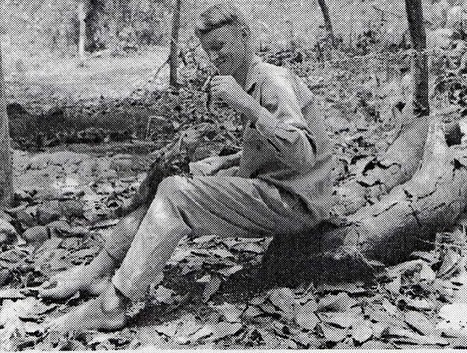
Nils Olof Hugo Wessberg was born in Eberswalde, Prussia, in 1919, weeks before the Treaty of Versailles redrew the map of Europe. He grew up in Sweden, served as an army officer, and spent his young adulthood as a restless outdoor enthusiast and committed vegetarian in a country still gray from war. Karen Mogensen, born in Denmark, shared his unease with post-war Europe's cramped cities and the continent's hunger for industrial reconstruction. They married in Sweden in 1952 with a modest plan. To find tropical land where they could cultivate fruit trees, keep beehives, and live simply off what they grew.
In 1954 they sold everything and headed west. They wandered through Mexico, where immigration troubles cut their stay short. They drifted south through Guatemala, El Salvador, Nicaragua. By 1955 they reached Costa Rica, where a friend mentioned the southern tip of the Nicoya Peninsula. Remote, rugged, barely accessible by road. They took a boat from Puntarenas to the fishing village of Montezuma, stepped onto the beach, and looked up at dry hills striped with forest fragments. Olof went by Nicolás in Costa Rica, adapting one of his middle names to the language that would become home. The land was harsh. Water was scarce five months a year, the dry tropical forest shed its leaves like snakeskin in summer, and the nearest market was a day's travel. But it was theirs if they could hold it. They bought a small property near Cóbano and began planting native trees.
The idyll lasted two years. By the late 1950s, Costa Rica was hemorrhaging primary forest faster than any country in Central America. Development policy incentivized clearing. If you cut down the trees and ran cattle, the state recognized your claim. If you left forest standing, you were wasting land. Standing on their hilltop, Olof and Karen watched the tree line recede daily. Chainsaws echoed through valleys. Smoke rose from burn piles. Cattle grazed where jaguar tracks had been.
One afternoon in 1960, Olof hiked southwest to Cabo Blanco, the peninsula's southern tip, searching for native seeds. What he found was the last intact pocket of moist tropical forest on the southern Nicoya. 1,250 hectares of primary canopy sheltering spider monkeys, white-faced capuchins, anteaters, and two hundred species of birds. He also found fresh chainsaw marks on boundary trees and surveyor stakes hammered into the soil. Loggers had already drawn the map. They were coming. Walking back through the forest, Olof kept returning to a single question. If they were going to cut that forest also, where would all those animals go?
Wessberg walked back to Montezuma and told Karen they had to act. There was no national park service in Costa Rica. No environmental ministry. No legal framework for citizen conservation. The state's priority was agricultural expansion, and the forest was in the way. If they wanted Cabo Blanco to survive, they would have to invent the process themselves.
Part II. Inventing Conservation
The couple began with letters. Olof wrote to conservation societies in Sweden, Denmark, England, Switzerland, Austria, and the United States. He wrote to old friends, hiking clubs, university departments. He wrote to anyone who might understand that Costa Rica's last dry-to-wet forest ecotone was about to be cleared for cattle. The letters were methodical, factual, urgent. Here is the acreage, here are the species, here is the price per hectare, here is what will happen if we wait. Karen handled logistics, translating between Spanish and the Nordic languages they used for fundraising, managing correspondence, negotiating with landowners who thought they were insane.
An article in an English conservation magazine broke the dam. Donations began arriving from across the world. Small sums, mostly, from readers who would never see Cabo Blanco but understood what it meant to lose a forest. Over three years the Wessbergs raised thirty thousand dollars, enough to purchase the threatened land outright. They bought the property in 1963 under their own names, creating Costa Rica's first privately held conservation reserve. Now came the harder part. Convincing the government to make it permanent.
Costa Rica in the early 1960s had just completed the Inter-American Highway, but most of the country remained inaccessible by vehicle. Beyond a narrow forty-mile stretch of paved road radiating from San José, the rural interior was laced with ox-cart tracks rutted deep enough to shred jeep tires. No bridges crossed most rivers. The Nicoya Peninsula was particularly isolated. Reaching the capital from Montezuma required a boat passage across the Gulf of Nicoya to Puntarenas, then either the Pacific Railroad or a grinding bus ride through the Central Valley on roads that turned to impassable mud during the rainy season. The round trip consumed at minimum two full days, more if weather delayed the ferry or washed out the mountain passes.
Olof made countless trips through that exhausting journey because the government never answered his letters. He spent hours in ministry waiting rooms while functionaries shuffled papers and asked why anyone would want to lock up productive land. He built alliances one conversation at a time. Teachers, agronomists, journalists, low-level bureaucrats who understood that cattle ranching on steep coastal slopes was ecological suicide. He drafted decree language. He lobbied legislators. He wore a suit he could barely afford and spoke in the calm, factual cadence of someone who refuses to be dismissed.
On October 21, 1963, the government of Costa Rica signed into existence the Reserva Natural Absoluta Cabo Blanco. The first protected forest in the country, predating the National Parks Service by fourteen years. It was not a gift from the state. It was extraction by attrition, proof that two foreigners with no institutional power could force a nation to act against its own development doctrine. The reserve's main trail is still called El Sendero del Sueco, the Swede's Path. Locals named it that because Olof machete-cleared it himself, meter by meter, before the government hired a single ranger.
Part III. The Last Frontier
Olof Wessberg could have stopped. He was in his fifties, his health was fragile, and Cabo Blanco was secure. But by the early 1970s reports from the Osa Peninsula, Costa Rica's southwestern extremity, made clear that the country's richest remaining rainforest was being carved up by competing interests moving faster than any government could regulate. He accepted a contract from the Costa Rican state to survey the area, knowing full well it would put him in the crosshairs.
The Osa in 1975 was not the Nicoya of 1960. It was a frontier zone where law moved slowly and money moved fast. Osa Forest Products, a logging consortium, held concessions to clear-cut primary rainforest for export to Japanese buyers. The same landowners eyed the coast for luxury real-estate subdivision. Gold miners, drawn by deposits of 21-carat purity, tore up streambeds with hydraulic hoses, leaving mercury and silt in their wake. Former banana workers from the closed United Fruit plantations in Limón had migrated west, staking claims as squatters on land the state barely monitored. And threading through all of it were the speculators. Men who cleared forest, filed provisional titles, and flipped land to the next buyer before anyone checked the paperwork.
Wessberg's government survey threatened to freeze all of it. If Corcovado became a national park, the logging contracts would be void. The gold concessions would be revoked. The land grabs would be reversed. Every man who had bet money on Osa staying lawless now had a bureaucratic Swedish surveyor walking the forest with a notebook, counting trees and mapping watersheds that would make expropriation legally airtight.
Part IV. The Shallow Grave
The survey was supposed to take seven days. Karen stayed in Montezuma preparing for her birthday, which Olof had promised to be back for. He left with the young guide in mid-July, walking south from Puerto Jiménez into the dense primary forest that covered most of the peninsula. The terrain was punishing. Steep ridgelines dropped into narrow stream valleys choked with ferns and palms. Rain fell in torrential afternoon downpours that turned trails to mud within minutes. The heat was stifling under the canopy, and the undergrowth concealed everything from fer-de-lance snakes to jaguar trails. It was the kind of place where you kept your machete sharp and your guide close.
The first week passed. Then the second. Karen waited in Montezuma, growing uneasy. On July 22, the guide reappeared alone in Puerto Jiménez with a story that unraveled immediately. Separated in the forest, he claimed. Maybe lost. Maybe sent ahead. His account changed depending on who asked. Local authorities were suspicious but lacked the manpower to launch a search. Karen took the boat from Montezuma herself, arriving in Puerto Jiménez to a community that already knew something terrible had happened. She mobilized everyone she could find. Fishermen, farmers, former loggers who knew the trails. They fanned out into Corcovado's interior, calling Olof's name into the green silence.
The search dragged into August. Tropical decomposition is fast and total. By the time searchers found the shallow grave in a ravine, weeks had passed. Only bones remained, along with the possessions Wessberg had carried. Compass, knife, canvas bag. The soil had been hastily scraped over him, enough to hide the body from casual passersby but not from anyone actually looking. The guide's story finally collapsed under interrogation. Men had approached him before the survey began, he admitted. Local operatives with ties to the logging and mining interests. Money had been offered. Threats had been made. The message was clear. Wessberg's government report could not be allowed to reach San José. When pressed for justification, the guide claimed he was acting on behalf of Osa Peninsula residents who did not want their land to become a national park. It was a convenient fiction. The men who paid him were not local settlers defending their homesteads. They were outside investors with logging contracts and gold concessions, framing murder as populist resistance.
The guide was arrested, tried, and convicted of murder. He was sentenced to prison in San José, far from the Osa. Within weeks of his incarceration, another inmate killed him. The official explanation was a personal dispute, but everyone understood the actual message. Loose ends in frontier zones get tied off quickly. The names of the men who had paid for Wessberg's murder were never formally recorded in court documents, but the small community of Puerto Jiménez knew exactly which logging bosses and gold mining concessionaires had the most to lose from a national park decree. No one was ever charged with conspiracy. The case was closed.
But the murder backfired spectacularly. President Daniel Oduber had been cautious about Corcovado, balancing conservation pressure against economic interests and the practical nightmare of expropriating dozens of competing claims. Wessberg's death eliminated that hesitation. On October 24, 1975, three months after the body was found, Oduber signed Executive Decree 5357-A, creating Corcovado National Park and protecting 42,469 hectares. The decree explicitly invoked the Swedish conservationist who had "given his life" for Costa Rica's forests. Violence intended to silence protection had instead made it politically untouchable. The men who ordered the assassination had miscalculated catastrophically. A living surveyor could be pressured, delayed, or legally challenged. A martyred one became a moral obligation. More than thirty times the size of Cabo Blanco.
Part V. What Karen Built
Karen Mogensen did not leave. She grieved, then she organized. For forty years after Olof's murder she continued the work they had started. Exactly as long defending what they built as they spent together creating it. She operated a modest lodge on their Montezuma property to fund reforestation and watershed protection. She became a quiet fixture in Costa Rica's conservation movement. The Danish widow who planted trees and refused interviews. When she died in 1994, she bequeathed the original forty-hectare property to the state. The government designated it the Nicolás Wessberg Absolute Natural Reserve. Today it protects 63 hectares of coastal forest that the couple had reforested by hand, grown from their original homestead into a functioning ecological reserve. Karen is buried there alongside Olof, whose remains were moved from the Osa to rest in the forest they saved together.
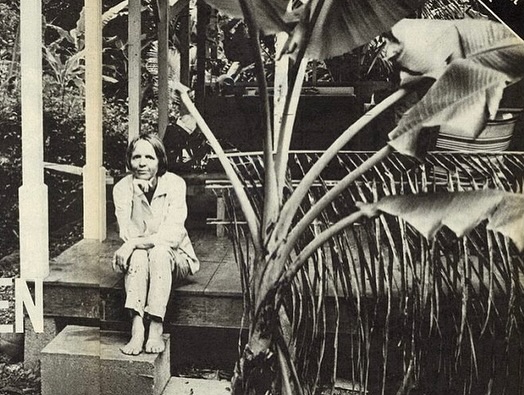
Today the Reserva Karen Mogensen, established later in the Nicoya highlands, operates as a community-run model of watershed restoration. Founded in 1991 by ASEPALECO, a local conservation association, the reserve took advantage of an unexpected opportunity. When the international beef market crashed in the early 1990s, highland cattle ranchers abandoned their properties. ASEPALECO systematically purchased the abandoned land at low prices, protecting 960 hectares that now supply water to five communities. The strategy the Wessbergs helped pioneer in 1960 remains one tool among many. Private fundraising. Land acquisition. Relentless pressure on the state. But Costa Rican conservationists have built far beyond that foundation, developing sophisticated legal frameworks, scientific institutions, and community-led models that the Wessbergs never imagined. The modern conservation movement is Costa Rican, built by Costa Ricans, though it includes the Wessbergs' early proof that citizens could force state action when bureaucracy moved too slowly.
Coda. Paradise Is Defended
Olof Wessberg never held public office. He never directed a ministry or commanded a budget. He was a Swedish homesteader with a typewriter, a machete, and an unshakeable belief that forests could be saved by ordinary people willing to do grinding, unglamorous work. His legacy is not inspirational. It is operational. He proved that when the state refuses to act, citizens can force its hand. Not through revolution, but through the slow accumulation of property rights, legal pressure, and international shame.
The contemporary conservation battles in Costa Rica, whether at Paso de la Danta or the fragmented corridors of the Brunca region, still echo his methods. File complaints. Document violations. Raise money. Buy land. Pressure officials. Repeat. The institutional framework is stronger now. Article 50 guarantees environmental standing, SINAC exists to manage protected areas, and international donors fund large-scale rewilding projects. But the enforcement gaps are the same. The state still prioritizes development. Forests still fall. And defending them still requires people willing to walk into conflict zones with notebooks and machetes, knowing the work might cost them everything.
Wessberg's murder was not an aberration. It was a reminder that conservation in extraction economies is always contested, and that the people who stand between chainsaws and primary forest sometimes pay with their lives. But the difference between 1975 and now is that his death catalyzed broader action. Between 1974 and 1978, protected areas in Costa Rica expanded from 3% to 12% of national territory. The murder coincided with what conservationists call the "golden years" of park creation, when the political cost of opposing protection became too high. Corcovado was not just saved. It became impossible to reverse. The next generation of defenders inherits not just parks, but a playbook and a warning. Paradise is not pristine. It is defended. And defense requires more than goodwill. It requires strategy, money, legal tools, and the stubborn refusal to yield a single hectare just because enforcement is weak.
If a Scandinavian farmer with a notebook could drag the Costa Rican state toward protection in 1963, then a network armed with satellite imagery, legal standing, and international pressure can finish what he started. The forests that remain are not accidents of geography. They are the cumulative result of people who refused to wait for someone else to act. Wessberg is not a saint. He is a schematic. And the schematic still works.
References & Further Reading
Academic & Scholarly Publications
Peer-reviewed article by former Minister of Environment examining the biographical contributions of Wessberg and Mogensen to Costa Rican conservation, including their arrival in 1955, discovery of Cabo Blanco's threatened forest, and establishment of Costa Rica's first protected area.
Swedish journalist's detailed historical account of the couple's conservation efforts, documenting their transition from agricultural homesteaders to pioneering conservationists who fundamentally shaped Costa Rica's protected areas movement.
Scholarly analysis examining conservation displacement in Costa Rica, including discussion of early conservation efforts by the Wessbergs and the complex social dynamics of protected area establishment.
Historical & Biographical Sources
Contemporary conservation organization's detailed documentation of the Wessbergs' life, work, and legacy in establishing Costa Rica's first protected areas.
Historical overview tracing the development of Costa Rica's protected areas from the 1960s establishment of Cabo Blanco through the "golden years" of the 1970s-80s when most national parks were created.
Field guide and biographical narrative covering the couple's journey to Costa Rica, conservation efforts, and the reserves established in their honor.
Biographical profile examining Wessberg's conservation work, the circumstances of his murder, and the creation of the reserve bearing his name.
Editorial coverage from Costa Rica's leading newspaper examining the Wessbergs' enduring influence on the country's conservation movement and protected areas system.
Conservation History & Policy
Academic journal article examining the role of small entrepreneurs and grassroots conservationists like the Wessbergs in establishing Costa Rica's ecotourism model and protected areas system.
Historical analysis tracing the influence of European conservationists, particularly the Wessbergs, in shaping Costa Rica's protected areas strategy and establishing citizen-led conservation models.
Community Conservation Models
Community-based organization founded in 1991 that manages the 960-hectare Karen Mogensen Reserve in the Nicoya highlands, continuing the Wessbergs' legacy through watershed protection, environmental education, and community-led conservation.
Documentation of the reserve's role protecting essential water sources for five local communities while demonstrating the viability of community-managed conservation in Costa Rica's Nicoya Peninsula.
Regional Context
Comprehensive overview of Costa Rica's first protected area, detailing its establishment by the Wessbergs, ecological significance, and ongoing conservation management.
Historical and ecological documentation of the park Wessberg died surveying, including its biodiversity, establishment following his murder, and current conservation status.
Regional historical documentation of logging operations, gold mining, and land conflicts on the Osa Peninsula during the 1970s that formed the backdrop to Wessberg's murder and the subsequent establishment of Corcovado.