The Man Who Made Ecotourism Work: Mario Boza's Economic Proof
An agronomist discovered that forests could be more valuable standing than cut, then spent his life proving it—turning ecotourism into Costa Rica's largest earner of foreign capital.
In 1968, a young Costa Rican graduate student named Mario Boza stood on a ridge in the Great Smoky Mountains National Park, watching American families stream from parking lots into ancient forest. He was 26 years old, an agronomist by training, a student from a small tropical nation that was, at that very moment, waging war on its own landscape. What Boza saw in Tennessee was not just a forest. He saw a pristine, protected wilderness, yes, but he also saw something more fundamental: a system.
He saw uniformed park rangers answering questions, managed trails weaving through protected wilderness, and visitor centers selling maps and postcards. Beyond the park boundaries, he saw hotels, restaurants, and shops lining the roads: a thriving local economy funded entirely by people who had traveled hundreds of miles and paid good money for the simple privilege of looking at trees. Not cutting them. Not burning them. Just looking.
For a man from Costa Rica, this was radical. He had left a home where the national consensus, from the small farmer to the halls of government, was that a forest was an obstacle. It was "unused" land, a green barrier to progress that must be cleared, burned, and converted into the productive engines of the age: cattle pasture and cropland. In the 1960s and 1970s, Costa Rica had one of the highest deforestation rates in the world. Its forests were not a resource; they were a problem to be solved with chainsaws and tractors.
Standing on a ridge in the Smokies, Boza had a revelation that was not romantic, but economic. He didn't just see "beautiful nature." He saw that conservation could be profitable. He saw that a standing forest, managed for visitors, could be worth far more than the lumber or beef it might otherwise produce. He returned to Costa Rica determined to start a national park service in his country, armed with this single idea: he would convince his nation to build a park system that would generate revenues from international tourism.
This was the core intellectual initiative of his life. He would become a heretic to his own training, arguing against the economic orthodoxy of his time. He did not yet know that his idea would pivot the entire economic identity of his country, that he would build a system of parks from nothing, or that he would champion innovative financial mechanisms to save them. He knew only that what he saw in the Smokies was not just a park, but a blueprint.
Part I: The Burning Land (1942-1969)
Mario Boza was born into a country that was actively destroying itself. The Costa Rica of the mid-20th century believed its wealth derived not from the biodiversity that filled its jungles (which was then seen as worthless) but from the agricultural soil beneath them.
The post-war development model was aggressive and extractive. Government policies explicitly supported linking development to agriculture, cattle ranching, and other 'basic' activities, which contributed to deforestation. Politically powerful ranching associations lobbied successfully for state support and against any restrictions. This was the era of the "war on trees." Imported technology, from tractors to machinery, was associated with the rate of forest clearing and seen as a metric of economic progress.
Into this world, Mario Boza trained for a career at the heart of the system. He graduated from the Universidad de Costa Rica in 1964 as an Agronomist Engineer. He was, by education, one of the very men tasked with maximizing the land's yield, a soldier in the army of production that saw forests as an enemy of progress. His profession was bananas and coffee, the engines of an economy that ran on cleared land.
This training made him an insider. He understood the economic arguments, the production models, and the political forces that were leveling his country. It also made him an effective revolutionary. He would not be an external activist, easily dismissed. He would be a heretic from within the establishment, an agronomist arguing that the most valuable "crop" Costa Rica could produce was the forest itself.
Boza's intellectual transformation began not in the forest, but in the classroom. After his agronomy degree, he enrolled at the Inter-American Institute of Agricultural Sciences (CATIE) in Turrialba, where he received his Master of Science in Forestry in 1968. There, he encountered the man who would arm him with the tools of revolution: Kenton Miller, an American forestry professor who was, in Boza's words, "a very good professor, a motivated professor, who motivated his students."
Miller was not a typical academic, sequestered in theory. He was a practitioner of applied conservation, building his approach one management plan at a time. At CATIE, Miller ran the wildland management program with a clear focus: teaching young Latin Americans not just why to save nature, but how. He gave Boza the blueprints. Miller taught Mario how to write a management plan for Poás, walking him through visitor capacity calculations, trail design, and budget projections. Miller had already written a management plan for Santa Rosa at the request of Costa Rica's tourism institute. More importantly, he took his students out of the classroom entirely, hauling them to Cahuita every semester to develop management protocols for a park that didn't yet exist, training them to see forests not as abstract ecological systems but as manageable, functional, economically viable public assets.
Miller's most significant contribution, however, may have been a book: Planning National Parks for Ecodevelopment in Latin America. It was a 625-page comprehensive manual, a point-by-point guide on how you do parks, on how you discuss their situation, their planning, their objectives and the concept of development for that park.
Miller, along with his colleague Gerardo Budowski, was articulating the very notions of 'ecodevelopment' and park-based conservation driven by revenues from responsible nature tourism. They were arguing against the prevailing conservationist wisdom: that valuable biological areas should be cordoned off from human visitation. Instead, they proposed a symbiotic relationship where non-extractive land use (tourism) would generate revenue, which in turn would create community acceptance for conservation over agricultural development.
It was during his time at CATIE, in 1968, that Miller sent Boza to the United States to see these theories in practice. Standing in the Great Smoky Mountains, watching the machinery of American park management turn tourists into revenue and revenue into conservation, Boza experienced the transformation from student to convert. The theories he'd learned in Miller's classroom were not abstract ideals—they were operational realities generating millions of dollars and protecting thousands of acres. His genius was in being the young graduate student who not only absorbed this theory but possessed the political tenacity to make it national policy in Costa Rica. He would be the one to drag ecodevelopment out of the university and into the legislature.
Boza's Master's thesis was his first-day-of-battle plan. It was not a theoretical exercise; it was a practical, political manifesto. The subject: a plan for the management of a national park on Poas, one of the volcanoes near San José.
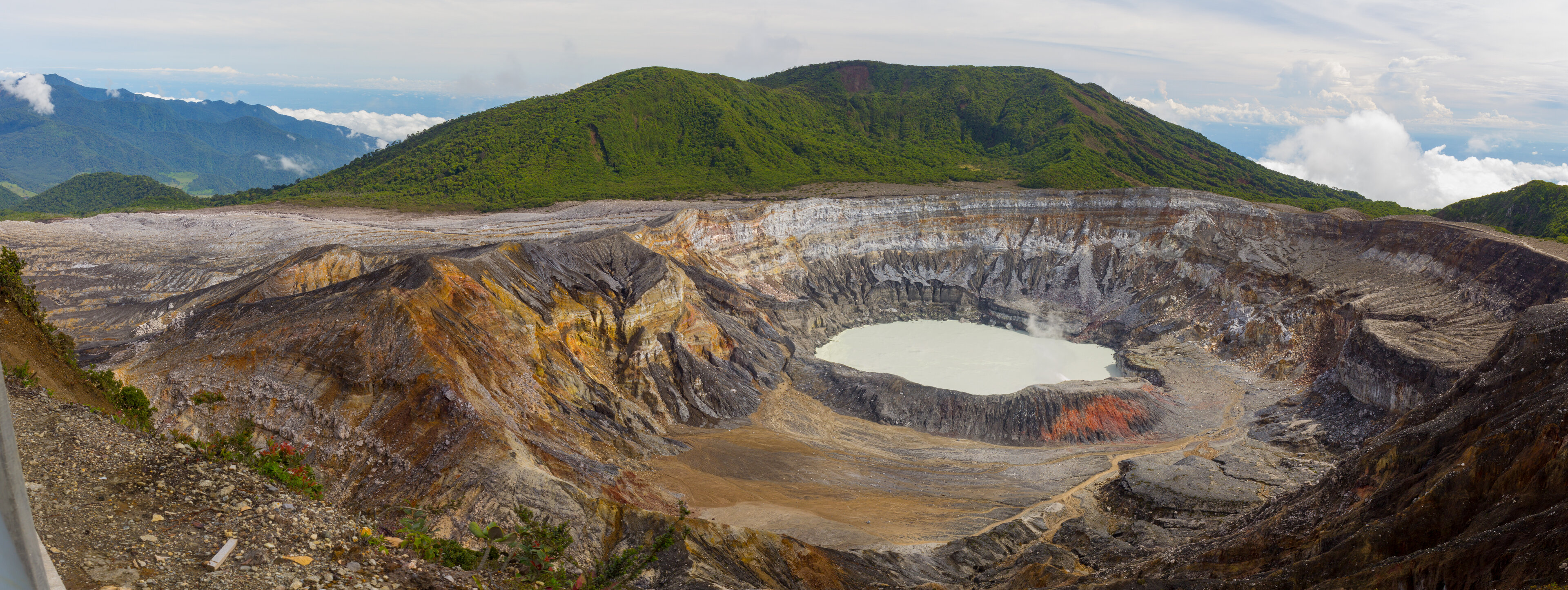
The choice of Poás was carefully calculated. The volcano was (and is) an accessible marvel: a 2,700-meter-high colossus with one of the world's largest active craters, boiling with acid lakes and explosive geysers, all wrapped in a dense cloud forest of giant ferns and gnarled trees. Critically, it was just a 1.5-hour drive from San José, the capital. This made it an ideal pilot project, a place where the nation's political and urban elite (including legislators who would vote on park budgets) could personally visit and see the value of conservation with their own eyes.
But Poás was also a target, and Boza was not the only one with plans for it. The land surrounding the crater was recognized as having considerable potential for hydrological projects and geothermal energy extraction. Engineers eyed the volcano's heat and water as untapped industrial resources. The fight for Poás was a direct confrontation between two fundamentally incompatible visions of development: extractive energy production versus non-extractive ecotourism. Boza was arguing that the volcano was worth more intact and visited than drilled and harnessed. It was a radical claim in a country that measured progress in megawatts and export tonnage.
Boza's thesis, crafted with the tools Kenton Miller had given him, was the technical argument for protection. It was not an abstract ecological treatise; it was a concrete business plan, written as if Poás were already a functioning national park, complete with management protocols, staffing requirements, visitor projections, and revenue forecasts. It laid out exactly how much money the park could generate from entrance fees and tourism spending. But Boza knew that a technical plan, no matter how brilliant, was useless if it just gathered dust on a shelf. The thesis had to become a weapon in a political fight.
So, in 1969, even before graduating, he became a political strategist. He wrote opinion pieces and editorials for Costa Rica's newspapers, making the public case for the forestry law under debate in the Legislative Assembly and arguing that Costa Rica should establish a national park system that would generate revenues from international tourism. This was a two-pronged campaign. With his thesis, he built the technical case for bureaucrats and legislators. With his newspaper articles, he built public support and political will.
This dual-pronged approach (marrying technical expertise with savvy public relations) would become his hallmark. He was lobbying for the very 1969 Forestry Law that would, in turn, create the legal and administrative basis for his life's work. He was not just writing a thesis; he was writing the job description for a department that didn't exist yet, a job he was about to create for himself.
Part II: The Green Republic (1970-1982)
The 1969 Forestry Law passed, explicitly allowed for the creation of the National Parks Department within the agriculture ministry. In 1970, Mario Boza, at the age of 27, was named its first director. For a time, he was its only employee.
Colleagues would later describe Boza as "a kick-start leader," a man whose style was characterized by relentless forward motion. He was outspoken, sincere when he spoke, qualities that would bring him both success and personal trouble throughout his career. Where some conservationists were content to write papers and attend conferences, Boza was a man of action, impatient with bureaucratic delay, willing to bend rules and exploit political opportunities to get land protected before it was too late.
The task before him was impossible. He had almost no local resources. He had a title, a desk, and a mandate to fight the country's most powerful economic forces: ranchers, gold panners, hunters, and squatters. He knew he could not win this fight with scientific papers. He needed power.
He found it by forming a fellowship that would, from nothing, build one of the world's most celebrated conservation systems. This triumvirate consisted of Mario Boza, the visionary and strategist; Alvaro Ugalde, the father of the national parks and on-the-ground commander who would physically face down squatters at Santa Rosa and fight developers at Corcovado; and Karen Olsen de Figueres, the First Lady, wife of President José "Pepe" Figueres.
Boza and Ugalde, in their own histories, gave Figueres a telling nickname: the "fairy godmother" of the parks. The name was not just a term of endearment; it was a precise description of her role. She was their political protector, their champion in the halls of power. As Ugalde recalled, "Doña Karen became our fairy godmother during the third administration of don Pepe from 1970-1974."
The two young men were powerless against the entrenched interests they were challenging. They needed elite political air cover to survive. Karen Figueres provided it. She had her own environmentalist agenda and vigorously supported the introduction of new legislation. She served on conservation commissions and provided the political backing that allowed Boza to turn his tiny department into a potent national force.
The alliance had its first victories in rapid succession. On September 24, 1970, Tortuguero was established as one of Costa Rica's first national parks to protect critical sea turtle nesting beaches. Just months later, on January 25, 1971, Poás Volcano National Park was formally established in its expanded form. Boza's thesis had become law. The revolution had its first pieces of land.
With Poás and Tortuguero secured, Boza and Ugalde turned to their next target: Santa Rosa. This would be their first great political triumph, demonstrating how to fuse ecological goals with nationalist sentiment.
The goal was twofold. First, to protect the historical setting of the Battle of Santa Rosa (March 20, 1856), a foundational event in Costa Rican history where the nation's forces defeated the filibuster William Walker. Second, to protect the land it sat on: one of the last and largest remaining tracts of tropical dry forest in Central America.
The path was already partially cleared. Hacienda Santa Rosa, one of Costa Rica's oldest and largest ranches dating back to 1663, had ceased cattle operations in 1966. That same year, La Casona—the historic house where Costa Rican forces had defeated William Walker's filibuster army in 1856—was declared a National Monument. The land was owned by Luis Roberto Gallegos, a Costa Rican rancher who was the last private owner of the historic property.
A lesser strategist would have made a purely ecological argument about the dry forest and struggled to gain traction. Boza and his team (including Ugalde, who would serve as the park's first superintendent, and his mentor Kenton Miller, who had written a management plan for the site) did something far more effective. They performed an act of political jiu-jitsu, fusing their ecological goal with an unassailable nationalist one.
They weren't just saving trees; they were saving a national shrine. They were protecting the very cradle of Costa Rican sovereignty, the site where the nation had proven its independence against foreign invasion. The argument was irresistible: national patrimony demanded protection, and that protection would also save one of Central America's last great tropical dry forests.
Santa Rosa National Park was established on March 27, 1971, becoming Costa Rica's first national park dedicated to protecting both historical and ecological heritage. Nearly a decade later, in 1979, the park would be significantly expanded with the addition of the Murciélago sector—land that had belonged to Nicaragua's dictator Anastasio Somoza and was expropriated after his overthrow. But the original 1971 founding was Boza and Ugalde's demonstration that conservation could succeed by aligning with, rather than opposing, national identity.
This victory also cemented the social component of their model. Ugalde, as the on-the-ground administrator, had to deal with some 40 families who were living inside the park. He did not simply evict them. He engaged in conversations and agreements, advised them on their legal rights to compensation, and guided their relocation with the land-settlement institute. This experience led Ugalde to a foundational conclusion that would guide their work for decades: there can be no conservation without justice.
The golden years of the 1970s and 1980s saw a rapid proliferation of new parks. But Boza's work was defined by a pragmatic, almost obsessive, focus on sustainability. He was not on a crusade to simply declare parks and walk away. He was building an institution.
His colleagues noted that Boza was careful to make each area operational, with a budget and staff, before moving on to the next. This was his core philosophy in action. A park that could not pay for itself, a park that was not operational, was just a paper designation, vulnerable to the very ranchers and miners they were trying to keep out.
This was the full-scale implementation of his ecodevelopment idea. His entire strategy represented a philosophical change in national thinking, one that sought to embed the parks directly into the nation's larger socioeconomic context. The goal was to make the parks an economic magnet for tourists, to turn the Pura Vida (Pure Life) into Pura Plata (Pure Money).
The gamble paid off beyond what he could have imagined. International visitor numbers climbed from under 300,000 in the mid-1980s to over 435,000 by 1990. The parks became the magnet. Boza's own bilingual book, The National Parks of Costa Rica, first published in 1981 and running through multiple editions, became a promotional tool itself, circulating through tour operators and libraries worldwide. The publicity from Costa Rica's political stability and its new green identity brought global attention to a nation marketing itself not as a source of cheap commodities but as a living museum of biodiversity.
By 1995, tourism revenues had overtaken bananas and coffee to become Costa Rica's largest earner of foreign capital. Tourism had clearly become the top foreign exchange earner, and by 1999, tourism was generating over $1 billion annually, continuing to grow rapidly through the early 2000s. This vindicated the vision from the Smokies. The ecotourism industry, which Boza had essentially willed into existence, had fundamentally reordered his country's economy. The man who stood on that Tennessee ridge had been proven correct: standing forests were worth far more than cut ones.
Boza had not just built a park system. He had built a national brand. He had engineered a new identity for his country as the "Green Republic". This identity, this idea of Costa Rica, itself became the nation's most valuable export. He had proven, in the most undeniable terms, that a country's greatest wealth could, in fact, be its "riches": its standing, living, natural resources.
Part III: The Pragmatist (1983-2021)
The 1980s brought a new, existential crisis. A global recession and soaring oil prices plunged Latin America into a crippling debt crisis, and Costa Rica was no exception. The nation's fiscal problems put the park system, and all the gains of the last decade, in extreme peril. Government budgets were slashed, and conservation was seen as a luxury.
Boza, now an indefatigable and internationally recognized leader, had to innovate again. He was now President of the National Parks Foundation (FPN), an NGO created to support the park system. He understood that if the government could no longer fund the parks, he would have to find the money elsewhere. His solution was just as revolutionary as ecotourism, but this time, he turned to the world of high finance.
The problem, he reasoned, was debt. The solution, therefore, must be the debt itself.
This was the conservation opportunity born from fiscal problems: the debt-for-nature swap. The concept had been pioneered by Thomas Lovejoy and first implemented in Bolivia in 1987, but Costa Rica, under Boza's leadership at the National Parks Foundation, would implement one of the most ambitious and successful programs in the world.
The mechanism was simple but effective. The FPN, under Boza's leadership, acted as the local negotiator and implementer. Here's how it worked in practice: international conservation groups (like The Nature Conservancy or the World Wildlife Fund) and foreign governments would go on the secondary debt market and purchase Costa Rica's foreign debt at a steep discount. Costa Rica's debt was trading for as little as 15-17 cents on the dollar because international creditors had essentially given up hope of full repayment. The conservationists would buy, say, $10 million in Costa Rican debt for just $1.7 million. They would then approach the Costa Rican government and offer to forgive that entire $10 million debt, tearing up the IOU. In return, the Costa Rican central bank, which no longer had to pay that $10 million in hard foreign currency, would instead pay a negotiated amount (often around $5 million) in local currency bonds to the National Parks Foundation. The FPN then used this new river of colones for its core mission: land purchase, park operations, and ranger salaries.
The program grew rapidly. Between 1988 and 1990 alone, the FPN, working with partners including The Nature Conservancy, the World Wildlife Fund, USAID, and Sweden's development agency, catalyzed multiple major swaps worth tens of millions in face value debt. Over the following years, Costa Rica would retire more than $68 million in total debt through these instruments. Everyone won: international creditors got something rather than nothing, conservation groups leveraged small investments into massive local funding, the Costa Rican government reduced its crushing debt burden, and Boza's parks got the financial lifeline they desperately needed. It was financial alchemy, and Costa Rica became the global model.
This was the second great pivot of Boza's career. Phase one was Ecology as Tourism. Phase two was Ecology as High Finance. He had learned, once again, to speak the language of power. In the 1970s, that language was politics (the "fairy godmother"). In the 1980s debt crisis, the language was finance. He had created a mechanism that turned a national liability (crippling debt) into a conservation asset (a funded, expanding jungle).
Boza's success and pragmatism eventually led him from activism to the heart of the establishment. From 1990 to 1994, he served as Vice Minister of Natural Resources, Energy and Mines (MIRENEM, a ministry that would later evolve into MINAE). And it was here, at the peak of his political power, that the man who built the "Green Republic" faced his most complex and compromising test.
The Ston Forestal debacle was a fierce conflict that struck at the heart of Boza's legacy. A powerful US-based paper giant, Stone Container Corporation (operating as Ston Forestal S.A.), had negotiated plans for a massive industrial forestry project in the Osa Peninsula: 60,000 hectares total, with plans to convert 24,000 hectares into monoculture plantations of melina and gmelina trees for wood chips and pulp. The Osa is one of the most biodiverse places on Earth, home to Corcovado National Park (which Ugalde had fought to save decades earlier), and the plan to replace its rich, diverse secondary forest with rows of identical pulpwood trees horrified local farmers, small-scale tourism entrepreneurs, and environmentalists who saw it as industrial colonization masquerading as "reforestation."
But where was Mario Boza, the conservation hero who had saved the Osa before? He was now a politician, Vice Minister in the Calderón administration (1990-1994), and that administration strongly supported the Ston project as economic development.
The man who had once been a famous "kick-start leader," impatient with bureaucratic delay, was now practicing the careful, evasive language of bureaucracy itself. When critics (including environmental activists and opposition deputies) met with him to protest the project, they found a very different Mario Boza. He assured them the project would be accompanied by "serious environmental impact studies" before moving forward: a classic political deflection that promised process while avoiding substance. Observers described his behavior, and that of his minister, as "PR-like," more focused on managing public perception than addressing the fundamental contradiction. In one documented exchange, Boza wrote a letter to a critical deputy defending the project's bona fides, arguing that Ston's industrial plantation would create jobs and be a form of productive land use.
He was, in a tragic sense, trapped by his own successful philosophy. The government, including Boza's ministry, justified the Ston project using the very language Boza had pioneered. The project, they argued, was a form of "ecodevelopment": it was integrating forest management with economic development, creating employment in a poor region, and practicing "reforestation." It didn't matter that these trees were a monoculture destined for the chipper, not a diverse ecosystem. It didn't matter that industrial forestry is fundamentally different from conservation. The economic development framing that Boza had used to build political support for conservation was now being used to justify its destruction.
The revolutionary had become the establishment, and he was now forced to manage the messy, imperfect compromises of the very ecodevelopment model he had championed. The nuance was lost. The man who had once fought to save Corcovado from gold miners was now in the impossible position of defending an industrial mega-project on Corcovado's doorstep. Local resistance, led by farmers and small tourism operators who understood their livelihoods depended on intact ecosystems (the very argument Boza had taught Costa Rica), eventually helped defeat the Ston project. But the damage to Boza's reputation among the environmental community was real.
The Ston Forestal affair was not a simple story of a hero "selling out." It was the far more tragic and human story of a successful idealist's arc. Boza's pragmatic model, designed to force a compromise between ecology and industry, to speak the language of economics and development in order to save nature, had created a "Green Republic" that was, in the end, still a republic. It still had to negotiate. It still had to compromise. And sometimes, the compromises cut against the very forests the system was designed to protect.
Boza did not let the compromises of politics define the end of his career. After leaving government, his work entered its third, and final, intellectual phase. His outspoken sincerity had brought him personal trouble throughout his career, but he would not be silenced. He now moved to the sides, as a colleague put it, and began to shoot from there.
His vision expanded beyond the borders of his own country's parks. He had been a key player in a logical, three-decade evolution of conservation science. In the 1970s, he established the national parks, saving critical, isolated "islands" of biodiversity from the surrounding sea of deforestation. In the 1980s, he implemented innovative funding mechanisms—ecotourism and debt-for-nature swaps—to make these islands economically viable. By the 1990s, conservation science itself was shifting. Thomas Lovejoy's groundbreaking work on habitat fragmentation was demonstrating what many ecologists had suspected: isolated parks, no matter how well-funded, would eventually fail. Species trapped within them could not migrate to adapt to climate change, could not maintain genetic diversity through interbreeding with distant populations, could not recolonize after local extinctions. Without connectivity, the parks Boza had fought so hard to create were becoming beautiful prisons. Boza understood this, and his final phase of work focused on championing connectivity.
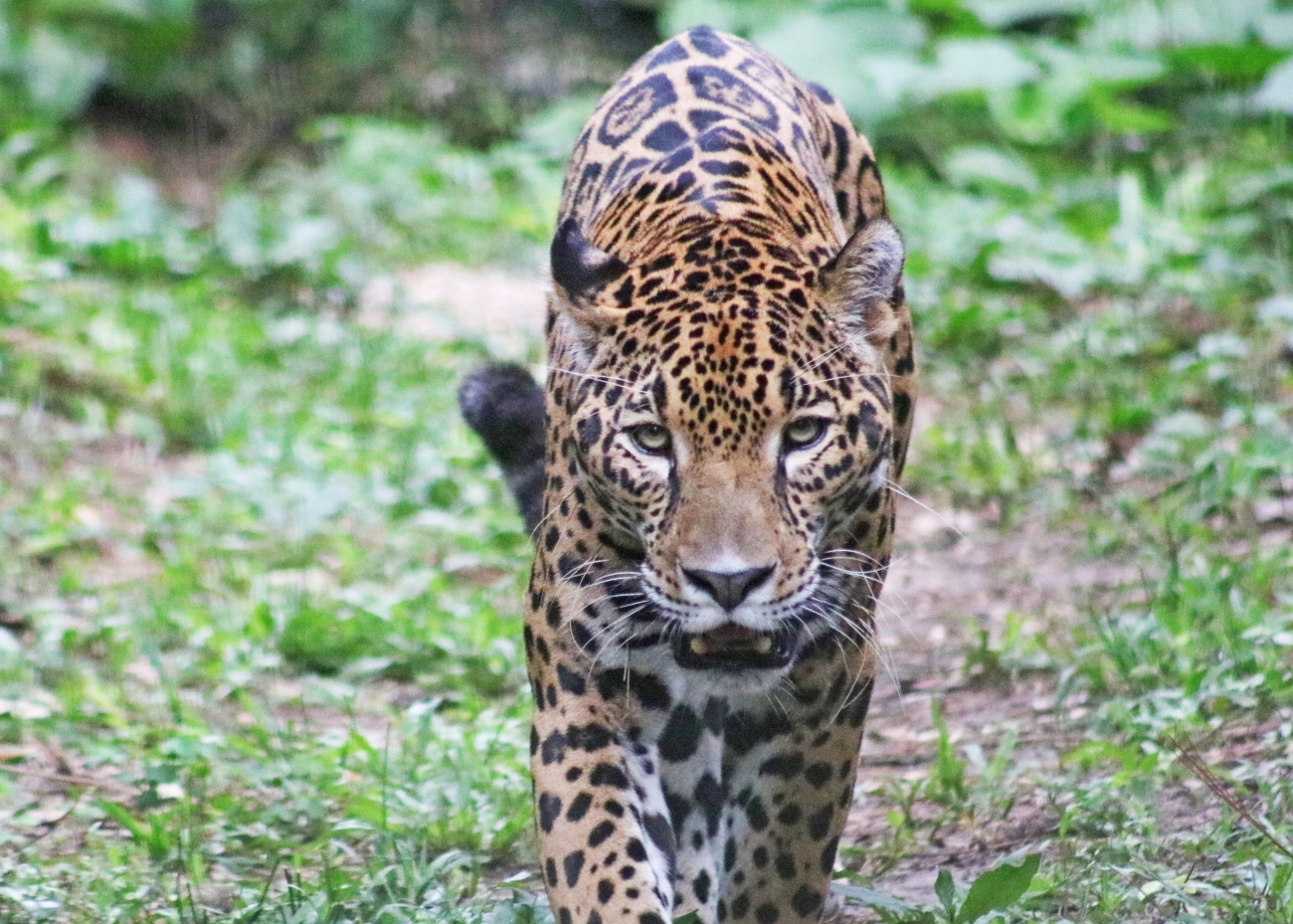
Through the Wildlife Conservation Society, Boza served as coordinator of the Mesoamerican Biological Corridor Program, a multinational initiative spanning eight countries from Mexico to Panama. This continental-scale project aimed to create a "green" corridor linking parks and protected areas across national boundaries, allowing jaguars, tapirs, and harpy eagles to move as they always had, indifferent to human borders. It was conservation thinking at ecosystem scale, recognizing that nature operates as a system, not a collection of discrete reserves. He was now working to save the web itself, not just individual strands.
His focus also sharpened from places to species, from the abstract to the specific. As Vice Minister, he had established Parque Nacional Marino Las Baulas (Las Baulas National Marine Park) by executive decree in 1991 to protect the nesting beaches of leatherback sea turtles. These creatures, unchanged for 100 million years, were crashing toward extinction, their populations collapsing due to fishing bycatch, coastal development, and egg poaching. Now, in his post-government life, he co-founded The Leatherback Trust, an NGO dedicated to protecting that park and its critically endangered namesake. It was conservation at its most urgent and immediate: not grand continental corridors, but the nightly vigil on dark beaches, protecting individual turtle nests from poachers, one clutch of eggs at a time.
He had become the guiding light and mentor to countless students. By the 1980s, his achievements had already earned him international recognition: the J. Paul Getty Wildlife Conservation Prize in 1983, presented by US President Ronald Reagan, alongside his colleague Álvaro Ugalde. Later in his career, he received honorary doctorates from institutions like Drexel University. He was the honored elder of a movement he had created.
Mario Boza died on October 29, 2021, after a battle with cancer. He lived to see his heresy become orthodoxy: Costa Rica's forest cover rebounded to nearly 60%, more than a quarter of the country's land is protected, and the nation he saved is now officially a carbon sink. Yet these gains remain fragile—luxury development pressures protected areas, illegal logging persists, and the ecotourism model he championed can strain the very ecosystems it was designed to save. His legacy is not written in stone, but in soil, and in the more than 160 protected areas he and Álvaro Ugalde willed into existence. He taught his country that conservation was not charity, but the most profitable economic decision it could make. The work is never finished.
References & Further Reading
Academic & Scholarly Publications
Peer-reviewed biographical article examining Boza's role as visionary in opening Costa Rica to nature-based tourism, including his academic formation at CATIE under Kenton Miller, his 1969 thesis on Poás management, and his strategic approach to building the national park system through economic arguments.
Scholarly examination of Boza's tenure as founding director of the National Parks Department from 1970, documenting his work alongside Álvaro Ugalde to establish the first four parks (Poás, Santa Rosa, Tortuguero, Cahuita) and build institutional capacity with minimal resources.
Boza's own retrospective article analyzing twenty years of Costa Rica's park system development, including discussion of the ecotourism model, debt-for-nature swaps, and challenges of balancing conservation with economic development pressures.
Critical scholarly analysis examining the social costs of park creation in Costa Rica, including displacement of rural communities and the complex negotiations required by conservationists like Boza and Ugalde to balance ecological and social justice concerns.
Academic analysis of the institutional framework that supported Latin American conservation efforts, including CATIE's wildland management program under Kenton Miller where Boza received his training and developed the intellectual tools for park system design.
Official Recognition & Awards
Official White House transcript of President Reagan presenting the seventh annual Getty Prize to Mario Boza and Álvaro Ugalde on July 25, 1983, describing the award as "often likened to a Nobel Prize for conservation" and honoring their work in establishing Costa Rica's park system.
Historical & Biographical Sources
Obituary and tribute by Costa Rica's leading newspaper upon Boza's death on October 29, 2021, at age 79, documenting his fifty-year career in conservation and the presidential recognition of his foundational role in creating the national park system.
Institutional tribute from Costa Rica's National University documenting Boza's academic career, his work promoting conservation education for park rangers, and his role as professor and mentor in wildlife conservation and management programs.
Historical overview tracing the development of Costa Rica's protected areas from the 1970 creation of the National Parks Department under Boza through the rapid expansion of the 1970s-80s and the evolution to modern SINAC administration.
Proposal to honor both Boza and Ugalde through naming of marine reserve in Osa Peninsula, examining their parallel careers, collaborative work establishing the park system, and continuing legacy in Costa Rican conservation.
Conservation History & Policy
Historical analysis examining how Boza and Ugalde's scientific approach to park planning created the foundation for Costa Rica's ecotourism industry, including the strategic decision to make parks economically self-sustaining through tourism revenue rather than moral conservation arguments alone.
Scholarly examination of the Ston Forestal controversy during Boza's tenure as Vice Minister (1990-1994), analyzing the complex tensions between conservation ideology and economic development pragmatism that defined his later career and the compromises inherent in the ecodevelopment model.
Personal account by former Environment Minister Alvaro Umaña examining the debt-for-nature swap mechanism pioneered by Boza through the National Parks Foundation in the 1980s debt crisis, including technical details of how foreign debt was purchased at discount and converted to local conservation funding.
National Parks & Protected Areas
Historical documentation of Hacienda Santa Rosa dating to 1663, noting Luis Roberto Gallegos as the last private owner before the property became Santa Rosa National Park in 1971, and confirming agricultural and livestock activities ceased in 1966 when La Casona was declared a National Monument.
Official government documentation of Santa Rosa National Park establishment in 1971 to protect the site of the 1856 Battle of Santa Rosa, and the 1979 expansion adding the Murciélago sector—land expropriated from Nicaraguan dictator Anastasio Somoza after his overthrow.
Official government agency managing Costa Rica's more than 160 protected areas encompassing 25% of national territory, documenting the expansion of the park system that Boza and Ugalde initiated in 1970.
Forest Cover & Environmental Statistics
Environmental analysis documenting Costa Rica's forest recovery from 21% coverage in the 1980s to nearly 60% today, attributing the transformation to the national park system and payment for ecosystem services programs that Boza's economic model made politically viable.
World Bank analysis examining Costa Rica's transformation from having one of the world's highest deforestation rates in the 1970s-80s to achieving 57% forest cover, with more than 25% of land under protection, validating Boza's thesis that conservation could be economically profitable.
Books & Monographs
Comprehensive scholarly history of Costa Rican conservation featuring extensive coverage of Boza's role in creating the park system, based on interviews, archival research, and policy analysis examining the transformation from one of the world's highest deforestation rates to a conservation model.
Boza's landmark bilingual publication documenting Costa Rica's nascent park system, which became a key promotional tool for the emerging ecotourism industry. Through multiple editions, this book helped establish Costa Rica's international reputation as a nature tourism destination and provided the economic vindication of Boza's vision that standing forests generate more value than cleared land.
Foundational 625-page textbook by Boza's mentor at CATIE that established the intellectual framework for Latin American park planning. Includes extensive case studies of Costa Rica's parks, including detailed development plans for Santa Rosa National Park. This book provided the methodological toolkit that Boza applied to build Costa Rica's park system from 1970 onwards.