The Dictionary Maker: Leslie Holdridge and the Language of Life Zones
Before Costa Rica could save its forests, it needed to name them. Over a lifetime, one botanist learned to read climate data as a map of where plants could live.
Stand at sea level on Costa Rica's Caribbean coast, where annual rainfall averages about 4,100 millimeters and mean annual temperature is near 24°C. Much of the lowland is tropical rain forest. Climb to the Continental Divide and the air cools while rainfall and cloud immersion vary sharply by slope and location; lower montane rain forest occupies parts of this highland gradient. Keep climbing to around 3,000 meters on the slopes of Chirripó. Mean annual temperatures are near 11°C, and rainfall varies greatly by slope. Here montane forest gives way toward páramo across the upper-elevation transition. Three ecosystems, three different assemblages of species, three distinct worlds.
By 1947, scientists already had global climate and vegetation classifications, including Köppen's. Holdridge proposed a different kind of Rosetta Stone: an explicitly bioclimatic system designed to relate plant formations to a small set of climatic measurements.
Leslie Holdridge gave them that language. His life zones classification system, published in a two-page paper in Science in 1947, became the dictionary for tropical ecology. It reduced the overwhelming complexity of Earth's vegetation patterns to an elegant formula: mean annual biotemperature, total annual precipitation, and the ratio between them. Those variables place a site within a climatic life zone, from rain forest to desert or tundra. Actual vegetation within that zone can still vary with soils, drainage, open water, fog and disturbance. For a country like Costa Rica, which packs twelve distinct life zones into a territory smaller than West Virginia, Holdridge's system became an influential tool in Costa Rican conservation planning, alongside later vegetation, species, land-cover and marine classifications. You cannot protect what you cannot name. Holdridge taught generations of biologists, foresters and conservationists how to classify and identify what they were trying to save.
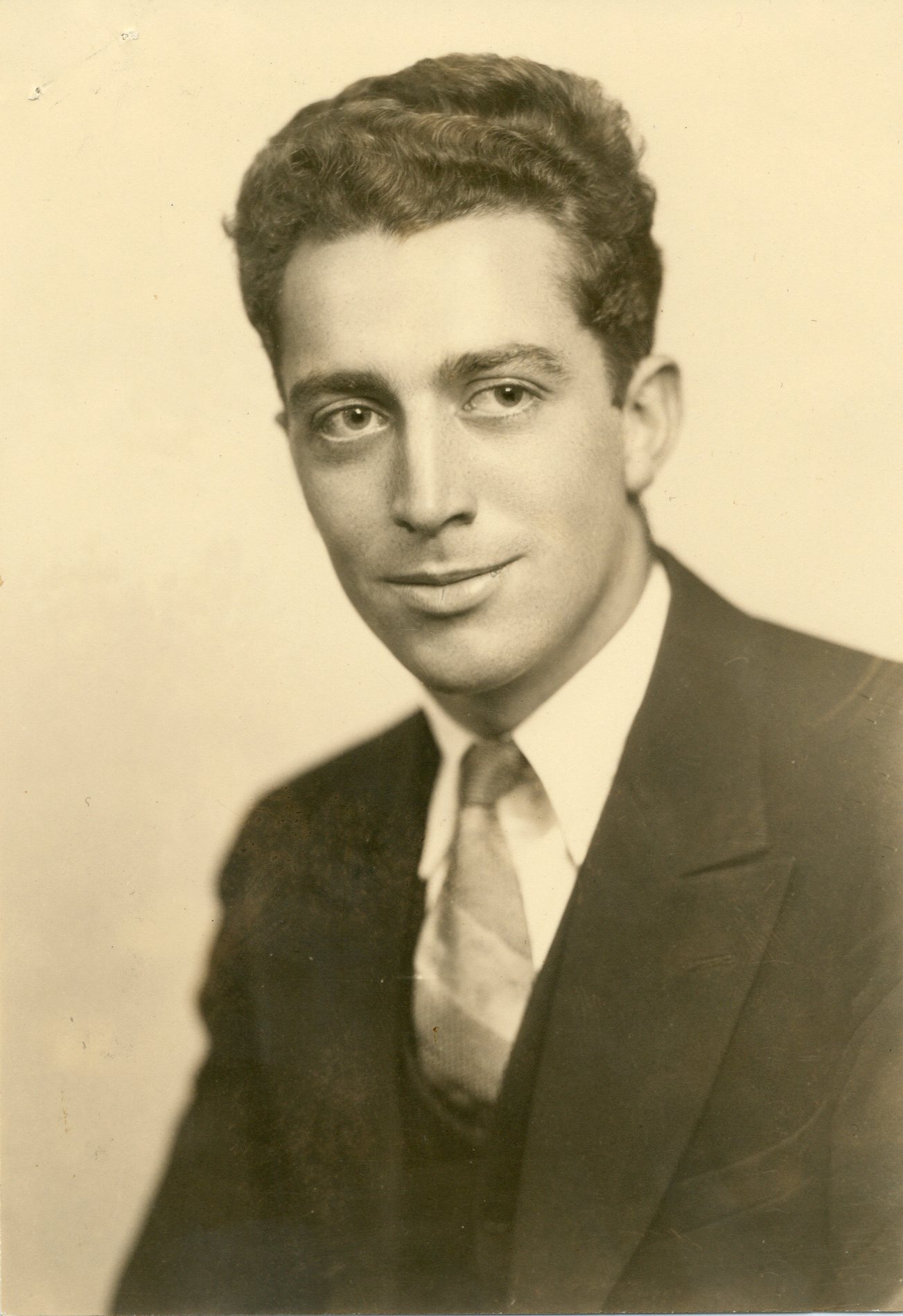
Puerto Rico to the Cinchona Missions
Leslie Rensselaer Holdridge was born in Ledyard, Connecticut, in September 1907; archival records disagree on whether the date was September 27 or 29. He grew up on his family's farm at Geer Hill in Ledyard, amid a broader Connecticut landscape where abandoned farmland was returning to forest and old stone walls recorded earlier agricultural use. It was tidy, categorizable, temperate. Nothing in his childhood hinted at the complexity he would spend his career untangling.
He studied forestry at the University of Maine, where he became a graduate fellow in botany in 1931, just as the Great Depression was tightening its grip on the country. Jobs were scarce, but the New Deal was creating opportunities for young foresters. In 1933, Holdridge found work as a reforestation foreman at Kisatchie National Forest in Louisiana. The job was part of Roosevelt's New Deal Civilian Conservation Corps. Holdridge later recalled planting trees, improving young stands and cutting undesirable species so pines could grow. The work taught him that forestry wasn't just about trees. It was about soils, water cycles, climate zones, and the interplay between human needs and ecological systems.
Two years later, opportunity pulled him south. In 1935, the U.S. Forest Service hired Holdridge to head the planting department at Caribbean National Forest in Puerto Rico. He left the familiar deciduous forests of North America for the Caribbean tropics. The contrast was immediate and overwhelming. Puerto Rico's forests exploded with species diversity that made New England woodlands look impoverished. A single hectare might contain dozens of tree species. Vines thick as a man's thigh climbed toward light. Epiphytes crowded every branch. Rain fell in torrents, then stopped, then fell again. The rules he'd learned in Maine and Louisiana didn't apply. Tropical forests operated on different principles, and nobody had written a clear guide to understanding them.
For six years, Holdridge worked in Puerto Rico's forests, planting experimental plots, testing which species could regenerate degraded land, studying how tropical trees responded to different conditions. He made mistakes. Years later, he would admit that planting cedro hembra (Cedrela odorata) had been his "biggest mistake" as disease and pests ravaged the plantations. But mistakes taught him what textbooks couldn't. He began to see patterns. Temperature and rainfall weren't just weather. They were fundamental constraints that determined which species could survive and which would fail. The relationship between climate and vegetation wasn't random or mystical. It was predictable, if you knew what to measure.
When World War II broke out, those pattern-recognition skills became urgently valuable. In 1942, Japan seized the Dutch East Indies, cutting off the Allies' supply of quinine, the antimalarial drug derived from cinchona tree bark. Without quinine, tropical battlefields would become death traps for soldiers vulnerable to malaria. The U.S. government launched the Cinchona Missions: expeditions to find natural cinchona sources in Latin America and establish emergency plantations. Holdridge conducted cinchona research in Colombia in 1942–1943 and later worked for Merck on cinchona experiments in Guatemala from 1947 to 1949. The work was urgent and practical, but it reinforced his growing conviction that climate data could predict biological outcomes. If you knew the temperature and precipitation ranges where cinchona thrived, you could find new locations without trial and error. The principle applied to any species, any ecosystem.
The 1947 Paper
In his late thirties, Holdridge went to the University of Michigan to study botany and ecology. He earned a master's degree there in 1946 and completed his doctorate in botany in 1947, building on more than a decade of field experience in the tropics. His dissertation research focused on the relationship between climate and vegetation in Haiti, where he'd worked during the war years. A system built from Haiti's climate and vegetation could reach far beyond that Caribbean island.
On April 4, 1947, Science published a two-page paper by Leslie R. Holdridge of the University of Michigan Department of Botany. The title was modest: "Determination of World Plant Formations From Simple Climatic Data." The approach was new. Holdridge proposed that the world's dry-land vegetation formations could be classified using temperature, precipitation, and evaporation. First: biotemperature, defined as mean annual temperature after eliminating readings below 0°C and above 30°C, the range where most plant growth occurs. Second: total annual precipitation. Third: the ratio of potential evapotranspiration to precipitation, which Holdridge simplified by using a factor of 58.93 times the biotemperature.
The system was empirically grounded. Holdridge hadn't constructed it from theory. He'd built it from years of forestry and vegetation fieldwork in the Caribbean, beginning with a mountain vegetation study in Haiti and informed by extensive tropical field experience. The elegance lay in its simplicity. Earlier classification systems often relied on subjective boundaries or complex formulas. Holdridge's required three climatic inputs and a chart. Plot your location's biotemperature on one axis, precipitation on another, and the evapotranspiration ratio determined your position within a hexagonal lattice. Each hexagon represented a distinct life zone: tropical wet forest, lower montane rain forest, subtropical dry forest, desert scrub, and dozens of other types.
Holdridge was careful to note the system's limits. These climatic variables, he acknowledged, could not perfectly predict actual plant assemblages. Geology mattered. Soil conditions mattered. Human activity mattered. The chart provided a framework, not a straitjacket. This intellectual humility, this recognition that simplification carried costs, distinguished him from scientists who mistook their models for reality.
Acceptance came unevenly. Holdridge later recalled that scientists in the United States and Europe took roughly 35 years to embrace the system, although it entered tropical-biology training earlier. By the early 1970s, life zones already underpinned a classic field study of Costa Rica's forest environments; their use in conservation planning expanded later. The objective climatic categories let ecologists compare broad environments without claiming to predict a site's exact plant assemblage. Later, conservation planners used them to find environments missing from protected-area networks, while climate researchers modeled how vegetation zones might shift as temperatures rose.
As of September 2026, OpenAlex listed more than 1,700 citations to the two-page 1947 paper. Researchers have since applied the system to land areas worldwide except Antarctica, and Holdridge taught related courses across much of tropical America. Climate scientists use life zones to model ecosystem shifts under warming scenarios, the Intergovernmental Panel on Climate Change has incorporated the concepts into global assessments, and conservation planners use them to locate gaps in protected-area networks. The system has endured because three climatic measurements make complex ecological patterns comparable without claiming to predict every species at a site.
Costa Rica: Turrialba and La Selva
In January 1949, Holdridge arrived in Turrialba, Costa Rica, to lead the Department of Natural Resources at the Inter-American Institute of Agricultural Sciences (IICA). The research and teaching operations on IICA's Turrialba campus became CATIE's institutional predecessor. He was 41 years old, armed with a fresh doctorate and a classification system that existed mostly on paper. Costa Rica gave Holdridge forests, farms and institutions in which to test the classification he had drawn on paper.
Costa Rica offered an unusually compact test of the system. Its roughly 51,000 square kilometers contain twelve Holdridge life zones, from tropical dry, moist, wet and rain forests through premontane, lower-montane and montane belts to sub-alpine rain páramo, plus climatic transition zones; mangroves form additional coastal ecosystems rather than a separate life zone. If the system could distinguish this diversity, conservationists could use it to describe what they sought to protect.
For roughly eleven years, Holdridge worked from IICA's Turrialba campus, conducting research, teaching graduate students and providing technical support to producers and institutions across tropical America. He also traveled widely to teach short courses. He trained tropical foresters and biologists to identify trees in the field from vegetative characteristics, including leaves, even when flowers or fruit were absent. His dendrology teaching influenced many professionals across tropical America. Students learned to recognize families, genera, and species from bark texture, leaf venation, wood structure, and growth patterns. Holdridge believed that if you couldn't identify what you were looking at, you couldn't manage it responsibly.
Holdridge wanted to move beyond classification and demonstrate that people could use tropical forests without clearing or exhausting them, provided management followed ecological principles. In 1954, while working at IICA, he bought land in Sarapiquí in Costa Rica's northern Caribbean lowlands. The National Registry records finca 4-47143 at 399.894154 hectares, although published sources report different figures for the forest or later station footprint. He named the property La Selva, “The Jungle,” and made it a personal experiment in sustainable tropical forestry.
By 1968, part of La Selva consisted of an isolated cacao plantation beneath a rich overstory of native trees. On land cleared earlier, Holdridge tested mixed plantings of cacao, pejibaye palms and other useful species to see whether valuable crops could grow without removing the entire forest, an unusual proposition in the 1950s. In 1959 he described a thirty-year succession that would gradually turn cleared land into a tree-dominated mixture of Cordia, pejibaye, cacao and tubers. The plan anticipated later ideas of sustainable forestry and drew on his study of what each life zone could support.
The Tropical Science Center and Monteverde
In 1961, Holdridge left IICA for independent practice. The following year he helped create the Tropical Science Center as an apolitical, nonbureaucratic association that would generate knowledge about the ecological and rational use of the tropics. The six founders were scientists Leslie Holdridge, Joseph Tosi and Robert Hunter, and businesspeople Frank Jirik, Fernando Castañeda and Wesley Kerper. Holdridge later recalled that the Center began without outside financial support and financed its programs and publications through consulting work. OTS was formed separately in 1963 by six U.S. universities and the University of Costa Rica.
The CCT joined science to practical application through tropical research and consulting, helped create private biological reserves for research and education, and fostered conservation work including the founding of ASCONA. It later managed its own system of private reserves. It was one of Costa Rica's first environmental non-profits, established years before the national park system formally existed. The organization gave Holdridge and Tosi a platform to apply the life zones system to real conservation challenges.
In 1968, Costa Rica's National Planning Office asked the Tropical Science Center to study natural resources in the northern region. Holdridge and Tosi traveled to Monteverde, a remote community founded by Quaker settlers who had moved to Costa Rica in the 1950s to farm peacefully. Community leader Hubert Mendenhall led the scientists into the primary cloud forest around the settlement. They found magnificent tropical montane cloud forest, including lower montane rain forest threatened by deforestation, with no formal protection at the time.
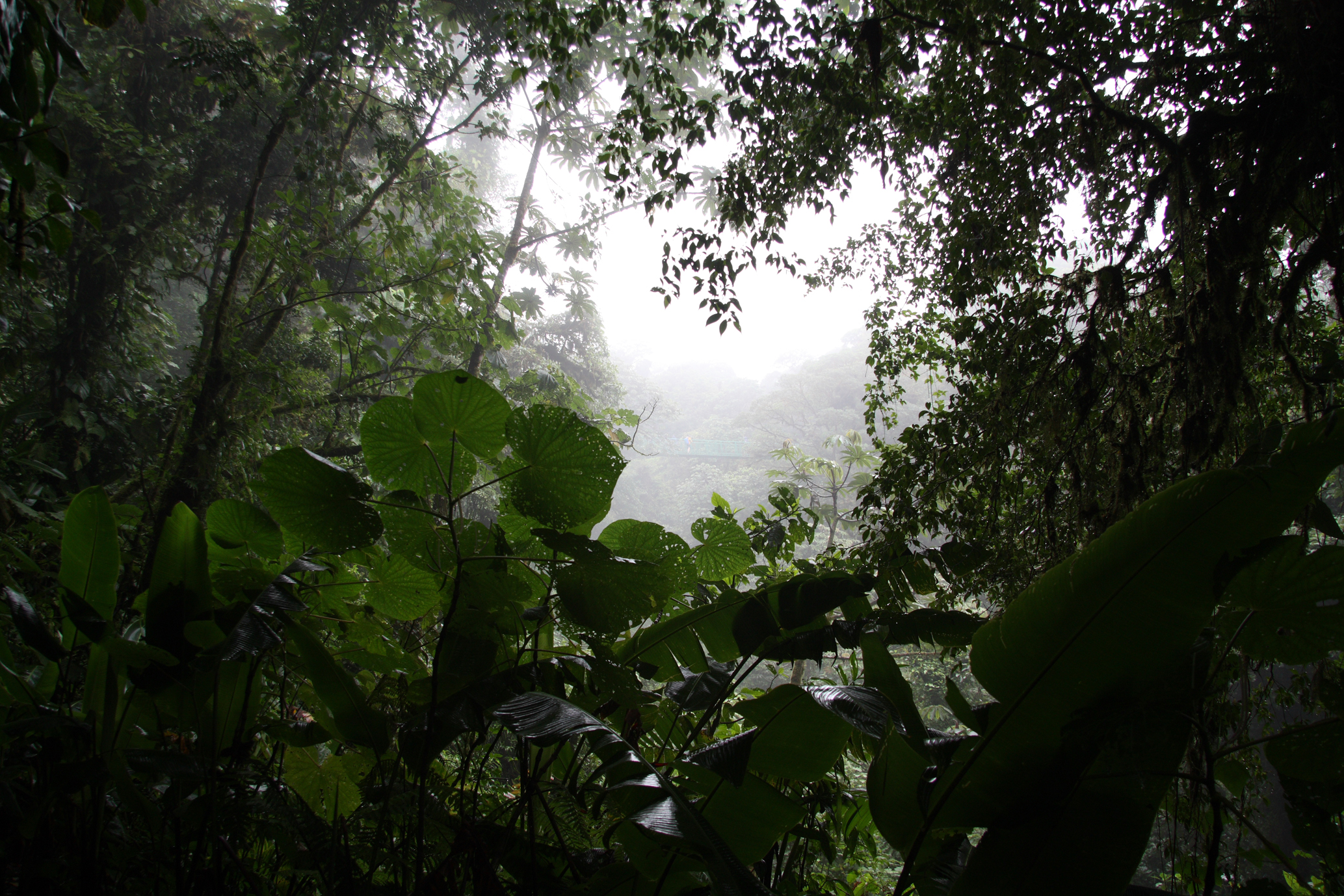
Holdridge and Tosi recommended that the Quaker community preserve the native forests to protect water sources and provide windbreaks for their farms. Their surveys identified lower montane and montane rain forests that were already becoming scarce in Costa Rica. These high-elevation forests intercepted moisture from trade winds and sustained the watershed on which farms depended; clearing them would reduce that input while increasing runoff and erosion. The Quakers, many of whom held conservation ethics rooted in their religious traditions, were receptive, and the recommendation became one strand in a broader local effort. George Powell arrived in Monteverde in 1970 to study birds, approached the Tropical Science Center in 1972 and raised funds while Wilford Guindon helped acquire land. The Center managed the reserve, which expanded through their work, Quaker watershed protection and other community efforts. The Monteverde Cloud Forest Reserve now protects 4,125 hectares.
At the same time, Holdridge was deciding what La Selva should become. Holdridge held the property for fourteen years and used it for mixed-plantation management experiments. From 1962, he lived in San José, where he and his colleagues had established the Tropical Science Center. By 1968, at 61, Holdridge believed La Selva would serve the future better as a permanent research station than as his private property. The Organization for Tropical Studies, established in 1963 as a consortium of seven U.S. universities and the University of Costa Rica, purchased La Selva in 1968 as its first biological field station and as a secure base for an NSF-funded comparative ecosystem program. Holdridge sold La Selva to OTS for what is commonly reported as $50,000.
After OTS purchased La Selva in April 1968, Holdridge taught an intensive dendrology course there and held its final exam in an isolated cacao plantation beneath a rich native-tree overstory. His students proposed turning the patch into a teaching arboretum, and he agreed. Gordon Frankie then had workers remove the cacao in October 1968 so observers could study the tall trees; Gary Hartshorn later added nearly 100 species. An initial 1970 inventory recorded 650 trees representing 111 native species, and in 1978 the 3.5-hectare collection was named the Holdridge Arboretum. It became an outdoor classroom that preserved his teaching methods in living form.
La Selva's Future and the Tree Guide
La Selva Biological Station became what Holdridge envisioned: one of the world's premier tropical research sites. Today OTS describes La Selva as 1,600 hectares, and OTS reports that research there has produced more than 4,500 publications. The Holdridge Arboretum has expanded to include 929 trees representing 247 native species from 63 families. Students still use it to learn tropical dendrology, walking paths between labeled specimens that represent the diversity Holdridge spent decades studying. Holdridge's method survives there at tree scale: students learn the forest by naming one living specimen after another.
The sale freed Holdridge to focus on the Tropical Science Center and a comprehensive field guide to Costa Rica's trees. Working with Luis Jorge Poveda, he published Árboles de Costa Rica in 1975, later described as a classic in tropical dendrology. Almost forty years of herbarium identifications, collecting trips and field notes went into a guide organized to help professionals and students identify trees from vegetative features and understand the species they sought to protect. Quírico Jiménez updated the book for a second edition in 1997.
But perhaps his most important later work was purely conceptual. In 1967, the Tropical Science Center published Holdridge's expanded Life Zone Ecology, with a photographic supplement prepared by Joseph A. Tosi Jr. The book treated classification, associations, soils, succession, human ecology, land-use planning and productivity, and became a standard text. It explained not just how to classify life zones but how to work within them sustainably. Each life zone, Holdridge argued, had inherent constraints and possibilities. He linked life zones to different agricultural practices, planting and harvesting times, crops, soils and land-use possibilities. Respecting them allowed humans to work productively within ecological limits.
The life-zone system shaped Costa Rican conservation planning. When Mario Boza and Álvaro Ugalde began building the national park system in the early 1970s, they used Holdridge's maps to identify life zones underrepresented in protected areas. A 2000 gap analysis found that only nine of 23 life zones or transitional zones met its adequacy threshold of more than 10,000 protected hectares; the 11 least protected zones contained only 2 percent of the country's protected area. The authors concluded that this left a significant portion of Costa Rica's biodiversity at risk and proposed expanding 12 protected areas, creating one new area and establishing linkage zones. Holdridge's classification let planners make that comparison from climate data and existing maps instead of spending years surveying vegetation.
Later Years
Leslie Holdridge worked until his final years. The Tropical Science Center hired Holdridge as an ecologist in 1967. He later taught ecology and dendrology part-time at the Costa Rica Institute of Technology; sources date that teaching either 1978–1982 or 1976–1983. A second edition of Árboles de Costa Rica, updated by Quírico Jiménez, appeared in 1997. Holdridge died in Easton, Maryland, on June 19, 1999, at 91, leaving practical systems and institutions that remained in use.
The life-zones system remains useful for modeling potential ecosystem shifts under climate change. Studies project that many areas will transition to different life zones within decades, and one Costa Rican study found lower montane rain forest particularly sensitive to modeled change. The Intergovernmental Panel on Climate Change has used life-zone models in global assessments. Some Costa Rican reforestation projects have used Holdridge life zones to stratify sites and help select candidate species, although species are not necessarily restricted to a single zone.
Holdridge's institutions and teaching projects also endure. The Tropical Science Center continues as one of Costa Rica's most respected environmental organizations. Monteverde attracts tens of thousands of visitors annually. La Selva has trained thousands of tropical ecologists. Students still learn tree identification in the arboretum named for him. The idea arose from students in his 1968 dendrology course; Gordon Frankie oversaw removal of the cacao, and Gary Hartshorn inventoried the trees and added nearly 100 species.
Walk through Costa Rica today and you're walking through landscapes classified by Holdridge's system. The national parks protect representative samples of life zones he mapped. Some reforestation projects have selected species using Holdridge's climate-vegetation relationships. When scientists say "tropical wet forest" or "lower montane rain forest," they're using categories he defined.
Last updated: September 11, 2026
References & Further Reading
Primary Scientific Publications
The foundational two-page paper introducing the life zones classification system based on biotemperature, precipitation, and evapotranspiration ratio.
A broad treatment of the life-zone system covering classification, associations, soils, succession, human ecology, land-use planning and productivity, with a photographic supplement prepared by Joseph A. Tosi Jr.
Updated edition of the comprehensive field guide to Costa Rica's trees, a standard reference for foresters, biologists, and conservationists working in Central America.
Ecological map of Costa Rica created by Joseph Tosi, applying Holdridge's system to show the country's twelve life zones and the transitional areas between them at 1:750,000.
Applications in Conservation and Climate Science
Gap analysis using Holdridge life zones revealing that only 9 of Costa Rica's 23 life zones had adequate protection, with 11 zones containing only 2% of protected area.
Uses the Holdridge framework to project how Costa Rica's life zones will shift under climate change scenarios.
Assessment of climate change impacts on Central American tropical forests using the Holdridge system.
Demonstrates the continued utility of the Holdridge system for ecosystem mapping across diverse climates, applying it to map life zones across the 48 conterminous United States.
Biographical Sources
Chronological timeline of Holdridge's career from forestry work in Louisiana through his decades in Costa Rica.
Biographical essay examining Holdridge's life, scientific contributions, and lasting impact on Costa Rican conservation. Includes details of his postgraduate teaching at IICA in Turrialba and the founding of the Tropical Science Center.
Institutional Resources
Official site for the La Selva Research Station, which OTS established in 1968 from Leslie Holdridge's sustainable-forest-research farm and developed into a major tropical ecology research site.
Information on La Selva's 3.5-hectare teaching arboretum, proposed by Holdridge's students in 1968 and named for him in 1978. The page reports 929 individuals representing 247 native species and three exotics, with ArbNet Level II accreditation.
History of the organization founded in 1962 by Leslie Holdridge, Robert Hunter, Joseph Tosi, and businesspeople Frank Jirik, Fernando Castañeda, and Wesley Kerper; CCT describes itself as Costa Rica's first environmental-conservation nonprofit.
Information on the reserve created in 1972 following Holdridge and Tosi's 1968 survey recommending forest protection to safeguard water sources.
Verification and Historical Sources
Costa Rican National Registry, Heredia finca 4-47143. Informational extract consulted September 9, 2026; registered area: 3,998,941.54 square meters (399.894154 hectares).
The map on PDF page 9 (printed page 308) labels the original 1968 La Selva footprint as 503.2 hectares, a different measure from the registered 1954 parcel.
Official regional temperature and rainfall averages used to check the article's opening climate examples.
Peer-reviewed climate descriptions for montane forest and páramo in the Talamanca highlands.
CATIE's account of its 1973 founding and the earlier IICA operations in Turrialba.
FAO review describing Holdridge's 1959 thirty-year crop-succession sequence on previously cleared land.
Documents use of Tosi's Holdridge life-zone map in Costa Rican reforestation planning.
Shows both the usefulness and limits of treating life zones as a species-selection rule.
Official guide recounting Holdridge and Tosi's 1968 visit and recommendation to conserve forest for water and wind protection.
Current owner-manager history and reserve information.
Confirms CCT management and the reserve's current 4,125-hectare extent.
Current arboretum registry confirming its holdings, accreditation and teaching role.
Biographical account by a Tropical Science Center colleague.
Academic history of wartime U.S. cinchona procurement and plantation work.
USDA Forest Service historical account of El Yunque's planting program and Holdridge's Cedrela odorata experience.
Institutional history of the CCC's conservation and reforestation work in Louisiana.
Archival authority record for Holdridge's birth, education and early forestry career.
Peer-reviewed analysis of tree-species richness in Puerto Rico's Luquillo forest.
Official source for Costa Rica's land area of 51,100 square kilometers.
Modern peer-reviewed discussion of Holdridge life-zone methods and limitations.
Documents early use of Holdridge life-zone models in climate-impact projections.
Peer-reviewed conservation-priority study using life-zone rarity and protection levels.
Bibliometric record used for the citation count reported in this article, consulted September 2026.
Current visitor and preserve information.
Metadata and licensing record for the cloud-forest image used in this article.
Archived institutional record for the 1931 graduate-fellow portrait.
Evans, S. (1999). The Green Republic: A Conservation History of Costa Rica. University of Texas Press.
Scholarly history of the Tropical Science Center, OTS, Monteverde and Costa Rica's national park movement.
Additional Context
Overview of the Holdridge life zones system, its variables, global applications, and use in climate change modeling.
Background on the World War II expeditions to find natural quinine sources in Latin America, including the first party to Colombia in October 1942, in which Holdridge participated.
Biographical overview including education, career positions, and scientific contributions.