Costa Rica's Green Godmother
Karen Olsen de Figueres, a Copenhagen-born sociologist turned First Lady, built the political foundation that made Costa Rica's park system possible—and kept it alive when it mattered most.
The canonical story of Costa Rica's park system usually starts with two men and their machetes. But if you listen to the people who were actually there, the founding scene is a phone call. In 1970, a desperate young biologist stood on the rim of Poás Volcano watching squatters burn the last cloud forest on its slopes. Sawdust swirled where quetzals had nested. The Ministry of Agriculture had dismissed Poás as "unproductive land" and had neither budget nor will to defend it. Mario Boza, with no chain of command left to trust, found a pay phone and asked the switchboard for Doña Karen.
"Mario, go back to the volcano. Don't let them cut one more tree. I will take care of it." Within hours Karen Olsen de Figueres walked past cabinet secretaries, briefed President José "Pepe" Figueres Ferrer, and forced an emergency decree that halted the clearing. She drafted the decree herself so agriculture officials could not dilute it. She sent drivers to the volcano with typed orders while Boza physically blocked bulldozers. Poás was saved because the First Lady treated conservation as a head-of-state priority, not a hobby.
The men who fought in the field called her the "political floor," the unseen foundation that made their campaigns survivable. Olof Wessberg wielded letters, Boza and Álvaro Ugalde wielded ranger patrols, but Doña Karen wielded access: to presidents, to ministries, to international capital. This is her story.
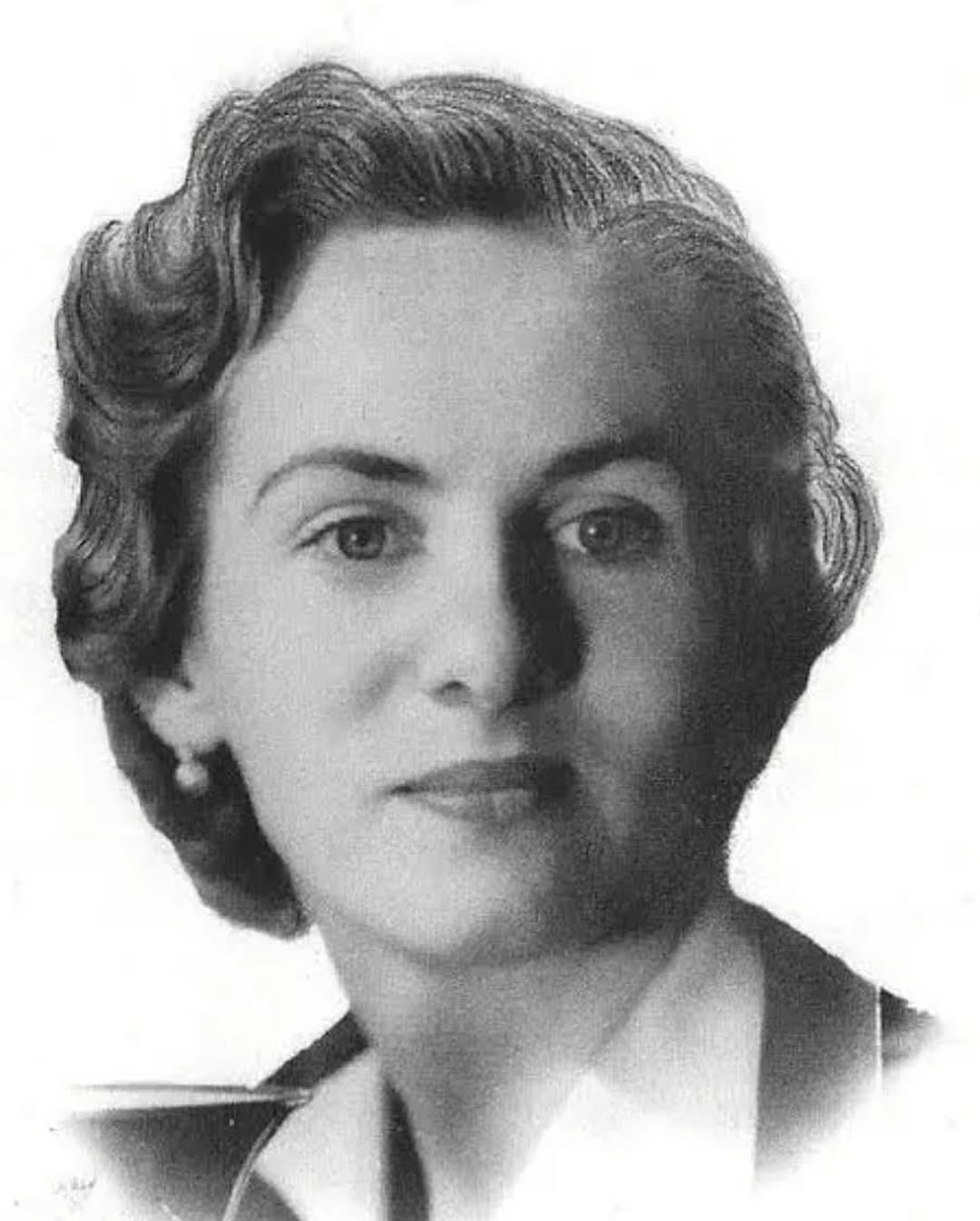
The American Sociologist and the Revolutionary
Rita Karen Olsen Beck was born January 31, 1930, in Copenhagen, Denmark. Her parents, Walter Olsen and Karen Beck Olsen, had emigrated from Denmark and became naturalized U.S. citizens, eventually settling in Yorktown Heights, New York. She was raised in the progressive intellectual environment of the East Coast, trained to study how societies change. At Mary Washington College she was involved in movements promoting solidarity with the needy. She went on to pursue a master's degree in sociology at Columbia University, with additional studies at the University of Copenhagen. At Columbia, she was deeply engaged in civil rights activism, working with the NAACP, Interracial Fellowship, Pan-American Women's Association, and the Women's International League for Peace and Freedom.
In 1953, José Figueres Ferrer came to Columbia University to give a series of lectures. He was touring American universities, explaining Costa Rica's experiment in social democracy to audiences who had watched, with fascination and alarm, his 1948 revolution. He was not an academic. He was a farmer, a revolutionary, and the most dominant political figure in modern Costa Rica. In 1948, at age 41, he had led a 44-day civil war that killed more than 2,000 people to uphold a democratic election. He won. Then, in an act that stunned the hemisphere, he abolished the army. On December 1, 1948, in a ceremony at Cuartel Bellavista, Figueres broke a wall with a mallet, symbolizing an end to Costa Rica's military apparatus. The abolition was enshrined in the 1949 Constitution. During that first junta period he also nationalized the banks, granted women and Afro-Costa Ricans the right to vote, and offered nationality to people of African descent.
For Karen, a 23-year-old graduate student immersed in questions of social justice and development, here was the theory made flesh. After one of his talks, she approached him with questions. They began to talk. He was 46, a widower with four children, a coffee farmer who quoted philosophy and had waged war to defend a ballot box. She was a Danish-American idealist who believed societies could be engineered toward justice. He was charismatic, brilliant, volatile, and possessed of a political gravity that drew people into his orbit. She was fascinated. He was equally enchanted by her intelligence and composure. Time-Life magazine would later describe their union as "Love and Ideals." It was both. Within months, she had left New York for Costa Rica. They married on February 7, 1954, in an intimate ceremony at the home of his brother Antonio, performed by Archbishop Rubén Odio Herrera. For Karen Olsen Beck, it was a profound leap. She was not just marrying a man. She was marrying a country, a political movement, and a family that was essentially Costa Rican royalty.
She moved to La Lucha Sin Fin, Figueres's sprawling farm-commune in the mountains of San Cristóbal, Desamparados. He had bought the land in 1928 and named it "The Endless Struggle." It was both a working coffee plantation and the intellectual nerve center of his National Liberation Party, which he founded in 1953. Describing himself as a "farmer-socialist," Figueres employed more than 1,000 sharecroppers and factory laborers. He built housing for them, provided medical care and recreation, established a community vegetable farm, and ran a dairy with free milk for workers' children. Karen learned Spanish in a household that served simultaneously as a coffee farm, a rope factory, and the headquarters of the most successful party in Costa Rican political history.
Her first tenure as First Lady came almost immediately. Figueres won the 1953 election and served from 1953 to 1958. By all accounts, she played the role dutifully, focusing on social welfare, children's health, and education. But beneath the surface, the sociologist was observing. She audited ministries, dissected budgets, and taught herself the informal rules of a country that ran on personal negotiations. She saw cattlemen torch hillsides that botanists considered irreplaceable and watched how easily public servants waved those fires through. She was learning to navigate the complex, personalist world of Costa Rican politics. She was no longer just Karen Olsen Beck. She was becoming Doña Karen.
The Interlude and the Seeds of a Movement
The years between Figueres's second and third presidencies (1958 to 1970) were formative. Doña Karen focused on raising their four children: José María, who would become president from 1994 to 1998; Christiana, who would lead the United Nations Framework Convention on Climate Change and shepherd the Paris Agreement; Mariano, dedicated to family enterprises with social responsibility; and Kirsten, interested in rural tourism. The long dinners at La Lucha about geopolitics and ecology shaped the next generation.
But these years were also a time of profound, dangerous change for Costa Rica. The country was losing forests faster than almost any nation outside the Amazon. The post-war economic model, championed in part by Figueres's own party, was based on agricultural expansion. The government offered incentives for anyone who "improved" the land, and "improvement" was legally defined as cutting down trees to plant crops or graze cattle. Forests were wastelands, obstacles to progress. The World Bank and other international lenders fueled this fire, providing massive loans for road construction and cattle ranching. The green sea that had covered three-quarters of Costa Rica in 1940 was shrinking at an alarming rate.
While the government in San José pushed this policy, a different story was unfolding on the margins. A Swedish-Danish couple, Olof Wessberg and Karen Mogensen, had arrived in the 1950s and were horrified by the destruction. By 1963, they had used their life savings to buy 300 hectares on the tip of the Nicoya Peninsula, creating the Cabo Blanco Absolute Nature Reserve. They proved conservation could work, but their private reserve was perpetually vulnerable. They had to fight squatters, hunters, and politicians. Their struggle was lonely and heroic.
Karen Olsen knew of the Wessbergs and their conservation experiment. The couple spent three years raising the first $30,000 needed to purchase the Cabo Blanco land, drawing support from environmental organizations in Sweden and Denmark. Their private reserve proved that conservation could work in Costa Rica, but it remained perpetually vulnerable, dependent on their own resources and will. It was a model that couldn't scale without government support.
In San José, a small group of academics and biologists at the University of Costa Rica was starting to sound the alarm. They argued that the country's unique biodiversity was a scientific treasure, not just timber. Among them was Mario Boza. In 1968, Boza managed to get a small grant to study park management in the United States. He visited the Great Smoky Mountains National Park and was so impressed that he developed a plan to manage the area around Poás Volcano in a similar way and presented it as his master's thesis. He returned to Costa Rica changed, an evangelist. He was given a token position in the Ministry of Agriculture and tasked with creating "parks." But it was a farce. He had no staff, no money, and a boss who actively thwarted him.
But in 1969, before Figueres returned to power, something pivotal happened. Dr. Mario Boza organized a field trip to Tortuguero to visit Archie Carr's pioneering sea turtle conservation project. The expedition included some of the most important figures in Latin American conservation: Kenton Miller, the American wildlands expert who was training a generation of park managers at CATIE; Gerardo Budowski, the renowned ecologist; a young and passionate former student leader named Álvaro Ugalde; and Doña Karen Olsen de Figueres. This trip to witness Carr's scientific conservation work in action forged one of the most crucial alliances for the national parks system that would soon follow. Karen saw firsthand that conservation was not just idealism—it was science, fieldwork, and political will combined. The connection made on that Tortuguero beach would become the foundation for the Kitchen Cabinet for Conservation she would build the following year.
This was the landscape when Figueres and the National Liberation Party swept back into power in the 1970 election. Costa Rica was at a crossroads. It was poised to follow the path of its neighbors, deforesting its way to a short-term economic boom and a long-term ecological catastrophe. What no one counted on was that the First Lady, Doña Karen, had also been watching. And she had decided that progress could not mean the annihilation of the very thing that made Costa Rica unique.
The Godmother of the Parks
The 1970 to 1974 Figueres administration is now seen as the Big Bang of Costa Rican conservation. It was the period when the country went from a handful of scattered protected areas—Cabo Blanco Reserve and a few monuments—to a legal, funded, and rapidly expanding National Parks System. This revolution was not led by the President. Figueres was a visionary, but he was focused on economic development, nationalizing industries, and social democracy. He was a man of action who saw forests as resources. The revolution was run from the office of the First Lady.
Doña Karen, now 37, was no longer the quiet observer of the 1950s. She was a savvy, deeply respected political operator. She understood Costa Rican culture, she knew every minister, and she had the one thing no one else had: the attention of the President. She created what could be called a Kitchen Cabinet for Conservation. She found the young idealists, Mario Boza and soon after a passionate former student leader named Álvaro Ugalde, and she gave them what they desperately needed: political protection. She called them her "Angelitos Verdes," her little green angels. They called her their "fairy godmother." They would come to her with their plans, and she would find a way to make them happen.
The phone call from Mario Boza at Poás was the first test and became her operating model. After she walked into her husband's office and laid out the situation, Figueres called the Minister of Agriculture immediately. The minister, who hours before had ignored Boza, dispatched the police. The sawmill was stopped. But Doña Karen knew that a temporary halt was not protection. "We need to make it a park, Pepe," she insisted. The problem was money. To declare it a park, the government had to buy the land from the squatters and landowners. The Treasury Minister was adamantly opposed, claiming there was no money.
Her sociology background kicked in. She did not just argue for nature. She argued for people. She reframed the park. It was not just about trees. It was about national heritage, a place for Costa Rican families, a source of national pride. She lobbied her husband relentlessly. She lobbied his cabinet. She used her social budget, the First Lady's partida, to help fund the initial expropriations. On January 25, 1971, Poás Volcano National Park was officially established. Mario Boza became its first director.
With Poás secured, Doña Karen became the primary driver behind the most important pieces of legislation in Costa Rican environmental history. The National Parks Law of 1971-72 was the masterstroke. She championed the creation of the Servicio de Parques Nacionales, the National Parks Service. This moved Boza's tiny office out from under the hostile Ministry of Agriculture and created a new, autonomous agency. This act was revolutionary. It gave the "Green Angels" a budget, a staff (even if it was just a handful of people), and most importantly, autonomy. They no longer had to beg for permission from a minister who wanted to cut trees.
During budget hearings, her presence signaled that cutting park funds meant defying the presidency. She functioned as translator-in-chief. She rewrote technical reports so cabinet ministers could not plead ignorance. She paired foreign donors with local field stations. She made sure that Cabo Blanco, Poás, Tortuguero, and Corcovado were debated as matters of national prestige, not fringe philanthropy. When ranchers torched Santa Rosa despite its protection, she coordinated the legal strategy, provided cover for armed ranger patrols, and forced the Ministry to enforce its own laws.
From the beginning, Ugalde and Boza were confronted with problems: squatters, gold panners, and hunting inside the parks. Doña Karen made sure they had the institutional muscle to fight back. She was not in the field with a machete, but she was in every meeting, every negotiation, every budget hearing that made their work survivable.
Financing a National Park System
The new park service still needed money. Costa Rica's national budget would never be enough. Doña Karen solved this problem by leveraging her international connections. She flew to Washington, New York, and Copenhagen to pitch Costa Rica as a living laboratory where modest loans could stop continental-scale deforestation. She briefed USAID officers, World Wildlife Fund managers, and Scandinavian foundations. She had credibility that few others possessed: she could walk back into the president's office and execute whatever she promised.
She hosted dinners at the Casa Presidencial for leaders from the Nature Conservancy, WWF, and Audubon Society. She charmed them. She was not a radical. She was a sophisticated, intelligent stateswoman who spoke their language. She told them that Costa Rica had the political will, but needed the seed money. The checks began to arrive. This international funding, leveraged by Doña Karen, became the "golden fund" that Álvaro Ugalde used to buy up land, pay rangers, and build the infrastructure for parks like Corcovado. That battle would be fought and won by Ugalde and President Daniel Oduber, Figueres's successor, but it was built on the foundation Olsen had laid.
She insisted that conservation budgets include social justice. There were compensation packages for displaced farming families, education stipends for ranger recruits, and seed funding for community tourism cooperatives. Her ecodevelopment framing persuaded legislators that parks were economic infrastructure, not sunk costs. Between 1970 and 1974, working with Boza and Ugalde, she helped transform Costa Rica from a country with zero national parks and a policy of deforestation into a nation with a fully-fledged, funded, and legally protected National Parks System. The political floor she provided made their field work survivable.
The Matriarch
When Figueres left office in 1974, Doña Karen did not retire. She had become, in every meaningful way, Costa Rican. Her life after Casa Presidencial was one of continued public service. She founded the Costa Rican Youth Association, which promoted the Youth Symphony Orchestra. She founded the National Drug Council. She founded the National Commission for Indigenous Affairs, known as CONAI, which institutionalized the commitment to support indigenous peoples and promoted the translation of school texts into local Amerindian languages. She was an avid promoter of the Joint Institute of Social Assistance, known as IMAS.
In 1956, during her first tenure as First Lady, she had served as a Costa Rican delegate at the United Nations General Assembly, where she gave lectures on fair prices and wage increases for underdeveloped countries. In 1982, she served as Costa Rica's Ambassador to Israel during the presidency of Luis Alberto Monge. After Figueres's death in 1990, she was elected to the Legislative Assembly and served from 1990 to 1994. She did not just advocate for conservation. She wrote environmental clauses into national law. She broke the traditional mold for former First Ladies, building her own political career. She evolved from First Lady to legislator to stateswoman without surrendering the conservation agenda she had birthed.
During her legislative tenure, she pioneered measures far beyond environmental law. She championed traffic safety reforms that would save countless lives: donating the first breathalyzer equipment to detect drunk drivers, introducing exhaust emissions testing, providing the first bulletproof vests for traffic police, and driving the legislation that made seat belts mandatory. Her work on indigenous rights was equally transformative. She actively participated in drafting and promoting legislation that strengthened indigenous communities, and played a crucial role in the constitutional ratification of ILO Convention 169, which established international protections for indigenous peoples' rights to their lands, resources, and self-determination. These were not peripheral causes—they were extensions of the same philosophy that had driven her conservation work: using political power to protect the vulnerable.
Her household became a training ground for the next generation. The children grew up in an intensely political household, always seated at dinner with visiting dignitaries and traveling with their father on campaign swings. Karen strictly tutored the kids in official protocol. The long dinners at La Lucha about geopolitics and ecology shaped her children profoundly. Her daughter Christiana Figueres would go on to serve as Executive Secretary of the United Nations Framework Convention on Climate Change from 2010 to 2016. Christiana later said she was "so inspired by her parents' commitment to public service, she decided to pursue a career in diplomacy herself." As Executive Secretary, Christiana orchestrated the negotiations that led to the 2015 Paris Agreement, which 196 nations unanimously adopted. It is impossible to look at Christiana's diplomatic skill, her unshakeable optimism, and her ability to build consensus, and not see the shadow of her mother. The same skills Doña Karen used to navigate the egos of her husband's cabinet to save a volcano, Christiana used on a global scale. The seeds planted at Poás had grown to encompass the globe.
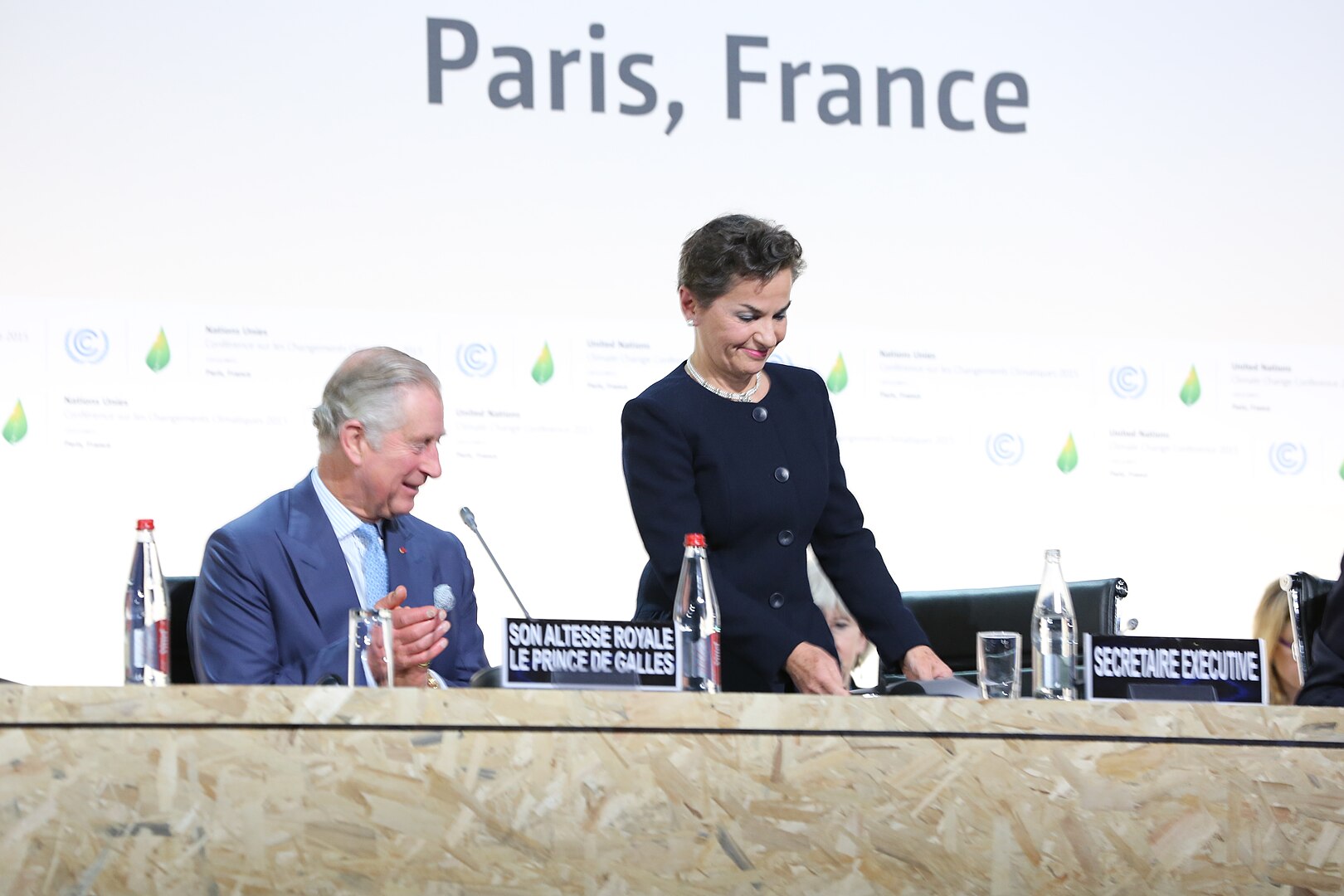
Doña Karen remained an adviser, fundraiser, and moral compass until her passing on September 25, 2025, at age 95. Even out of office, she fielded calls from rangers, mayors, and activists who needed a well-placed phone call or a public rebuke to stop an illegal road. She had balanced, as one observer noted, Don Pepe's "blind spot" in environmental areas and imprinted her own personality on the political project that transformed Costa Rica into an emblematic country. She was the matriarch of a political dynasty, but more than that, she was the matriarch of a national ideal.
The Weaver
The story of Costa Rica's conservation success is often told as a story of male heroes: the fiery vision of Don Pepe, the scientific persistence of Mario Boza, the fundraising genius of Álvaro Ugalde, the tragic sacrifice of Olof Wessberg. But woven through all these threads is the quiet, steady hand of Karen Olsen de Figueres. Her contribution was unique. She was not the pioneer in the wilderness, like Karen Mogensen. She was the pioneer in the corridors of power. She understood that saving a forest was not just an ecological act, but a political one.
She was the translator, bridging the world of the field biologist with the world of the cabinet minister. She was the intercessor, using her personal influence to dislodge bureaucratic logjams and change the President's mind. And she was the visionary, who understood that one park was not enough, that what Costa Rica needed was a system, embedded in law and backed by national pride. Mario Boza and Álvaro Ugalde became the fathers of the parks because Karen Olsen de Figueres agreed to be their godmother. She wove scientists, presidents, legislators, farmers, and foreign donors into a single tapestry.
Today, Costa Rica protects over a quarter of its territory in national parks and reserves. Millions of tourists visit every year, generating billions of dollars to see forests that were once marked for clearcutting. The "Pura Vida" brand rests on a system that Karen Olsen de Figueres helped build between 1970 and 1974. She gave Boza and Ugalde the political cover to survive. She secured the international funding that bought the land. She embedded conservation in law and linked it to national identity. Without her, there would have been no political floor. And without that floor, Costa Rica's green revolution would have collapsed before it began.
References & Further Reading
Books & Academic Articles
An academic overview of the historical roots of environmentalism, providing context for the conservation movement in which Karen Olsen was a key player.
Definitive conservation history documenting the roles of Karen Olsen, Mario Boza, and Álvaro Ugalde in building Costa Rica's national park system from 1970-1974.
Narrative account of the founding of Costa Rica's parks, including Karen Olsen's political support for the "Green Angels."
An academic article by one of her key collaborators, providing a first-hand account of the conservation movement's history and challenges.
Biography & Tributes
Official listing of Karen Olsen Beck as a former member of the Legislative Assembly (1990-1994).
Profile highlighting her social welfare work, conservation initiatives, and legacy as matriarch of Costa Rica's most influential political family.
Obituary from Costa Rica's leading newspaper detailing her life and contributions to the nation.
Remarks by Karen Olsen Beck on behalf of President José María Figueres, where she discusses Costa Rica's commitment to sustainable development.
Collaborators & Colleagues
An article by Mario Boza where he calls Karen Olsen the "fairy godmother of conservation" and "the best collaborator a parks program could have."
Official document that includes a submission by Karen Olsen, Álvaro Ugalde, and Mario Boza opposing a law that threatened Las Baulas National Park.
Social & Indigenous Affairs
Article detailing her role in founding the National Commission for Indigenous Affairs (CONAI) and other social initiatives.
Comprehensive biography documenting her active participation in drafting and promoting legislation for indigenous peoples and her crucial role in the constitutional ratification of ILO Convention 169, which established international protections for indigenous rights to lands, resources, and self-determination.
Legislative Work & Public Safety
Profile detailing her pioneering traffic safety reforms during her legislative tenure (1990-1994), including donating the first breathalyzer equipment for drunk driving detection, introducing exhaust emissions testing, providing bulletproof vests for traffic police, and championing mandatory seat belt legislation.
Park System & Conservation
Local history documenting the 1969 field trip to Tortuguero organized by Mario Boza to visit Archie Carr's turtle conservation project, attended by Karen Olsen de Figueres, Kenton Miller, Gerardo Budowski, and Álvaro Ugalde—the expedition that forged crucial alliances for the subsequent creation of the national parks system.
A report from the International Institute for Environment and Development that details the financing mechanisms for Costa Rica's parks, mentioning Karen Olsen's crucial role in securing aid.
History of Poás, Costa Rica's first national park, established January 25, 1971 through Karen Olsen's emergency intervention.
Official page for Cabo Blanco, the first private reserve that inspired the national system, established by Karen Mogensen and Olof Wessberg.
Family & Legacy
Interview with her daughter, Christiana Figueres, where she discusses the influence of her parents and her upbringing on her own work in climate change.
Profile describing how the Figueres children grew up in an intensely political household, always seated at dinner with visiting dignitaries, traveling on campaign swings, and being strictly tutored in official protocol by Karen—an upbringing that inspired Christiana's commitment to public service and shaped her diplomatic skills.
Biography of Karen Olsen's daughter, who served as Executive Secretary of UNFCCC (2010-2016) and orchestrated the 2015 Paris Agreement.
Biography of Karen Olsen's son, who served as President of Costa Rica (1994-1998).