The Cartographer of Everything
How a Swiss botanist named Henri Pittier built the scientific infrastructure of two nations, was fired by both, and left institutions that outlived every government that dismissed him.
In early July 1888, a Swiss schoolteacher climbed Volcán Barva during his vacation. Henri Pittier had been in Costa Rica for barely eight months. He was thirty years old and still employed as a science teacher at the Liceo de Costa Rica and the Colegio Superior de Señoritas. He was not yet director of anything. He held no official scientific title in the country. On paper, he was a recent immigrant who taught geography and hygiene to high school students.
At the summit he found dense cloud forest saturated with moisture. Fog drifted through the canopy. Rain collected in the leaf litter, seeped into the root systems, and filtered down into underground aquifers. On July 10 he submitted a report to Mauro Fernández, the education minister, arguing that these summit forests functioned as natural water deposits. They absorbed rainfall and fog moisture, transferred it to underground springs, and fed the streams that supplied drinking water to the cities of Heredia and Alajuela. Cut them down, and the water would disappear.
Within three weeks, on July 28, 1888, the Costa Rican Congress approved a decree. Its sole consideration emphasized "the public utility of the conservation of the mountains where the streams and springs that supply water to the province of Heredia and part of Alajuela originate." The decree's first article declared "inalienable a zone of land two kilometers wide on either side of the summit of the mountain known as Volcán de Barva, from the hill called El Zurquí to the one known as Concordia." The decree was published in La Gaceta three days later. A schoolteacher's vacation report had become one of the earliest science-based conservation measures in Latin American history.
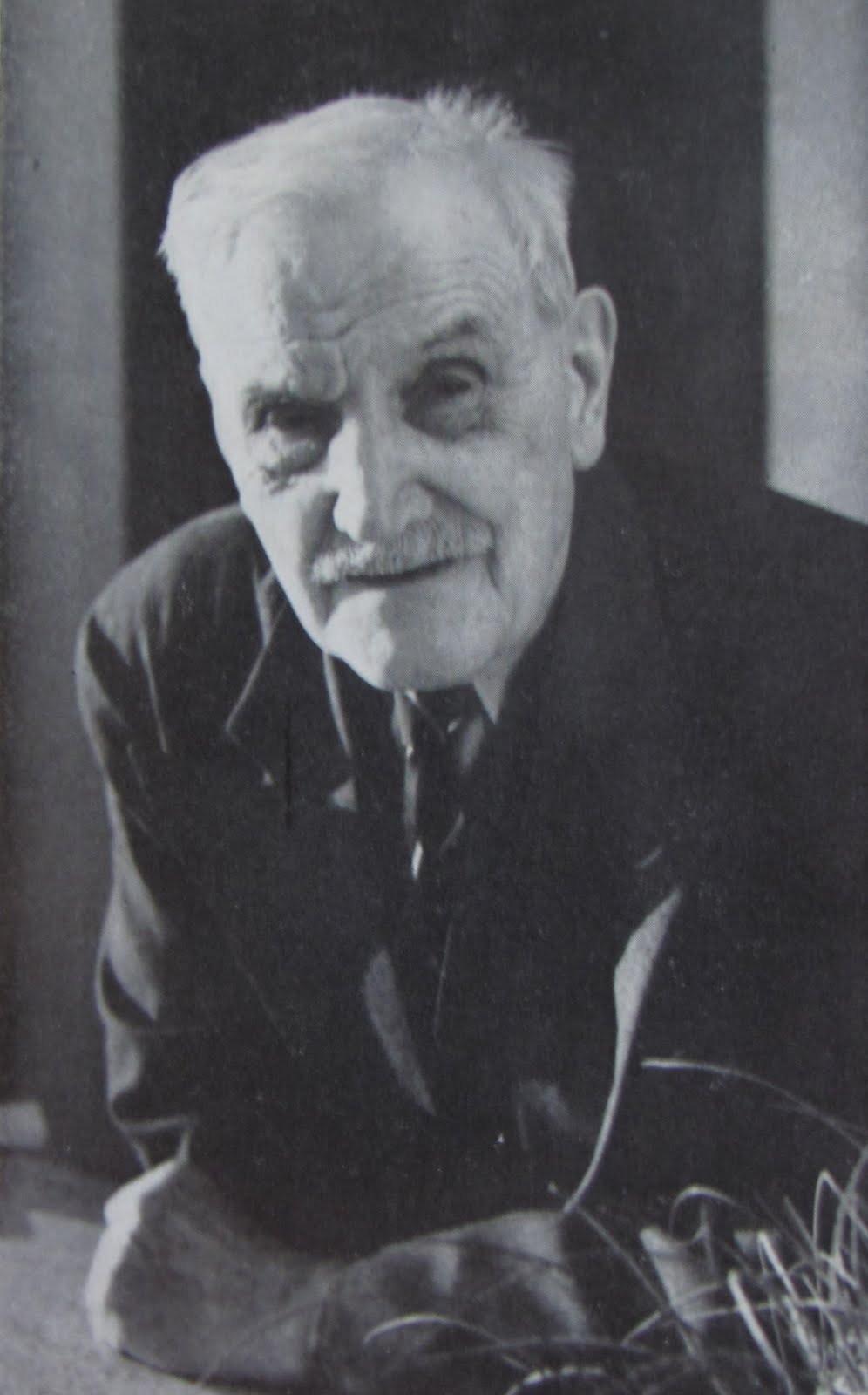
From Bex to San José
The man who wrote it had been born on August 13, 1857, in Bex, a mountain commune in the Swiss canton of Vaud. His father Jean François Pittier was a farmer, his mother Elise Dormond, and he was the eldest of five sons. His interest in plants came from the Thomas family next door, whose botanical tradition reached back two generations to Albrecht von Haller, the Swiss naturalist who had founded the Botanical Garden of Göttingen. By the 1860s the Thomas household had become a meeting point for botanists from all over Europe, running a herbarium specimen business that sold pressed plants to the great collections of Europe. It was there, not at school, that the young Pittier first encountered books, natural history, naturalists, and environmental conservation. He started primary school at Fenaler in 1864 and enrolled at the Collège de Bex in 1869. The following year, at thirteen, a bullet wound to his right foot confined him to bed for twenty-three months and left him with a slight limp for the rest of his life.
By the time he could walk again he knew he wanted to study the natural world. He spent two years at the École Normale in Lausanne without taking a degree, completed secondary studies at the Lycée Cantonal in 1875, and earned a bachelor's in physical and natural sciences from the Académie de Lausanne in mid-1877. For the next decade he taught natural sciences, history, and geography at the Collège Henchoz in Château-d'Oex. He began keeping systematic meteorological observations in 1880, and in 1881 spent six months interning at the Stevens Institute in Hoboken, New Jersey. On July 3, 1882, at twenty-four, he married Adeline Hefti Mayor. With the Belgian taxonomist Théophile Durand he undertook a detailed survey of the Canton of Vaud's flora; their four-year collaboration produced the Catalogue de la Flore Vaudoise, published between 1882 and 1887. It remained the last complete inventory of the canton's flora for 140 years.
Costa Rica found him at the right moment. Under President Bernardo Soto Alfaro, a government of young liberal positivists known as "el Olimpo" had undertaken sweeping educational reforms. Education minister Mauro Fernández tripled the national education budget and committed the country to free, compulsory, secular schooling. To staff the new institutions, the government decided to recruit professors exclusively from Switzerland. Pittier arrived in San José on November 27, 1887, at age thirty, accompanied by his compatriot Juan Sulliger. His wife Adeline Hefti Mayor came with their three children: Mathilde Elise, Hans Sylvius, and Luisa Rosa. They settled in San Francisco de Guadalupe, on the outskirts of the capital.
Pittier could not sit still. Barely two weeks after arriving, he offered 400 plant species to Günther Beck at the Imperial Royal Museum in Vienna. By late January 1888 he had undertaken a five-day excursion to the volcanoes Irazú and Turrialba. By March he was back exploring Irazú's foothills. By July he had climbed Barva and Poás and was already writing conservation policy. He later noted that during his school vacations he had "explored the entire central cordillera, from Poás to Turrialba," recognizing "the ignorance in which we find ourselves regarding the geography of the country and the evident necessity to continue this study without delay."
In December 1888, thirteen months after arriving in Costa Rica, Adeline died of a chronic pulmonary condition. Pittier was left with three small children in a country he had known for barely a year. He buried his wife and kept working.
The Institute
In the eighteen months between April 1888 and December 1889, Pittier built the institutional scaffolding of Costa Rican science. He had been lobbying from the moment he arrived. On January 28, 1888, two months after landing in San José, he was placed on the governing board of the Museo Nacional. Ten weeks later, on April 7, the Instituto Meteorológico Nacional was officially established, and Pittier was named its director two days after that. The observatory occupied a tower at the Liceo de Costa Rica on Avenida 2a, where he initiated the first systematic observations of rainfall and temperature in San José. Before him, no one had methodically recorded the country's climate.
His next ambition was larger. Working through Mauro Fernández, the education minister who had received his Barva report and his field dispatches, Pittier built the case for a single institution consolidating meteorology, geography, and natural history under one roof. The pitch was utilitarian: a national map for the country's unresolved border disputes with Nicaragua and with Colombia; geological data, made urgent by the destructive earthquakes of December 1888; agricultural meteorology. On June 11, 1889, President Soto Alfaro and Fernández signed Decreto No. XLII creating the Instituto Físico-Geográfico Nacional. Pittier was appointed its director eleven days later. The Institute absorbed the Meteorological Observatory, a new Geographic Service, and the Museo Nacional. Six months later, after a dispute with Anastasio Alfaro over authority, the Museo was carved back out on its own line within the Ministry of Public Instruction; the National Herbarium stayed with Pittier. That September he traveled to Paris to represent Costa Rica at the International Meteorological Congress, using the trip to link the new institute to the international scientific community and to recruit staff, including the Swiss botanist Adolphe Tonduz, his future brother-in-law Jean Rudin as draftsman, and instruments and journals for the observatory.
He was not working alone. The Swiss recruitment had brought other naturalists, and the country's own scientific tradition, though young, was real. Paul Biolley, a Swiss entomologist from Neuchâtel, had arrived in February 1886, nearly two years before Pittier. Anastasio Alfaro, a twenty-two-year-old Costa Rican who had trained at the Smithsonian Institution under ornithologist Robert Ridgway, directed the Museo Nacional. José Castulo Zeledón, the country's first naturalist, an ornithologist trained in Costa Rica by the German naturalist Alexander von Frantzius who then worked at the Smithsonian under Spencer Baird beginning in 1868, served on the Museum's administrative board. In 1889, Pittier recruited Adolphe Tonduz, a Swiss botanist from the Museo Botánico de Lausanne, as the Institute's plant collector. Tonduz would accompany Pittier on every expedition from 1889 to 1903 and become the first director of the National Herbarium. Pittier later wrote of him as "my countryman, who for nearly fourteen years accompanied me on my journeys, sharing with me the hard labors and the dangers, as well as the joys, in ignored corners of the virgin forests."
Together they built what Paul Standley, the American botanist who later wrote the Flora of Costa Rica, called a collection "without equal in Latin America." By 1904, the herbarium held approximately 18,000 plant specimens. Complete sets were distributed to the Smithsonian Institution and several major European herbaria. Pittier and Durand edited an exsiccata series, Plantae Costaricenses exsiccatae, distributing numbered, identified specimens to institutions worldwide. The sale of duplicate specimens provided supplementary income for Pittier's family, funded later explorations, and allowed the purchase of scientific instruments, books, and journals. Sterling Evans, the environmental historian, described this period as the "golden age of Costa Rican natural history."
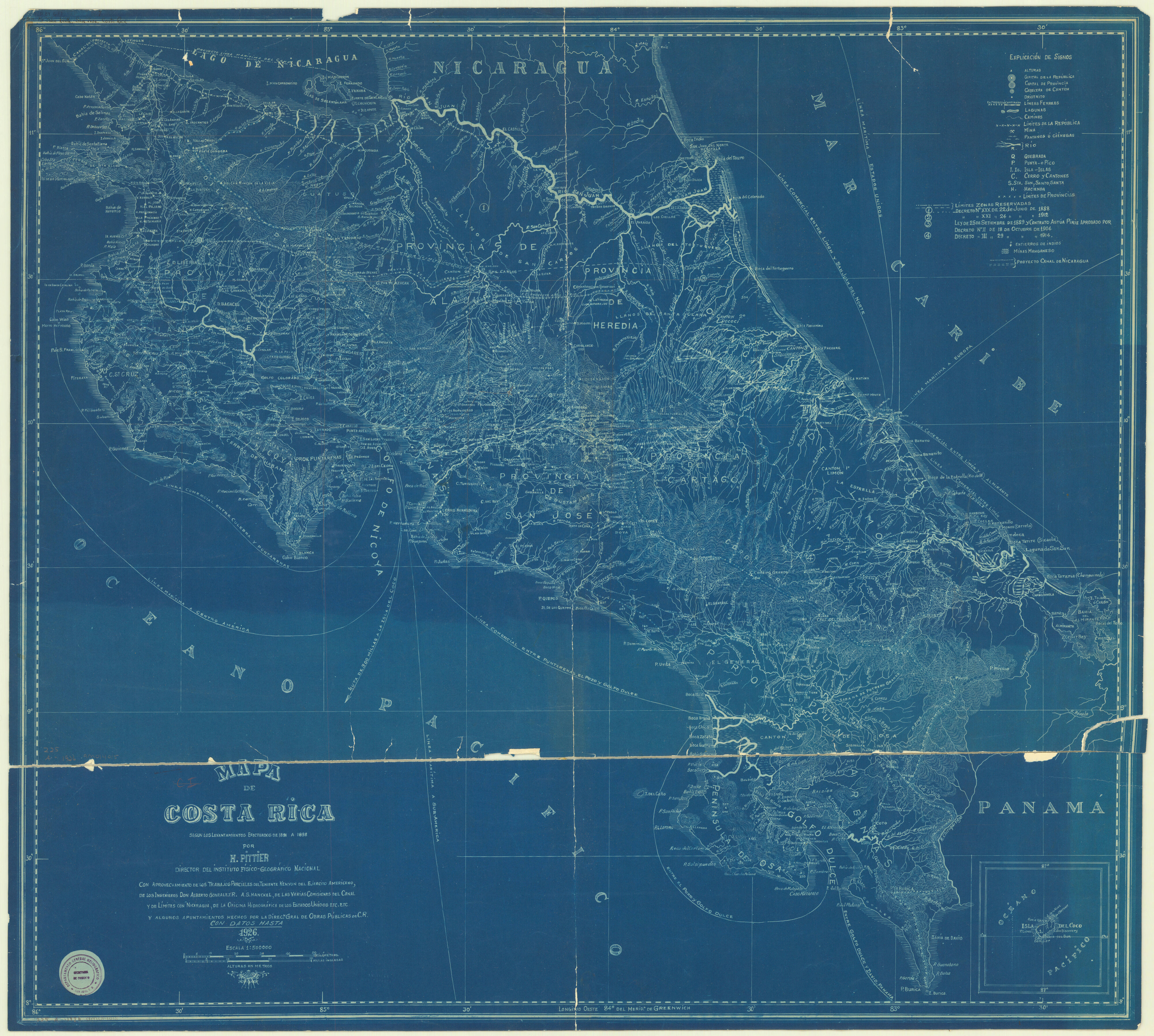
Pittier founded two scientific journals: the Anales del Instituto Físico-Geográfico Nacional in 1889, aimed at specialists, and the Boletín in 1901, aimed at a broader public. Both acquired national and international importance. With Durand, he published the Primitiae Florae Costaricensis between 1891 and 1901, the first attempt at a comprehensive flora of the country, issued through the Jardín Botanique de l'État in Brussels in twelve fascicles with contributions from specialist taxonomists across Europe. He proposed and oversaw systematic cartographic surveys between 1891 and 1898 to produce a comprehensive map of Costa Rica that would include not just topographic information but climatic, geological, botanical, and zoological data. The finished map, published in 1903, was considered a landmark in Central American cartography.
Later assessments would call Pittier "determined, indefatigable and tyrannical" with a "bold multidisciplinary approach to field biology." He called Costa Rica "the botanical and zoological emporium of the continent." The characterization of tyranny was not unfair. He demanded total commitment from everyone around him and tolerated no compromise on scientific standards. That quality built institutions, and it would inevitably bring him into conflict with the people who paid for them.
The Forests and the People
Between 1888 and 1900, Pittier and Tonduz moved almost continuously through the country, usually on mule. Costa Rica had no finished national roads. Coffee bumped from San José to Puntarenas in a seasonal stream of eight to ten thousand oxcarts a year, about four hundred and sixty kilos to a cart on the spokeless Costa Rican wheel bred for mud and sand, the round trip taking roughly a fortnight. The one paved route inland was the 1882 Camino a Carrillo, forty kilometers of cobbled calzada from San José through the Paso de La Palma and the Bajo de La Hondura to the Atlantic railhead, where diligencias pulled by three pairs of mules got through in six hours with up to twenty passengers. Everything else was mule trail or dugout canoe. On December 7, 1890, after nineteen years of construction and roughly four thousand worker deaths, the Ferrocarril al Atlántico finally opened through to Limón. A ten-day Reventazón mule trek became a one-day train ride, and Pittier was in the field along the new line within weeks. The through railroad to Puntarenas would not open until 1910, six years after he had left.
Along those roads and rivers, the volcanoes were only part of the work. The Geographic Section of the Institute ran dated expeditions to Bahía Salinas, Cerro Buena Vista, El General, Boruca, Dominical, Cañas Gordas, Coto Colorado, Talamanca in 1894 and again in 1895, and twice to Isla del Coco, in 1898 and 1902. On one expedition Pittier became lost for thirty-three days near Cerro Buena Vista in the freezing heights of what is now called Cerro de la Muerte. Crossing the virgin sabana at Cañas Gordas in 1897, he later recalled, the only way to stay on course was to keep the trail dead straight behind him, "otherwise one involuntarily described the most fantastic curves, ending up in the high forest at any point except the one taken as objective."
He ventured into Talamanca in August 1888 to study the Bribri and Cabécar peoples, beginning an ethnographic engagement that would produce a 613-page linguistic study of the Bribri language, published in German in Vienna in 1898 with Friedrich Müller. The work documented grammar, vocabulary, pronunciation, cultural practices, and included a Bribri-German-Spanish word list. He photographed the Guatuso (Maleku) people and their activities, producing 128 silver gelatin prints now preserved in the Smithsonian's National Anthropological Archives. His field method credited indigenous knowledge as scientifically authoritative. Plant names, he wrote with his American collaborator O. F. Cook, were used by forest peoples "with the same precision as scientific ones," and indigenous agronomy, like the Bribri practice of planting madera negra beside wild cacao, worked as integrated pest control and soil enrichment even when the practitioners did not frame it in European terms. On the Sixaola and Telire rivers, the team evaluated commercial navigation, he noted, "from the experiences the Bribris had in navigating" those waters.
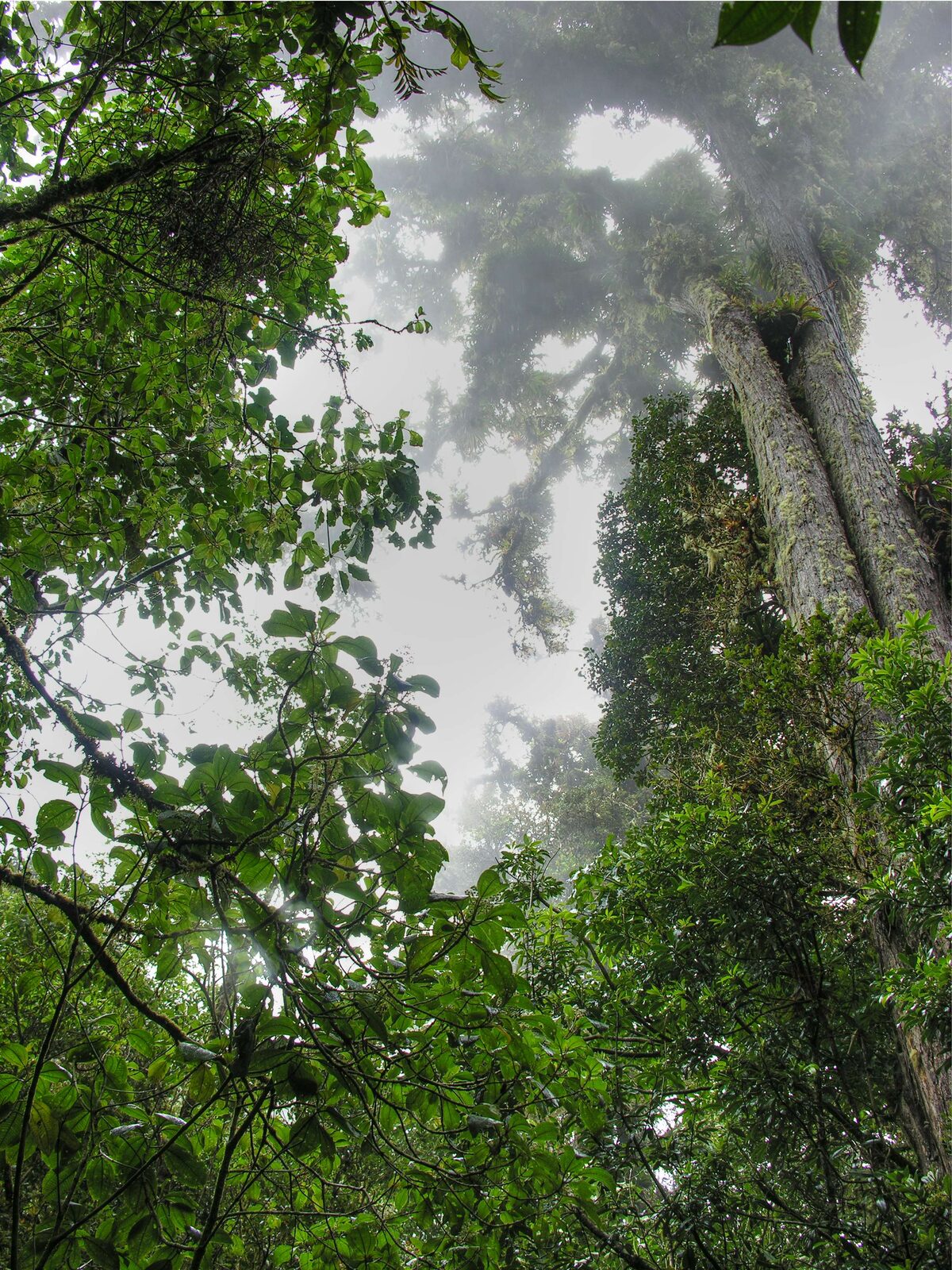
Everywhere he traveled, he documented destruction. On an early expedition to the Térraba region, he observed the agricultural frontier advancing into the southern highlands, where farmers were logging and burning centuries-old oak forests on the crests of Tablazo mountain. The soil layer was shallow. Erosion was inevitable. He called it "insensate destruction" of valuable timber "converted to ashes." The oak forests of the central plateau had been lost in his own lifetime. "Unfortunately," he wrote in the Ensayo, "one must go far now, to the spurs of Cerro de Buena Vista or the southern slopes of distant Kámuk, to see those forests still in all their majesty." Reading Anders Oersted's 1846 notes on "the beautiful forests of Candelaria" pained him "when we remember the stripped hillsides, the rocks and the aridity of the same district, as we have known it." The cascade was concrete: "scarcity of potable water, deterioration of climate, washing-away of arable soil exposed to the direct blow of the rains, collapse of the slopes, sterilization and annihilation of the productive forces of the land." These, he wrote, were the consequences "fatally experienced in many countries, of that eagerness to destroy with the terrible auxiliary of fire, the forests which constitute one of the greatest goods put by nature at the service of humanity."
His specific recommendations went further than any previous Costa Rican conservation measure: prohibit forest destruction by fire in the Río Grande and upper Reventazón basins; purchase remaining non-national superior forests with state funds; prohibit the alienation of national superior forests; protect forests near rivers and important water sources. He recognized the need for forest police and silvicultural legislation. "The urgent necessity," he wrote, was "to declare that all those forests located beyond a certain limit fixed by law are inalienable and fall under the protection of the State." These proposals anticipated by decades the framework that would eventually become Costa Rica's national park system.
In April 1891, Pittier married Guillermina Josefa Fábrega Fábrega, a young woman of Colombian parents. Guillermina was a descendant of General José de Fábrega, a follower of Simón Bolívar and one of the most important independence leaders of the Isthmus of Panama. They had three children together: Margarita, Emilio, and Teresa. Pittier adopted the surname "de Fábrega" from his second wife.
In 1894 he established a Jardín de Plantas y Animales beside the Liceo de Costa Rica, an acclimatization garden where native and exotic species could be grown, studied, and displayed. Neighborhood complaints about the noise of the animals pushed the collection north into Barrio Amón, on the northern edge of downtown San José. The botanical garden was formalized in 1916 and inaugurated in 1921 as the Parque Zoológico y Jardín Botánico Nacional Simón Bolívar, opened on July 24 during celebrations of Bolívar's birthday. It served as Costa Rica's national zoo for a century, closing in 2024.
During his seventeen years in Costa Rica, Pittier published approximately thirty-five discrete titles: reports, monographs, and popular science pieces. That count excludes his running editorial and research contributions to the Anales and the Boletín, which ran hundreds of shorter pieces. He contracted Alberto Manuel Brenes, considered the first Costa Rican-born botanist, to prepare ten collections of five hundred species each, training him in the methods of herbarium preparation. Brenes would continue the exploratory botanical work throughout Costa Rica long after Pittier left. The scientific community that Pittier helped build would nurture the tradition that eventually led to the founding of the Organization for Tropical Studies in 1963.
The Caciquillos
In 1899, the Instituto Físico-Geográfico was closed. International coffee prices had collapsed. Green coffee, which had averaged around $4.50 per hundred pounds in the previous decade, fell to an average of $2.13 in the decade that followed. The threat of war with Nicaragua compounded the fiscal crisis. Pittier's institute, for all its scientific achievements, was an expenditure a coffee-dependent government could no longer justify.
By 1903, Pittier had been running the country's scientific institutions for fifteen years. His original 1887 teaching contract had long since been folded into his directorship; his salary came from the Ministry of Public Instruction as chief of the Instituto Físico-Geográfico and the Meteorological Observatory, and that arrangement was set to expire the following year. The political mood had shifted. Pittier strongly suspected that leading figures in the newly elected government were opposed to renewing it. He felt targeted by what he called "caciquillos costarricenses," small-time political bosses, and specifically named the lawyer and minister Pedro Pérez Zeledón, whom he considered xenophobic. Rather than face the embarrassment of non-renewal, he decided to resign, initially requesting to rescind the contract to work with the United Fruit Company. The government asked him to remain as unpaid curator of the National Herbarium and chief of the Observatory, which he continued in an ad honorem capacity until he left the country.
Pittier left Costa Rica in late 1904, contracted by the United States Department of Agriculture as a "Special Agent in Botanical Investigation in Tropical Agriculture." He was forty-seven years old. Behind him he left the meteorological institute, the herbarium, the journals, the map, the botanical garden, and the conservation decree. The Instituto Físico-Geográfico would be definitively dissolved in 1910 after his departure, and its herbarium absorbed into the Museo Nacional, where it remains today with approximately 500,000 specimens.
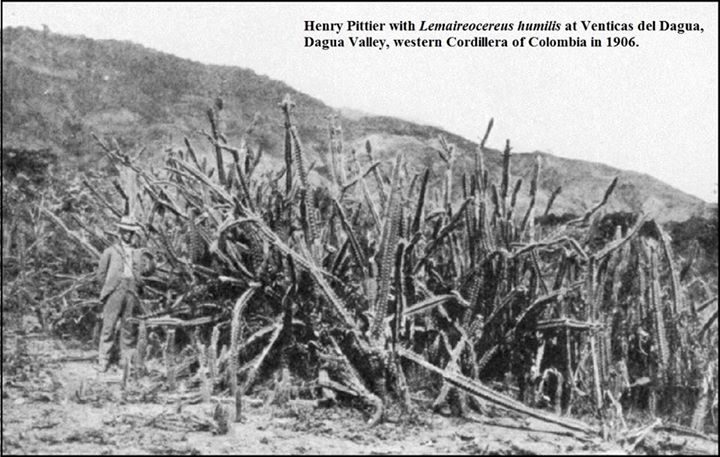
At the USDA he spent fifteen years collecting across Central America. From 1910 to 1912 he led the botanical component of the Smithsonian's Biological Survey of the Panama Canal Zone, collecting over 4,000 specimens to record the native flora before canal construction destroyed it. In 1908, from Washington, he published the Ensayo sobre las plantas usuales de Costa Rica, a comprehensive guide to the common plants of the country he had left. It was reviewed in Science. He did not like Washington's cold weather, and found ways to get out of it.
The Difficult Modernization
In 1913, the Venezuelan government invited Pittier, as a USDA agricultural expert, to advise on establishing an agricultural school. Minister of Public Instruction José Gil Fortoul had visited American agricultural institutes and wanted to create something similar in Maracay, on the expropriated hacienda La Trinidad. Pittier wrote a detailed document explaining why the plan was premature. Venezuela lacked experimental knowledge of tropical agriculture; experimental stations should come first. His frankness alarmed his associates. General Velutini told him: "If you were Venezuelan, I would advise you to leave for Curazao before presenting that document." The government accepted his recommendation and shelved the school.
He returned in 1917 on USDA leave, with a one-year Venezuelan contract to establish an experimental agricultural station at Cotiza, north of Caracas. He published detailed reports on the station's work: gardens of acclimatization, horticultural trials, pasture experiments, wheat trials, cotton experiments. Then he clashed with the Minister of Fomento, Gumersindo Torres, over authority. Pittier wrote Torres that he expected to be treated as "a collaborator, not a dependent." Torres replied that the contract required Pittier to follow ministry instructions. Pittier resigned from the station after what he called "criolla politicking" was introduced into its affairs. It was then "placed in the hands of a person whose only merit was being son-in-law of a brother-in-law of the president." It soon decayed and disappeared.
After leaving the station, Pittier tried farming. With partners, he acquired property in Carabobo state for timber export and corn and cotton cultivation. The venture failed. He was left, he wrote, "with debts that to me seemed truly gigantic." In 1919, at sixty-two and nearing the USDA's mandatory retirement age, he formally resigned from Washington and settled permanently in Caracas. By sixty-three he found himself without secure employment in a country governed by the dictator Juan Vicente Gómez. Both the Venezuelan and American governments seemed uninterested in re-employing him.
Pittier applied pressure. To Washington, he implied that Berlin's herbarium had made "very interesting offers" regarding his Venezuelan plant collections, leveraging the intense American-German competition for tropical botanical specimens. Eventually, the Dirección de Política Comercial, under Foreign Minister Esteban Gil Borges, created a Museo Comercial e Industrial, and Pittier was named its director. "In reality," he later wrote, "it was never either a museum or commercial. From the beginning my idea was followed, which was the study of the flora in the systematic sense."
From a back room in the Casa Amarilla in Caracas, with one secretary, Pittier began building a second national herbarium. During his first visit in 1913, he had seen vestiges of the Ernst and Vargas herbaria, Venezuela's two earlier botanical collections, "thrown out like trash in a location unprotected from the elements." He was determined not to let it happen again. From the start, he sent duplicate specimens to both the US National Herbarium in Washington and the Berlin herbarium, "not the desire to increase by exchange our own wealth, but the fruit of a sad experience." By August 1931, his catalog included 2,051 genera and 8,782 species. Venezuelan collectors contributed alongside him: Alfredo Jahn, José Saer d'Heguert, the Hermanos Cristianos of Barquisimeto and Caracas, doctors Enrique Tejera and Eugenio De Bellard.
In 1926, he submitted a 900-page manuscript of the Manual de las plantas usuales de Venezuela to General Gómez and the Minister of Fomento. The minister had "experts" review it favorably, then asked Pittier to soften his criticisms of Venezuelan forestry legislation. Pittier acceded, but told the minister: "One of the reasons that may have induced you to attribute to me intentions I have not had is my eagerness to always approach as closely as possible to the truth." When publication was delayed, Pittier threatened to publish an English edition through the Smithsonian. He dedicated the book to General Gómez. Francisco Tamayo, one of Pittier's Venezuelan disciples, later assessed the Manual and its 1939 supplement as works that "have currency, for their projection is of great scope and they have not yet been surpassed."
In 1931, Pittier helped found the Sociedad Venezolana de Ciencias Naturales, serving as its secretary and contributing research throughout the following decades. That same year, he was placed in charge of the Observatorio Cajigal. The state of what he found there became legendary. Francisco Tamayo, who accompanied Pittier on his first visit, testified: "There was a goat tied to the foot of the main instrument and a hen nesting in the casing that was supposed to cover one of the most valuable pieces of that institution. I can attest to this because I accompanied the maestro when he went to take possession." Pittier published a frank assessment of the observatory's deterioration.
In 1933, he was fired from both the Museo Comercial and the Observatorio. The Colegio de Ingenieros revoked his honorary membership, accusing him of trying "to discredit the labors of said observatory" and of wounding "the patriotic sentiments of this Corporation." At seventy-five, Pittier was penniless. He wrote to his colleague Carlos Chardon: "This dismissal leaves me without resources of any kind and with heavy financial burdens that I will be unable to meet, this at an age when it is difficult, if not impossible, to start again elsewhere." He feared the herbarium he had built for twelve years would be lost. He and Alfredo Jahn tried to treat the collection with preservatives, but were denied access.
Gómez later sent word that "the past was forgotten" and Pittier was "still high in his esteem and friendship." Pittier was told to seek reinstatement. He refused: "I told them that if they wanted me they would have to come looking for me." Ellsworth Killip, from the US National Herbarium, wrote: "It is a disgrace the way you have been treated by Venezuelan officials. One does not expect gratitude from governments, but that they should fail to take advantage of someone who knows the tropical American botany better than anyone else... seems incredible."
Two Passports to Paradise
The dictator Juan Vicente Gómez, who had ruled Venezuela for twenty-seven years, died on December 17, 1935. The new government under Eleazar López Contreras created the Servicio Botánico within the Ministerio de Agricultura y Cría, and Pittier was named its head. His first task was rescuing the herbarium from three years of neglect at the Museo Comercial. He was seventy-eight years old and starting over for the third time.
In a session of the Sociedad Venezolana de Ciencias Naturales, Pittier read a paper that contained perhaps the most urgent words he ever wrote: "In none of the Hispanic American countries I have had the opportunity to visit have I been able to note a state of affairs so deplorable in matters of forest destruction and soil sterilization as in the central valleys of Venezuela. And the vandalistic work of the axe and fire continues all around; the devastated area expands day by day and if it is not checked, within a few generations the entire country will have become unproductive and semi-desert." He demanded reform of forestry legislation, which he said was "essentially unilateral," considering "the rental part of the exploitative side, forgetting with few exceptions the most important details of conservation and reseeding." He invoked Schiller's William Tell as a model for the reverence toward forests that Hispanic America lacked.
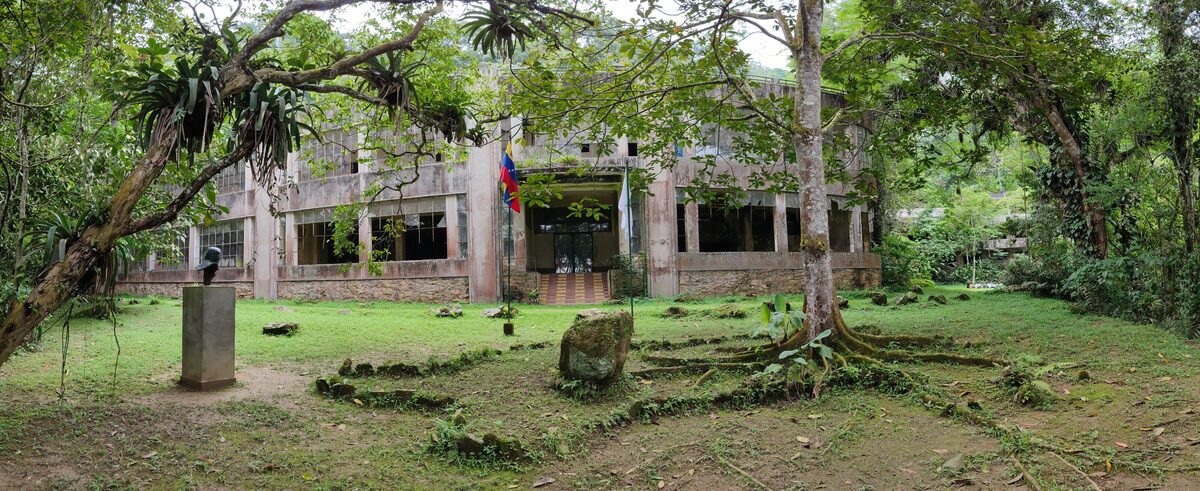
On January 14, 1937, Pittier submitted a memorandum arguing that the nationalization of properties belonging to the late General Gómez presented an unrepeatable opportunity to establish forest reserves and national parks. He specifically recommended the valleys of El Limón and Ocumare de la Costa and the headwaters of the Río Chuao. Exactly one month later, on February 13, 1937, President López Contreras created the Parque Nacional de Rancho Grande, Venezuela's first national park. An unfinished Art Deco hotel that Gómez had begun building in the park was converted, at Pittier's suggestion, into the Estación Biológica de Rancho Grande, a research facility that continues to operate today. In 1953, three years after Pittier's death, the park was renamed Parque Nacional Henri Pittier in his honor. It remains Venezuela's oldest national park, covering approximately 107,800 hectares of cloud forest and coastal ecosystems in the state of Aragua.
In the years that followed, Pittier trained a generation of Venezuelan botanists. He organized practical botany courses, initially teaching them himself, and published the Clave analítica de los géneros de plantas hasta hoy conocidos en Venezuela in 1939 as a teaching text. His principal disciples included Tobías Lasser, who would become the leading figure in Venezuelan botany; Francisco Tamayo; Zoraida Luces, who specialized in agrostology; Víctor Badillo; and Harry Corothie. In 1942, on Pittier's eighty-fifth birthday, the Venezuelan government created the "Henri Pittier" scholarship for advanced training in systematic botany. Badillo and Tamayo were among its first recipients, specializing in Argentina. Together with Lasser, Ludwig Schnee, Luces, and Badillo, Pittier co-authored the Catálogo de la Flora Venezolana, published in two volumes in 1945-1947 for the Third Inter-American Conference on Agriculture in Caracas.
By 1947, the Herbario Nacional held 335 families, 1,528 genera, and 9,696 catalogued species, with 27,109 individually numbered, determined, and classified specimens, plus a wood collection of 2,750 structural samples and a library of 6,000 bound volumes. Pittier noted that the 9,696 species "considerably exceeded 10,000" by the time he was writing, making Venezuela's flora "one of the richest in South America, relative to the country's surface area." He strictly enforced the policy that foreign expeditions leave their first set of collections in Venezuela. When the New York Botanical Garden failed to deliver specimens from an Auyantepui expedition, he cut them off.
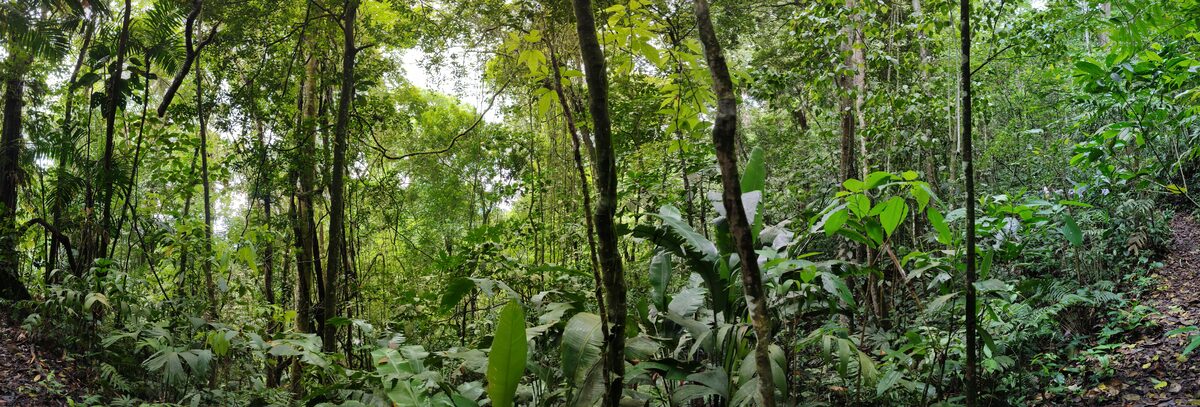
On April 29, 1949, while at the Estación Biológica de Rancho Grande, Pittier received notice that the Ministry of Agriculture had decided to retire him. He was ninety-one years old and had been working "almost until the last days of his life." The government pensioned him with 2,000 bolívares monthly. From the Clínica Maracay, where he was hospitalized, he wrote to Killip at the Smithsonian: "The government was splendid with me, pensioning me with a salary of 2,000 bolívares monthly and other privileges that I do not have the hope of being able to enjoy for much time." He added: "I realize now more than ever that work is life."
Months before dying, he wrote to Smithsonian Secretary Alexander Wetmore that he had confirmed his United States citizenship through the American ambassador, and that Switzerland had restored his Swiss nationality. He closed the letter: "Now I have two passports with which I am sure of reaching Paradise!" Henri François Pittier de Fábrega died on January 27, 1950, in Caracas, at the age of ninety-two.
Over a career spanning six decades and three countries, Pittier published more than 300 works across botany, geography, forestry, anthropology, ethnography, linguistics, geology, and climatology. He wrote or edited three national floras: the Primitiae Florae Costaricensis, the Ensayo sobre las plantas usuales de Costa Rica, and the Manual de las plantas usuales de Venezuela. More than 500 species of plants and animals bear the epithet "pittieri" in his honor. The Costa Rican meteorological institute he founded in 1888 was declared an Institución Benemérita de la Patria in 2025, on its 137th anniversary. The Herbario Nacional de Costa Rica, which grew from the collections he and Tonduz built, now holds approximately 500,000 specimens. The Herbario Nacional de Venezuela, which he started in a back room of the Casa Amarilla, holds approximately 458,000. After his death, the Department of Forest Research in Venezuela was placed under Tobías Lasser's direction and renamed the Botanical Institute. The Jardín Botánico de Caracas was later named the Instituto Experimental Jardín Botánico Dr. Tobías Lasser, and in 2000 the Ciudad Universitaria de Caracas, which contains the garden, was inscribed as a UNESCO World Heritage Site. Pittier had built things too useful to destroy.
Resources & Further Reading
Books
The most detailed study of Pittier's Venezuelan career, including his own articles, selected correspondence 1912-1950, and a complete bibliography of his publications.
Based on previously unseen primary documents including 70 years of Pittier's correspondence. The only major English-language study of Pittier's work in Costa Rica.
The most comprehensive biography of Pittier (455 pages, in German). Reviewed by Irina Podgorny in Isis 93, no. 2 (2002).
Places Pittier within the broader history of conservation in Costa Rica, from the colonial period through the establishment of the national park system.
Key Articles
The most detailed academic study of Pittier's conservation work in Costa Rica, establishing him as the first person to make conservation proposals grounded in scientific criteria.
Reconstructs the institutional history of the IFGN and evaluates Pittier's central role in founding modern science in Costa Rica.
Situates Pittier's work within the broader context of Latin American nation-building through botanical science.
Detailed study of Pittier's plant collecting in Panama, including a list of type collections.
Detailed biographical study of Pittier, with specific dates for the 1933 firing from the Observatorio Cajigal and the Museo Comercial.
Full chronology of nineteenth-century Costa Rican geographic exploration, with a dated roster of Pittier and IFGN expeditions from 1890 to 1902 and the political context for the national cartographic project.
Primary Works by Pittier
The first attempt at a comprehensive flora of Costa Rica, published in twelve fascicles through the Belgian Royal Botanical Garden.
A comprehensive guide to the common plants of Costa Rica, published in Washington after Pittier's departure from the country.
Pittier's 900-page guide to Venezuelan plants, with a 1939 supplement. Francisco Tamayo assessed it as a work that "has not yet been surpassed."
Institutions
Founded under Pittier's direction at the IFGN. Now holds approximately 500,000 specimens, including 11,735 historic examples collected more than 100 years ago.
Founded by Pittier on April 7, 1888. Declared Institución Benemérita de la Patria on its 137th anniversary in 2025.
Founded by Pittier in 1921. Now holds approximately 458,000 specimens at the Instituto Experimental Jardín Botánico Dr. Tobías Lasser, located within the UNESCO-inscribed Ciudad Universitaria de Caracas.
Pittier's field notebooks (SIA Acc 12-350), related records (SIA RU000192), and ethnographic photographs in the National Anthropological Archives.
Digital scan of the 1903 IFGN map, surveyed under Pittier's direction from 1891 to 1898. 10231 × 9186 px grayscale, public domain, open IIIF access.
Official UNESCO record for the 2000 inscription of the Ciudad Universitaria de Caracas, the World Heritage Site that contains the Jardín Botánico founded by Pittier.
Related Profiles
American ecologist who developed the life zones classification system in Costa Rica, building on the tradition of vegetation science that Pittier helped establish.
Quaker conservationist who protected cloud forest in Monteverde, continuing the tradition of watershed protection that Pittier pioneered at Volcán Barva.