The Man Who Named Scientific Imperialism
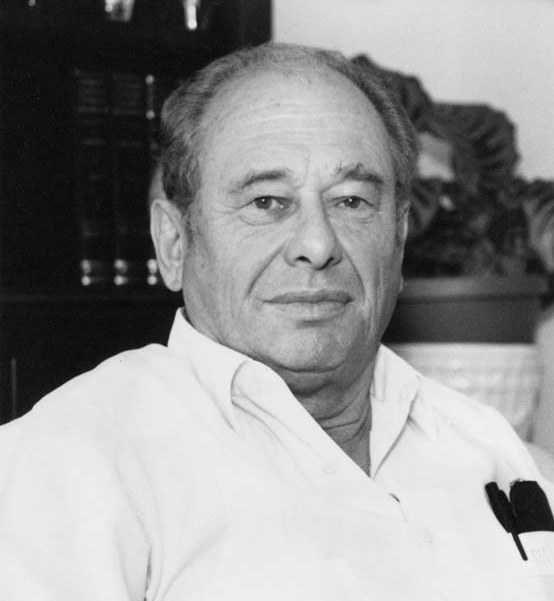
Gerardo Budowski fled Nazi Germany, became a champion of a developing country, then rose to lead global conservation. From that platform, he challenged the powerful institutions that extracted knowledge from the Global South while leaving nothing behind.
The pattern was always the same. A scientist from a wealthy country would arrive in the tropics, collect specimens, record observations, photograph everything, then fly home. The specimens would end up in museums in New York or London or Paris, where they would be "studied, mounted, identified, described and illustrated." The local assistant who had guided the expedition, identified species, and navigated customs would appear in the footnotes, if at all. The developing country that had provided the resources would receive nothing but an acknowledgment. And the visiting scientist would return a few years later to discover that the rare species he'd studied had been hunted to extinction—using the efficient trapping techniques he'd introduced.
In 1975, the man running the world's most important conservation organization gave this pattern a name. He called it "scientific imperialism."
Gerardo Budowski was Director General of the International Union for Conservation of Nature, based in Switzerland, at the center of global environmental policy. He could have spent his tenure cultivating donors and attending diplomatic receptions. Instead, he used his platform to publish a systematic critique of how scientific research perpetuated colonial power structures. "Every country has the right to utilize and present to the world its own scientific resources," he wrote. Scientists from developed countries, he argued, "descend upon developing countries to collect, 'protect' or capture and take home flora, fauna and professional prestige." The word "imperialism" was deliberate. This was not a complaint about manners. It was an accusation of exploitation.
What gave Budowski the standing to make this accusation was his own trajectory. He was not born in the Global South, but he had become part of it. He understood extraction from the receiving end.
The Harbor
In 1933, when Gerardo Budowski was eight years old, his family fled Berlin. His parents were both chemists, Jewish intellectuals in a city that was turning against them. They crossed into France just ahead of the violence. For the next several years, Gerardo attended school in Paris while Europe prepared for war.
By the early 1940s, the family needed to leave Europe entirely. They booked passage to Latin America, but their German nationality complicated everything. Panama would not let them through. Their ship was diverted to Venezuela. When it docked at La Guaira, the Budowskis faced an immediate problem: none of them spoke Spanish. None except fifteen-year-old Gerardo, who had somehow picked up the language. The family's survival in this strange harbor depended on their teenage son. They sent him to find lodging.
He found it. The Budowskis stayed in Venezuela. Within a decade, Gerardo had become a Venezuelan citizen, graduated as an agricultural engineer, and won the national chess championship. The family's chess tradition ran deep—his mother had once drawn a game against José Raúl Capablanca, the Cuban world champion, and Alexander Alekhine had given young Gerardo lessons in Paris. In 1951, he defeated Julio García 6-0 to become Campeón Absoluto de Venezuela. He reportedly could play blindfolded against multiple opponents simultaneously.
But chess was a sideline. After graduating as an agricultural engineer from the Universidad Central de Venezuela in 1948, Budowski joined the country's Oficina Técnica de Investigación Forestal. He led forest inventory expeditions into remote terrain, including trips to the tepuyes—the ancient tabletop mountains that rise from the Venezuelan jungle. On these expeditions he worked alongside the ornithologist William H. Phelps and the American ecologist Leslie Holdridge, whose life zone classification system was reshaping how scientists understood tropical ecosystems.
Holdridge saw something in the young Venezuelan and encouraged him to pursue graduate studies at the Inter-American Institute of Agricultural Sciences in Turrialba, Costa Rica. Budowski arrived in 1952 and earned his master's degree with honors in 1954. He spent the next two years as chief forester for the Organization of American States, based in Havana, overseeing forestry programs across Mexico, Central America, and the Caribbean. In 1956 he returned to IICA and soon took over its forestry department. His 1961 dissertation at Yale on forest succession—how tropical forests recover after disturbance—became foundational work in the field. He was the first Venezuelan to earn a doctorate in forest science.
By 1970, Budowski had directed IICA's Natural Resources Department for years and published extensively in Spanish, English, French, and German. He had trained at elite institutions in the developed world, but he represented Venezuela. He knew what it was like to arrive in a strange harbor with nothing, dependent on the goodwill of others. When he saw foreign scientists extracting resources from developing countries, he recognized the pattern.
The Critique
In late 1969, the International Union for Conservation of Nature unanimously elected Budowski as its first Director General at its General Assembly in New Delhi. He was 44 years old, Venezuelan by nationality, German by birth, and about to lead the world's most influential conservation body from its headquarters in Morges, Switzerland. He served through 1976, a period that included the landmark 1972 Stockholm Conference—the first United Nations conference on the global environment.
From this platform, Budowski published his critique of scientific imperialism. The article appeared in Unasylva, the FAO's forestry journal, and systematically documented how international research perpetuated inequality. He catalogued the forms it took: specimen collectors who sent everything to foreign museums without strengthening local institutions; scientists who "discovered" facts that local researchers already knew, presenting them as novelties and receiving wide coverage while local authors went uncredited; visitors who made sweeping generalizations from short observations, labeling tropical countries as "hot, steaming, almost unbearable" while ignoring how residents actually lived.
He was especially pointed about local assistants. The "bright local guide" who identified species and navigated bureaucracy often received only a footnote—or nothing. Well-funded visitors arrived with spouses and graduate assistants while their local counterparts scraped by on minimal budgets. Excessive payments for specimens and services "disrupted traditional patterns and customs" and created resentment among local scientists who could not afford similar amounts. The power differential was structural, not personal.
Most damning was his observation about technology transfer. Visiting scientists introduced efficient hunting traps and fishing techniques that led, in some cases, to "practical eradication of some species" and widespread depletion. Conservation researchers, in other words, sometimes caused the extinctions they later mourned.
Budowski's remedies were practical: involve local scientists as co-authors and expedition partners; build local facilities, libraries, and museums; consult local researchers before press interviews; establish coordination offices to prevent duplicated efforts. The goal was not to stop international research but to restructure it so that host countries benefited. "Every country has the right to utilize and present to the world its own scientific resources."
The Frameworks
The scientific imperialism critique was part of a larger pattern in Budowski's thinking: finding ways for unequal forces to coexist productively rather than one exploiting the other. Before IUCN, he had spent time at UNESCO in Paris, where his work on ecology and conservation intersected with the development of what became the Man and Biosphere program in the early 1970s. The MAB initiative pioneered a new kind of protected area—biosphere reserves—designed not as untouched wilderness museums but as landscapes where conservation and human activity could coexist in concentric zones. Costa Rica now has four of them: Cordillera Volcánica Central, La Amistad, Agua y Paz, and Savegre.
The same year he left IUCN, Budowski published another paper that would prove even more influential.
"Tourism and Environmental Conservation: Conflict, Coexistence, or Symbiosis?" appeared in 1976 and gave practitioners a vocabulary they still use today. Budowski argued that tourism and conservation could exist in three relationships. In conflict, tourism damaged natural areas. In coexistence, the two ignored each other. In symbiosis, tourism generated revenue and political support for conservation while protected areas provided attractions that drew tourists. The relationship was not fixed—with good management, conflict could become coexistence, and coexistence could become symbiosis.
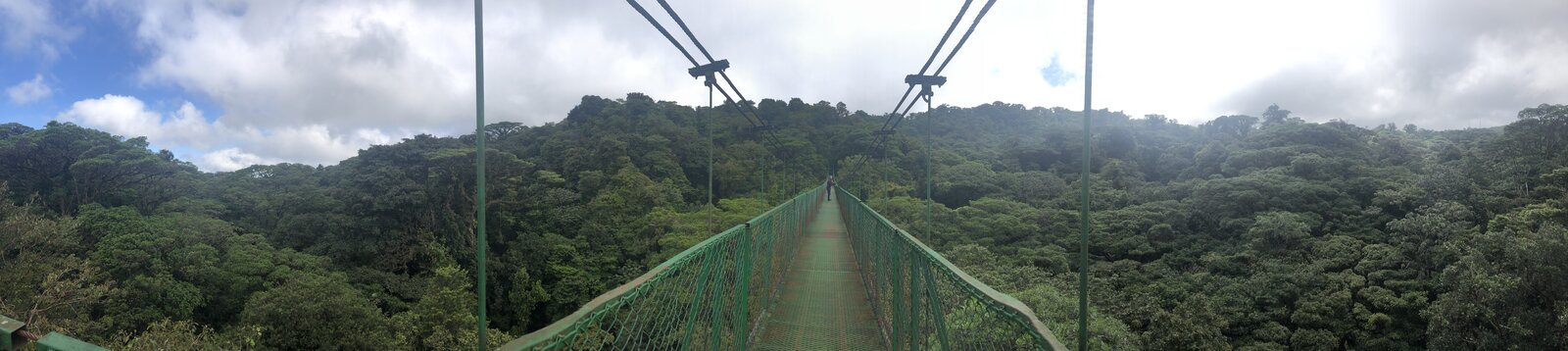
Costa Rica would become the world's leading example of that symbiotic relationship. When Mario Boza and Álvaro Ugalde built the national park system, when private reserves like Monteverde attracted international visitors, when rural communities developed nature-based tourism enterprises, they were proving Budowski's thesis. But Budowski himself was doing more than theorizing. After leaving IUCN in 1976, he returned to Costa Rica and CATIE, where he directed the Natural Resources Department. Under his leadership, the department expanded considerably with projects in firewood, watersheds, and a discipline for which Budowski coined the Spanish term: agroforestería.
Farmers throughout Latin America had long integrated trees into their agricultural systems—shade trees over coffee, forest strips along streams, timber species intercropped with annual crops. These practices had local names everywhere, but no common vocabulary existed to describe them as a coherent discipline. Budowski's term spread rapidly through Latin American scientific communities. English borrowed the concept as "agroforestry," now a recognized field with its own journals and university programs. Again, the pattern: finding ways for seemingly opposed forces—in this case, farming and forestry—to reinforce rather than undermine each other.
The tourism-conservation framework also became an institution. From 1993 to 1997, Budowski served as president of the World Ecotourism Society, working to translate his 1976 paper into global practice. He was an honorary member of the World Wildlife Fund, and consistently argued that local communities needed to become active stakeholders in conservation decisions rather than subjects of policies designed elsewhere.
The Teacher
Budowski's teaching embodied his critique. Where scientific imperialists made sweeping generalizations from short visits, he taught students to do the opposite. His famous course at CATIE, "Bases ecológicas del uso de la tierra," was legendary—colleagues said no student escaped it, nor wanted to. His teaching philosophy could be summarized in a single directive: "Don't theorize, don't adopt fanatic positions—go to the field and measure."
He had a gift for puncturing pretension through practical example. When students debated the merits of native versus exotic species—a topic that could generate fierce ideological positions—Budowski would ask them to list what they had eaten for breakfast. Bread, beans, eggs, rice, orange juice. Then he would point out that none of these originated in tropical America. The lesson was not that exotic species were harmless, but that automatic thinking was dangerous. Go to the field. Measure. Let evidence guide you.
Where scientific imperialists treated local assistants as footnotes, Budowski sent his students to learn from farmers. Rather than imposing theory, he had them measure what rural people already knew. They studied shade-grown coffee and cacao systems, homestead gardens showcasing generations of biodiversity knowledge, the living fences that lined farm boundaries throughout Central America. His research team documented 92 species that Costa Rican farmers used for live fenceposts—empirical knowledge that had never been systematically recorded. Every field study required what Budowski called "in-depth discussions with plot owners and families." The people who worked the land were not assistants to be acknowledged in footnotes. They were sources of knowledge that science had overlooked.
His office at CATIE became legendary for different reasons. Publications accumulated obsessively—stacks covering his desk entirely, eventually spreading across the floor in neat piles. Despite apparent chaos, Budowski could locate any document quickly. Once, an assistant attempted to organize the office while he was traveling. The results were notably unapproved. He attended conferences with briefcases stuffed with documents rather than notebooks, simultaneously reading, annotating, and correcting papers while fully participating in discussions. The man who could play blindfolded chess had a similar capacity for parallel processing in academic settings.
In 1980, the United Nations established the University for Peace in Costa Rica. Budowski joined and became instrumental in developing its environmental program, eventually serving as Interim Rector and Vice-Rector. Colleagues noted that he embodied peace not only academically but in daily life. He calmed complex discussions, consistently articulated principles, and guided contentious meetings toward productive resolution. His environmental ethics fundamentally linked peace with progress—he argued that peaceful initiatives should be prerequisites for funding development activities in Latin America.
The Long Game
Gerardo Budowski died on October 8, 2014, in San José, Costa Rica, at the age of 89. He was survived by his wife Thelma Palma and their two daughters—one of whom pioneered innovative ecotourism reception services in Costa Rica, carrying forward the symbiosis model her father had articulated.
His ideas became so thoroughly integrated into conservation practice that people use them without knowing their origin. When Costa Rican park managers design visitor programs to generate revenue while protecting ecosystems, they work within Budowski's framework. When farmers describe their tree-crop systems as agroforestry, they use his vocabulary. When research partnerships require capacity building and co-authorship with local scientists, they follow principles he articulated half a century ago.
The fifteen-year-old who found lodging in a strange harbor had spent seven decades finding ways for unequal forces to coexist. The refugee who depended on others' goodwill became the advocate for developing countries' right to control their own resources. The chess champion who could see twelve moves ahead had played a longer game than anyone realized.
References & Further Reading
Primary Works
Budowski's systematic critique of how international research perpetuated colonial power structures in developing countries.
The foundational paper establishing the conflict-coexistence-symbiosis framework for understanding tourism-conservation relationships.
Biographical Sources
Official IUCN tribute to Budowski following his death in 2014.
Comprehensive Spanish-language biography with personal anecdotes from colleagues and students.
Tribute article recognizing Budowski's contributions to tropical mountain conservation.
Biographical overview including his flight from Nazi Germany, chess career, and scientific contributions.
Institutional Resources
1995 tribute article recognizing Budowski's role in promoting agroforestry.
The UN-mandated institution where Budowski served as Interim Rector and Vice-Rector.
The institution where Budowski earned his master's degree in 1954 and later directed the Natural Resources Department.