The Conservationist Who Armed His Rangers
Álvaro Ugalde turned Costa Rica's burning frontier into a living park system, then spent his last breath keeping it alive.
In February 2015, Álvaro Ugalde's heart was failing. Doctors knew. His family knew. He knew. But in the final days of his life, the 68-year-old co-founder of Costa Rica's park system wasn't at home preparing to die. He was at Casa Presidencial with mud on his boots, pressing President Luis Guillermo Solís for more protection for the Osa Peninsula. The gold miners were back in Corcovado, he warned. The park he'd spent forty years defending was bleeding again. Days later, his heart gave out. The battle, he'd insisted to the end, could not.
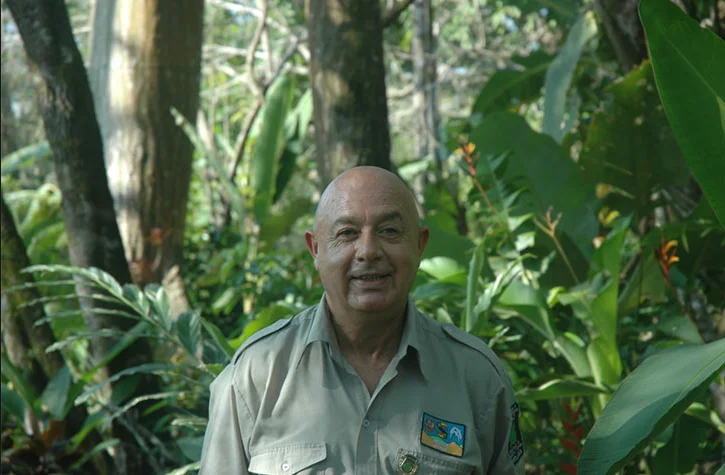
Álvaro Ugalde was born in Heredia in 1946. As a young man, before university, he'd spent time in the United States working manual labor in Georgia to learn English: loading trucks, farm work, whatever paid. In his early twenties, he studied biology at the University of Costa Rica with no grand plan. He just liked biology. By his final years at university, he'd become a volunteer at a protected area that existed in name but had no staff and no management: Santa Rosa.
In early 1969, during his final year of university, a fellow volunteer named Mario Boza approached him with an opportunity. Boza, who had studied agricultural engineering at the University of Costa Rica and received his master's degree in forestry from CATIE, had recently visited Great Smoky Mountains National Park in the United States. He'd been so impressed that he wrote his master's thesis on a conservation management plan for the area around Poás Volcano, a blueprint for managing it like an American park. Now Boza had found funding for Ugalde to attend an International Seminar on National Parks, a month-long tour of U.S. and Canadian park systems run by their park services and the University of Michigan.
Ugalde's response was reluctant. He was worried about finishing his degree, which he felt was his most pressing priority. He said no. But Boza was persistent. In May he returned with the funding secured. The pressure from Boza and other friends was insurmountable. Ugalde dropped out of school for the year.
In August 1969, he joined 25 other individuals from around the world on the journey. They traveled from Jasper National Park in Canada to the Grand Canyon in the United States, stopping at fifteen or twenty parks along the way. Ugalde met everyone from superintendents to rangers to concessioners.
Something clicked. What Ugalde saw was not just pretty landscapes but infrastructure. He saw how those two countries ran their park systems: management plans, budgets, uniforms, chains of command. He saw, for the first time, a system for conservation. The biologist's mind was transformed into an architect's. This trip, he would later say, was "the most inspirational experience you can probably ever have." It would "change my life, the history of my country and the life and history of many, many others." He was so galvanized that after the seminar ended, he stayed two more months at the Grand Canyon, registering in a Park Operations course and working with the rangers.
Ugalde returned to Costa Rica in December 1969. The timing was electric. Just one week earlier, the Costa Rican Congress had passed a new forestry law that, for the first time, included provisions for establishing national parks. The law had no budget, no staff, and no land. It was ink on paper. Boza and Ugalde returned to their volunteer work at Santa Rosa determined to turn the ink into reality. They had Boza's master's thesis on Poás as a blueprint. They had fresh expertise from the Grand Tour. What they needed was political power.
They found it in an unexpected ally. In 1970, Karen Olsen Beck became First Lady when her husband José Figueres Ferrer was elected president for his second term. She would prove to be, alongside Boza and Ugalde, the main promoter for the creation of the National Parks Service. With the First Lady's patronage, the two young conservationists had access to ministries and funding that would have been impossible otherwise. They were not just idealistic students anymore. They were representatives of the First Lady's conservation agenda.
In 1970, armed with Boza's thesis, First Lady Olsen's support, and their newfound expertise from the American park tour, they successfully lobbied the government to create Poás Volcano National Park. On September 24, 1970, executive decree 1237 established Poás alongside Tortuguero as Costa Rica's first national parks. The cloud forests around one of the country's most active volcanoes were now protected. Mario Boza became the first and only national park employee in Costa Rica. Álvaro Ugalde finished his biology degree and became the unpaid superintendent of Santa Rosa, a protected area where he'd been volunteering but which still had no formal status or management.
In 1971, they pushed for Santa Rosa's formal designation. The Tourism Board, which controlled the land in Guanacaste, transferred it to the new parks department. Santa Rosa became a national park. But the victory was immediately attacked. Congressman Daniel Oduber introduced a bill to reverse the transfer and return Santa Rosa to the Tourism Board. Ugalde and Boza went to war. They lobbied legislators, mobilized First Lady Olsen, and made sure the bill never left committee. The park stayed. Years later, after Oduber became president, he would become one of their strongest allies. At Santa Rosa's inauguration, Boza and Ugalde appeared in park ranger uniforms alongside First Lady Olsen and Fernando Batalla, the Minister of Agriculture. The photographs from that day show two young men in their twenties standing with Costa Rica's most powerful political figures, having just fought off their first attempt to dismantle what they'd built.
It would not be their last. Costa Rica in the 1960s and 1970s was a demolition site. By 1940 roughly two thirds of the country's forests still stood; by 1961 the figure had fallen to 43%, and by 1977 only 32% remained. The pasture frontier had ballooned by 62% since the 1950s as cattle ranchers cleared forest to feed a booming international beef market. Banana plantations ripped out old-growth trees on an industrial scale. Laws rewarded anyone who cleared "unused" land. Trees could not secure bank loans, but cattle could. Development was defined as the sound of chainsaws. Creating parks on paper was one thing. Defending them in a country where every economic incentive pointed toward destruction was another.
When Boza left the park service in 1974 to pursue an academic career, Ugalde, just back from earning his master's degree in natural resource management at the University of Michigan, was appointed the new director. He would hold the post for seventeen years, expanding what he and Boza had started. Boza had established the first four parks and created the institutional structure. Ugalde's task was to multiply it, defend it, and make it permanent. He recruited young guards and wrote management plans. He argued with ministers who saw parks as obstacles to roads, dams, and military bases. His English, learned years earlier loading trucks in Georgia, now opened doors to American and European foundations. He began flying wealthy donors into the parks for multi-day wilderness tours. No hotel lobbies, just ranger stations where they slept on cots and woke to howler monkeys screaming in primary forest. The pitch was visceral: buy the private inholdings inside park boundaries before speculators did, and turn paper parks into functional ecosystems.
What set Ugalde apart was his willingness to enforce the map. He cultivated donors abroad, but he also fought presidents at home. Colleagues remember his rule of thumb: a decree meant nothing if you couldn't defend it at gunpoint and in court.
His recruiting pitch was blunt: he told young guards they'd be living in mud, earning almost nothing, and making enemies of every logger and rancher in the province. Most quit within a year. The ones who stayed became his shock troops, guards willing to arrest cousins, confiscate chainsaws, and patrol at night when hunters knew the trails better than they did. Ugalde didn't romanticize the work. He treated it as war by other means.
By the mid-1970s Ugalde's radar had locked onto the wildest test case on the map: the Osa Peninsula, where a Swedish dreamer named Olof Wessberg had just been murdered trying to save the last coastal rainforest in Central America.
Costa Rica already knows the name that forced Corcovado onto the books: Olof Wessberg, the Swedish homesteader whose 1975 murder shocked President Daniel Oduber into signing the park decree. We told Olof's story earlier. Ugalde's story is what happened after the ink dried. The brand-new park contained 160 squatter farms, free-ranging cattle, bulldozed pastures, and poachers armed with machine guns. Left alone, Corcovado would have become a paper park.
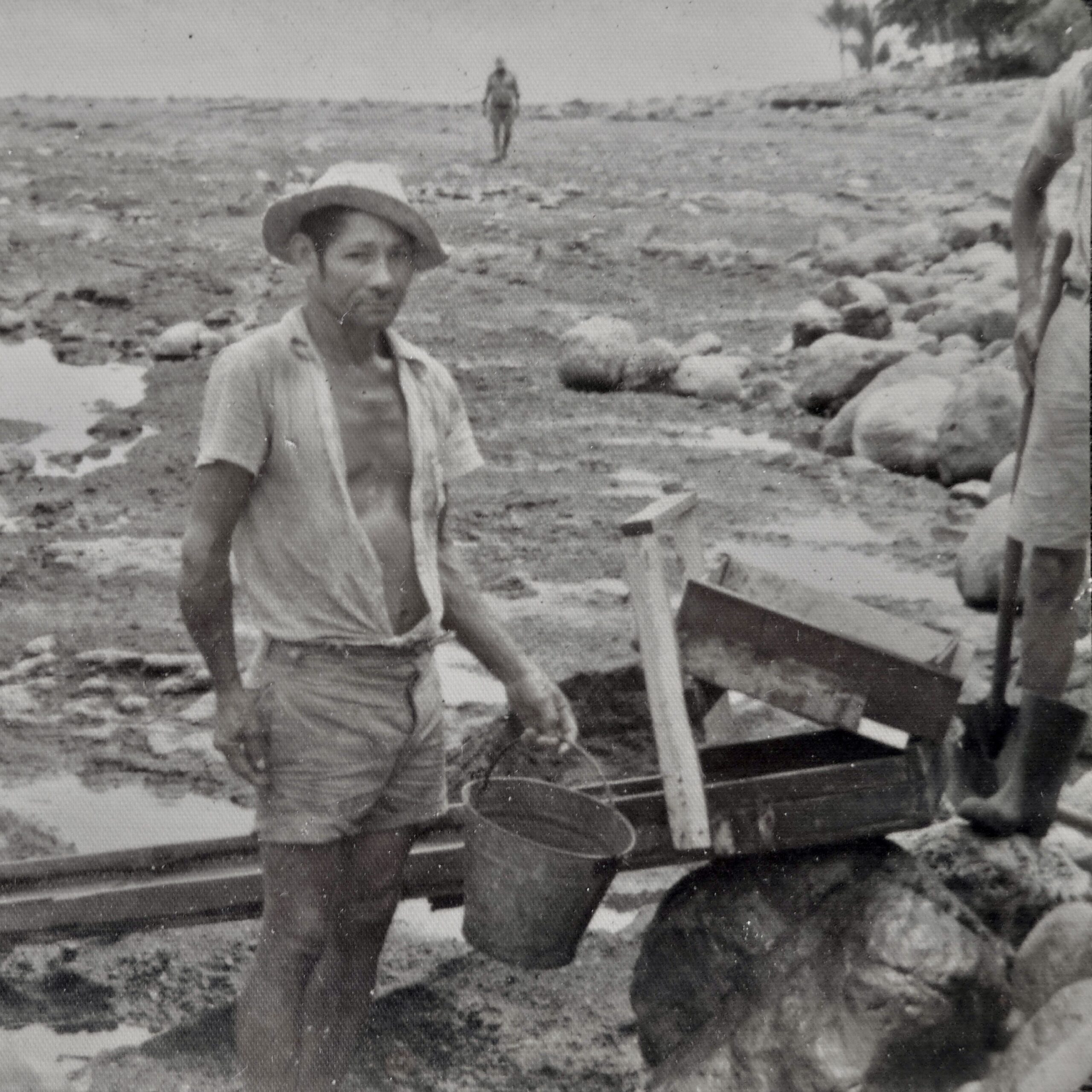
Ugalde's first encounter with Osa stayed with him forever. Years before the park existed, he'd hiked into the peninsula and spent an afternoon panning for gold with miners tearing up stream beds. He later described himself as "a gold-miner for a few hours," an experiment to understand what he was up against. The miners showed him how hydraulic hoses could rip apart a riverbank in minutes, leaving mercury-laced silt where fish had spawned. They explained the economics: a few grams of 21-carat gold paid better than a month of farming. And they made clear that no government decree would push them out without a fight.
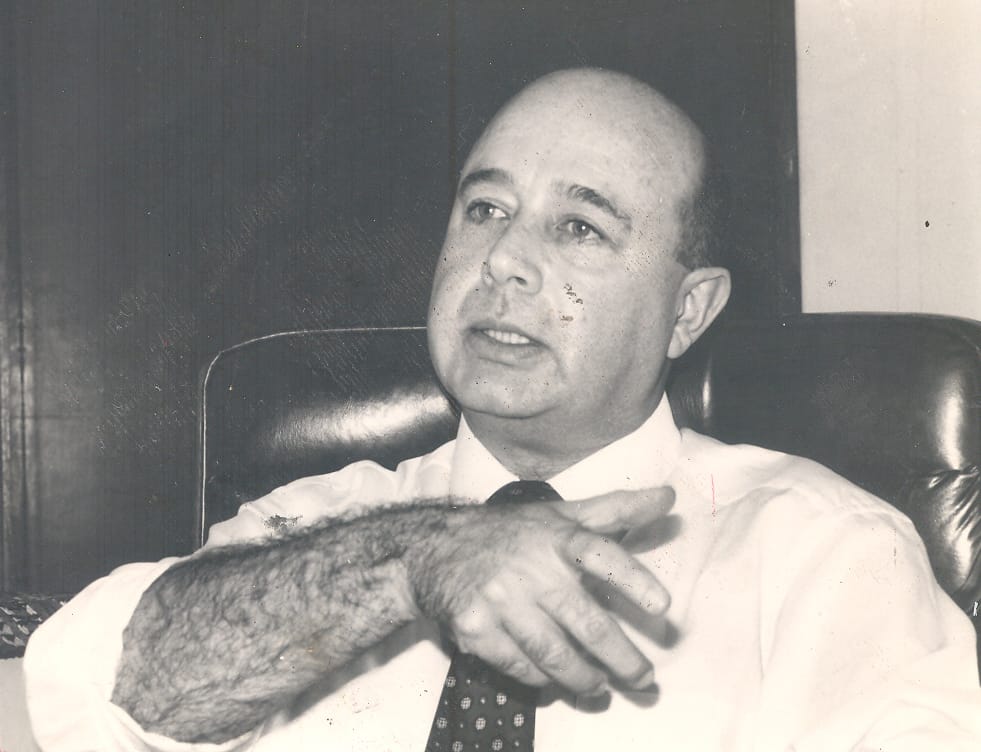
When Oduber signed the decree establishing Corcovado in October 1975, he gave Ugalde something more valuable than budget: presidential authority. Ugalde became known in Osa as "The President's Man," which meant he could bypass ministers and act fast. One of his first moves was financial warfare. He went to the banks that were lending money to land speculators and developers carving up Osa. With presidential backing, he got them to freeze credit. No more loans for clearing park land. No more financing for subdivision schemes inside boundaries Wessberg had died mapping. The speculators who'd bet on Osa staying lawless suddenly couldn't get capital. Some sold out. Others abandoned their claims. Ugalde bought the parcels with donor money before anyone else could move in.
Ugalde moved into the mud. He didn't enforce Corcovado from an office in San José. He went to the Osa Peninsula and lived in the remote, swampy, difficult conditions the squatters endured. The park decree gave him legal authority. Enforcing it meant confronting 166 families who had no intention of leaving. He began making the rounds, meeting the leaders who controlled blocks of squatters. Evo Salazar, Feynner Arias's father, was one. According to Ugalde's later account, Salazar "would speak, then scream, then threaten." Beto Bullas was another, nicknamed "noise" because he could scream louder than anyone. Ugalde hiked to Bullas's remote house one night, slogging through swamps at midnight, dodging pigs and mosquitoes. When he arrived, Bullas offered coffee and they talked for hours. By morning they were friends.
His method was deliberate. He attended meetings visibly exhausted, often popping Dramamine for airsickness from the small planes that ferried him into Osa. He stayed quiet while government land-reform officials from ITCO did the negotiating, watching for who controlled the room. After heated sessions, he'd approach the loudest opponents, embrace them, ask about their families, remember their kids' names. It wasn't manipulation. He genuinely wanted to understand why a man would hack a farm out of rainforest, then refuse to leave even when offered cash. Most were ex-banana workers from closed United Fruit plantations in Limón. They had nowhere else to go. When the buyouts concluded, Ugalde made an unconventional call: he paid ranchers for their livestock instead of slaughtering the animals. He knew jaguars and pumas would follow the pigs and cattle back into the recovering forest. Their natural prey (peccaries, agoutis, deer) had been nearly hunted out. It was tactical: keep predators fed on domestic animals while wild populations rebuilt.
In 1976, Oduber declared Corcovado a national emergency, which freed up cash without the usual budget approvals. Ugalde and ITCO spent $1.7 million over a year buying out the squatters. The climactic scene happened at Río Claro. Officials arrived with 30 million colones in checks. They assembled everyone and began calling names. The first squatters refused. Then more refused. ITCO officials were insulted. It looked like the whole operation would collapse. Then one man stepped forward and took his check. Another followed. Within an hour, most had cashed out. Afterward, Evo Salazar pulled Ugalde aside and said: "You don't harvest all the corn at once. You break the grains off the cob one by one." Partial success was still success.
But the wealthiest squatter, Félix Avellán, didn't take a check at Río Claro. He owned thousands of hectares, including the land that would become Sirena Station. He ran the airport, the commissary, and controlled cattle operations. He was also litigious. Years later, he sued the park service over unpaid fence posts. Ugalde dealt with him through a combination of patience and attrition. Avellán eventually sold, but only after realizing the government wasn't going to blink.
Removing the squatters was only half the battle. Ugalde beefed up ranger posts at Sirena, Madrigal, and the northern boundary, knowing that without constant patrols the forest would be lost again. One of the most haunting photos he carried into presidential offices captured what enforcement was up against. A wealthy hunter from San José had flown a plane to Corcovado's beach, landed on the sand, walked into the forest with a machine gun, and massacred an entire herd of white-lipped peccaries. Then he lined up all eighty butchered animals on the beach and took a trophy photograph. Ugalde later said this image "really moved me, and later the president." The message was blunt: without fuel, pay, and helicopters, the slaughter would continue.
Getting Corcovado on paper had taken a murder and a presidential decree. Keeping it alive would take the rest of Ugalde's life.
In July 1983, President Ronald Reagan invited Ugalde and Mario Boza to the White House Rose Garden. They were receiving the J. Paul Getty Wildlife Conservation Prize: $50,000 split between them, which Reagan called "the Nobel Prize for Conservation." Ugalde stood in a borrowed suit while Reagan praised them for protecting "more than 850 bird species, 205 mammals, 150 amphibians, 210 reptiles, and 700 species of butterflies." After the ceremony, reporters asked what he'd do with the money. Ugalde said he thought he was "so rich" with his $25,000 share. His first idea: create annual prizes for the best park neighbor and the best ranger, funded by bank interest. Then he did the math. The interest would generate maybe $100 per prize. He later called the plan "nonsense" and bought computers for the park service instead. Mario Boza invested his share and made a profit. Years later, Ugalde joked he had "no money" while Boza had grown wealthy.
In the mid-1980s, Corcovado expanded its boundaries to protect more watershed. Hundreds of gold miners who'd been operating in what they thought was legal territory suddenly found themselves inside park limits. Ugalde was tasked with evicting them. "All hell broke loose," he later said. The miners organized protests. Politicians accused the park service of heartlessness. Ugalde stood firm. The law was the law. But he also understood the miners weren't villains. They were poor men chasing survival. His goal wasn't punishment. It was "to clean the park of human activities...as humanely as possible, because they were terribly affected."
He believed science had to steer enforcement, so he invited researchers such as Eduardo Carrillo to monitor jaguar and peccary numbers. Data gave him leverage to pry loose budget increases and to prove when lax enforcement was gutting wildlife.
Some of the squatters' children became his rangers. Feynner Arias, born in the squatter settlement that was displaced when the park was created, went to work for Ugalde after his family was bought out. Ugalde trained him, promoted him, and watched him become a skilled park administrator. Years later, Feynner moved to California and ran trails in Big Sur. When Ugalde heard, he laughed. "From Corcovado to Big Sur. Same job, different country." It was proof the model worked: turn former opponents into defenders. Give people whose families you displaced a stake in what comes next. Not everyone made that transition. But enough did that Ugalde could point to living examples when critics claimed conservation only benefited foreigners and biologists.
Enforcement made ecological recovery possible. Within three to five years after patrols began, wildlife populations rebounded. The peccary herds that had been hunted nearly to extinction were moving through the forest again in groups of fifty or more. Scarlet macaw nests that had been raided for pet trade chicks began fledging young. The rivers that gold miners had turned into mercury-laced mud started running clear. Tapirs returned to trails where they'd been absent for years. Ugalde knew these details because he kept visiting. Long after he stopped being director, he'd fly into Sirena Station for multi-day hikes, checking on the rangers, asking about poaching reports, counting tracks. He treated the park like a patient who needed constant monitoring, watching the recovery with the eyes of someone who remembered what had been lost.
His seventeen years as director spanned five presidencies, each with its own attitude toward parks. Daniel Oduber (1974-1978) gave him presidential authority and emergency funding. Rodrigo Carazo (1978-1982) was sympathetic but broke; oil crises and debt had gutted the budget. Luis Alberto Monge (1982-1986) treated parks as nice-to-have luxuries during economic crisis. Oscar Arias (1986-1990) saw them as diplomatic tools and used Costa Rica's environmental reputation to boost the country's global standing. When Ugalde returned to the directorship in 1991, Rafael Ángel Calderón Fournier (1990-1994) was navigating post-Cold War economic restructuring. Ugalde survived by building infrastructure that outlasted political cycles. He cultivated international donors who could fund operations when government couldn't. He trained rangers who stayed loyal through regime changes. He built relationships with journalists who would amplify threats to parks when ministers tried to shrink boundaries. And he documented everything (wildlife counts, patrol logs, poaching incidents) so that when a new administration tried to claim parks were fine without enforcement, he could produce binders of evidence proving otherwise.
Colleagues who worked under Ugalde remember him as demanding and relentless, but never bureaucratic. He hated meetings that didn't produce decisions. He'd cut off rambling presentations with "What do you need and when?" If a ranger reported a poaching incident, Ugalde wanted to know three things: location, evidence, and whether arrests had been made. If the answer to the third question was no, he wanted to know why not within the hour. He kept a small notebook where he tracked every threat to every park, updating it after phone calls and field visits. When ministers claimed there was no money for enforcement, he'd pull out the notebook and read specific incidents (dates, species killed, damage estimates) until the conversation shifted from "Can we afford this?" to "How do we stop this?"
His donor pitch evolved over the years. In the 1970s, he sold wilderness: pristine rainforest, untouched beaches, exotic wildlife. By the 1980s, he was selling ecosystem services: watershed protection, climate regulation, pharmaceutical biodiversity. By the 2000s, he was selling national security: stable rural communities, reduced migration pressure, economic diversification through tourism. He learned to speak different languages to different audiences. Environmentalists got data on species counts. Economists got revenue projections from ecotourism. Politicians got talking points about Costa Rica's global brand. Everyone got the same underlying message: protection costs money up front but pays dividends for generations. Destruction is cheap today and catastrophic tomorrow.
The vindication for his decades of fighting came gradually, then all at once. In 1987, President Oscar Arias won the Nobel Peace Prize. International attention flooded Costa Rica. Reporters came looking for the "Switzerland of Central America" story and found something better: a small country that had abolished its army in 1948 and spent the peace dividend on schools, hospitals, and forests. The parks Ugalde and Boza had dragged into existence against political resistance suddenly became the cornerstone of Costa Rica's national brand. Ecotourism exploded. By the 1990s, nature tourism was generating over $600 million annually. By the 2010s, the figure topped $2 billion. Corcovado became one of National Geographic's "most biologically intense places on Earth." Jaguars, scarlet macaws, and tapirs that had nearly been exterminated in the 1970s now appeared in coffee-table books marketed to American and European tourists.
The moment Ugalde knew the transformation was complete came in the late 1980s, when a minister suggested opening Corcovado to limited logging to generate revenue. The proposal leaked. Within forty-eight hours, National Geographic, the World Wildlife Fund, and The Nature Conservancy all issued statements condemning the idea. Costa Rican newspapers ran editorials asking if the government wanted to destroy the country's brand. The minister quietly withdrew the proposal. For decades, Ugalde had defended parks from politicians. Now politicians had to defend themselves from appearing anti-park. The system he'd built—donor networks, scientific legitimacy, media relationships, international reputation—had created a protective envelope. Parks were no longer vulnerable to every budget negotiation. They'd become part of Costa Rica's identity.
Even after he left the Park Service directorship in 1986, Ugalde treated Osa as unfinished business. He called the recurring invasions "human tsunamis": waves of desperate people crashing into parks whenever economic crisis hit or gold prices spiked. As director of the Área de Conservación Osa in the 1990s, he confronted another wave. This time the miners had better organization and political backing. Ugalde responded the same way he always had: document the damage, build alliances with local communities who depended on clean water, and force the government to choose between short-term political convenience and long-term ecological collapse. When poachers nearly wiped out Corcovado's peccaries again in the early 2000s, he launched a $30 million campaign with local NGOs and the Gordon and Betty Moore Foundation to rebuild ranger forces. His mantra never changed: "It ain't gone until it's gone; in the meantime, we can and we must fight like hell." That line was operational guidance, not bravado.
In 1999, a decade after leaving his director post, Ugalde founded the Nectandra Institute. It wasn't another green NGO running feel-good workshops. Nectandra worked with communities adjacent to the La Balsa watershed, teaching them why clean water mattered more than one more pasture. He hired local teachers to run environmental education programs in schools. He organized watershed monitoring so farmers could see the direct connection between forest cover upstream and water availability downstream during the dry season. The model was pragmatic: if conservation didn't deliver measurable benefits to the people living next to parks, it wouldn't survive the next political cycle.
During his final years, Ugalde split his time between conservation and something unexpected: volunteering at care homes for the elderly. Half his week went to visiting old people who had no family, playing cards, reading to them, making sure they weren't forgotten. Friends asked why he bothered. His answer was consistent. A society that only values productive members is the same society that treats forests as wasteland. You defend both or you defend neither.
By the time Ugalde's heart gave out in February 2015, the park system he and Boza had built from nothing encompassed 29 national parks and 166 protected areas covering nearly 25% of Costa Rica's territory. Seventeen years as director had left him exhausted, cynical about politicians, and oddly hopeful about people. He'd learned that governments only protect forests when the political cost of not protecting them becomes unbearable. His job had been raising that cost through donor pressure, scientific documentation, media campaigns, and the occasional threat to embarrass ministers in international forums. The system worked, but it required constant vigilance. "It ain't gone until it's gone" wasn't optimism. It was a warning that protection is never permanent, only defended.
When Ugalde died, guardaparques stood watch over his coffin in their khaki uniforms. Tributes poured in: La Nación called him "the father of the parks"; colleagues remembered his "old fox" instincts and refusal to accept defeat. The International Union for Conservation of Nature reminded the world that he was still lobbying for Corcovado protection twenty-four hours before his death.
Ugalde's duality as both soldier and gardener, enforcer and nurturer, was visible in everything he built. He armed rangers and courted scientists. He negotiated with peasant families while confronting presidents. He understood that conservation required both the hard edge of law enforcement and the patient work of ecological restoration. One without the other was theater.
His legacy is visible from space. Satellite imagery shows the canopy darkening again after deforestation peaked at 52,000 hectares a year in the late 1970s. But his warning remains on the ground. Laws did not save Costa Rica. People like Álvaro Ugalde did: those willing to fight every administration, every illegal mine, every budget cut. The only way to honor that legacy is to keep the rangers paid, the patrols running, and the public aware that paradise is never permanent. It is defended.
References & Further Reading
Primary Sources & Oral Histories
Comprehensive oral history interview conducted shortly before Ugalde's death, covering his entire career from the 1969 park tour through his final advocacy efforts, including detailed accounts of park establishment, enforcement strategies, and political maneuvering.
First-person account by Ugalde reflecting on the challenges of establishing and defending Corcovado National Park, including his encounters with gold miners, negotiations with squatters, and the decades-long enforcement battle.
Ugalde's personal narrative of his initial visit to the Osa Peninsula, including his experience panning for gold with miners to understand the economic forces threatening Corcovado.
Biographical & Memorial Coverage
Memorial coverage from Costa Rica's leading newspaper documenting Ugalde's final days lobbying President Solís for Corcovado protection and his lifelong battle against illegal mining and hunting.
Obituary and career retrospective covering Ugalde's transformation from biology student to national park director, his partnership with Mario Boza, and the park ranger honor guard at his funeral.
International Union for Conservation of Nature tribute emphasizing Ugalde's advocacy work up to his final hours and his role in establishing Costa Rica's globally recognized protected areas system.
Profile by Ugalde's alma mater documenting his graduate studies in natural resource management and how his Michigan education shaped his approach to building Costa Rica's park system.
Recognition of Ugalde as an Ashoka Fellow for his innovative approach to conservation through community engagement and his founding of the Nectandra Institute.
Conservation History & Policy
Historical overview tracing the development of Costa Rica's protected areas from the 1970 establishment of Poás Volcano National Park through the system's expansion, including the crucial roles of Ugalde, Boza, and First Lady Karen Olsen Beck.
Academic journal article examining how park directors like Ugalde pioneered the "see it to save it" donor strategy that became the foundation for Costa Rica's ecotourism model, generating over $600 million annually by the 1990s.
Scholarly analysis of conservation displacement in Costa Rica, including detailed examination of the Corcovado squatter removal Ugalde orchestrated in 1976 and the complex social dynamics of park enforcement.
Documentation of First Lady Karen Olsen Beck's critical role as main promoter of the National Parks Service alongside Ugalde and Boza during her tenure (1970-1974), providing the political patronage that made park establishment possible.
Historical data on Costa Rica's forest cover collapse from 67% in 1940 to 32% by 1977, documenting the crisis that Ugalde confronted when building the park system against overwhelming economic pressures favoring cattle ranching.
Authoritative quantitative analysis using remote sensing to document Costa Rica's forest cover decline from 68% in 1940 to 17% by 1983, with deforestation rates peaking at 50,000 hectares per year during the 1970s—the crisis period when Ugalde was building the park system.
Full transcript of Reagan's Rose Garden ceremony honoring Ugalde and Boza, including his statement that Costa Rica's wildlife includes "more than 850 bird species, 205 mammals, 150 amphibians, 210 reptiles, and 700 species of butterflies."
Tourism revenue statistics documenting Costa Rica's ecotourism boom: from $763 million in 1995 (becoming the largest foreign exchange earner), to $2.1 billion in 2008, and over $3.7 billion by 2016—vindicating the economic model Ugalde pioneered.
Historical context on cattle ranching expansion: pasture land expanded approximately 62% since the 1950s as Costa Rica had one of the highest deforestation rates globally during the 1970s-1980s, driven by U.S. beef imports and subsidized ranching credits.
Regional & Park-Specific Documentation
Comprehensive overview of the park Ugalde defended for four decades, including the circumstances of its 1975 establishment following Olof Wessberg's murder, ecological significance, and ongoing enforcement challenges.
Regional historical documentation of gold mining operations, squatter settlements, and land conflicts that formed the backdrop to Ugalde's enforcement campaigns in the 1970s-1980s.
History of Costa Rica's first modern national park where Ugalde worked as an unpaid volunteer superintendent starting in 1970, inaugurated in 1971 with Tourism Board land transfer and First Lady Olsen's attendance.
Contemporary reporting on recurring illegal mining in Corcovado, documenting how the "human tsunamis" Ugalde fought in the 1980s continue threatening the park decades later.
Community Conservation & Later Work
Organization founded by Ugalde in 1999 working with communities adjacent to La Balsa watershed through eco-loan programs, environmental education, and watershed monitoring demonstrating conservation's measurable benefits to local residents.
Environmental consulting firm's tribute examining Ugalde's pragmatic conservation philosophy, donor strategies, and the model of treating parks as infrastructure requiring constant defense rather than static preservation.
Proposal to create a marine reserve honoring both Ugalde and Boza, recognizing their partnership in establishing Costa Rica's protected areas system and their shared receipt of the 1983 J. Paul Getty Wildlife Conservation Prize from President Reagan.