What One Clause Has Stopped
A single clause in a 1996 law has been used to undo forest converted to pasture, crops, houses, roads, and even a drug plantation across Costa Rica. Courts focus on the same act in every case: replacing forest with something else.
The sentence is short enough to miss on the page. Yet it is the legal root of every case that follows.
Since 1996, Article 19 has generated hundreds of court decisions; Coalición Floresta's review of the record has compiled more than 600. Courts applying it have ordered both houses demolished and coffee plants uprooted. To understand how one sentence acquired that reach, it helps to return to the crisis and political bargain that put it into law.

How It Got There
By the mid-1980s, Costa Rica had lost more than half its forest cover. Deforestation rates were among the highest in the world. Government policy had actively incentivized the clearing: the agrarian reform agency ITCO rewarded landholders who "improved" forest into pasture, and subsidized cattle credit poured into frontier clearing. At prevailing rates, Álvaro Umaña, Costa Rica's first environment minister, warned that no forest would be left by approximately 2015.
That crisis set the terms of the political fight in 1996. Congressman Ottón Solís proposed a total ban on cutting natural forest, allowing logging only in plantations established by landowners. René Castro, then Minister of Natural Resources, saw the danger: a total ban would drive logging underground and likely accelerate conversion of natural forest to plantations. So Castro joined Franz Tattenbach of FUNDECOR and Carlos Manuel Rodríguez from the opposition party PUSC to build a counter-proposal. Their plan would ban conversion while allowing sustainable harvesting, and compensate landowners through a new mechanism called Payments for Environmental Services.
Tattenbach and FUNDECOR staff drafted the law on blackboards at FUNDECOR's offices in San José, with assistance from SINAC lawyers. Tattenbach described the central bargain in a 2015 interview with Princeton University's Innovations for Successful Societies: "The big principle was, no land use change but compensation." The logging companies accepted the deal because, as Carlos Manuel Rodríguez later explained, "a land-use-change ban was very consistent with the sustainable logging they were preaching."
During the legislative debate, Diputado Garrón Figuls captured what was at stake: "Me parece fundamental el no cambio de uso, los bosques que hay seguirán siendo bosques, eso me parece básico." No change of use. The forests that exist will continue to be forests. That seems basic to me. His colleagues called Article 19 "la esencia del proyecto": the essence of the bill.
The bargain became two parallel legal regimes. On private land, Article 19 prohibits land use change with four narrow exceptions: housing, infrastructure of national convenience, safety, and fire prevention. For private land, those four exceptions limit rather than erase Article 19's ban. But on state-owned land classified as patrimonio natural del Estado (natural heritage of the State), the prohibition is absolute, with no exceptions of any kind. The Sala Constitucional confirmed this in Voto 12716-2012: "No cabe la corta, el aprovechamiento forestal ni el cambio de uso del suelo" on state forest land.
Legislators have continued proposing exceptions to the ban. Bills have sought exceptions for geothermal energy (Expediente 24858), regularization of occupants on state land (Exp. 22391), and forestry law reform (Exp. 20516). The Procuraduría General de la República responded to each proposal by invoking the principle of non-regression.
How the Clause Keeps Working
Article 61(c) of the Forestry Law imposes one month to three years in prison for violating Article 19. It applies to anyone who "realice actividades que impliquen cambio en el uso de la tierra, en contra de lo estipulado en el artículo 19": anyone who carries out activities implying a change in land use, contrary to what Article 19 stipulates.
The Fiscalía Adjunta Agrario Ambiental issued Circular No. 11 specifically on how to prosecute this crime. Its title: "El Delito de Cambio de Uso de la Tierra (delito de efectos permanentes)." The words in parentheses explain the crime's unusual reach. Cambio de uso has permanent effects.
What It Has Stopped
The permanent-effects doctrine concerns the duration of the crime. Its legal effects continue as long as the changed use remains. The enforcement record, meanwhile, shows how broadly Article 19 has been applied across the landscape. The changed use may be pasture, coffee, a house, or a road, but the legal problem begins with the same act: forest replaced by something else.
Pasture conversion is the most common prosecution in the record. Across roughly two dozen documented cases, the sequence repeats: clear forest, plant grass, run cattle. The typical scale is three to five hectares per case. The method often begins with socola, the clearing of understory vegetation, followed by planting improved pasture grasses. Gamalote species appear repeatedly in the case files.
The Fiscalía Circular is explicit on what constitutes cambio de uso in this context: "Incluso, la corta del estrato inferior del bosque (sotobosque) y la introducción de pastos mejorados constituye un cambio de uso, porque dicha obra antrópica impide la regeneración natural del ecosistema." Even cutting the forest's lower layer (understory) and introducing improved pasture constitutes a change of use, because that human intervention prevents the ecosystem from recovering naturally. Removing the understory alone is enough.
Courts have rejected claims that decades of converting forest to pasture made the practice lawful. In cases from Pérez Zeledón, where systematic pasture conversion near water sources appears repeatedly, sentences have ranged from six months to two years' imprisonment. Conditional execution (suspended sentences) is common, paired with reforestation orders and environmental damage awards of one to two million colones.
From pasture, the same legal rule reaches the crops planted after a clearing. Coffee dominates: eleven of nineteen documented agricultural cases that we reviewed involve clearing forest for coffee cultivation, with plots typically ranging from five to fifteen hectares. Those coffee cases involve tala rasa, the complete clearing of primary or secondary forest. Courts order the coffee plants uprooted so the area can return to forest. Courts have also rejected the defense that a prior owner had already cleared forest for coffee.
A 2024 case from Los Santos Forest Reserve shows what the clause can still undo after a prosecution ends in acquittal. Inspectors found that 7,730 square meters of forest had been converted to coffee. The understory was gone, every smaller-diameter oak had been cut, and coffee plants occupied the cleared ground. The trial court acquitted the defendant because it doubted criminal responsibility, but it treated the physical change to the forest as proved. It prohibited further coffee planting and required a forestry engineer to prepare a restoration plan for MINAE's approval and supervision. On appeal, the court upheld both orders. An acquittal barred punishment, it held, but did not erase the proven environmental damage or the court's duty to return the land to its prior state.
Agricultural cases also include corn (a three-hectare clearing in the Salitre indigenous reserve) and subsistence crops (yuca, coconut, plantain) in protected areas. Sentences range from one to three years, with about half receiving conditional execution. Environmental damage awards range from two to eight million colones.
Article 19 makes housing in forest conditional on a State Forestry Administration permit. The agency may issue one on privately owned forest land; any clearing must be limited, proportionate and reasonable, and the owner must first submit the project for environmental pre-screening. A Bahía Ballena case illustrates the missing step. Trees and shrubs were removed, and a two-story house with a 120-square-meter footprint (240 square meters total) was built without MINAE authorization. The trial court ordered demolition even though it acquitted the accused, but the appellate court set that order aside because the registered owner had never been made a party. It left MINAE or another competent authority free to pursue demolition through a proceeding in which the owner could be heard. The house therefore did not qualify for Article 19's exception: no Forestry Administration permit had ever authorized it.
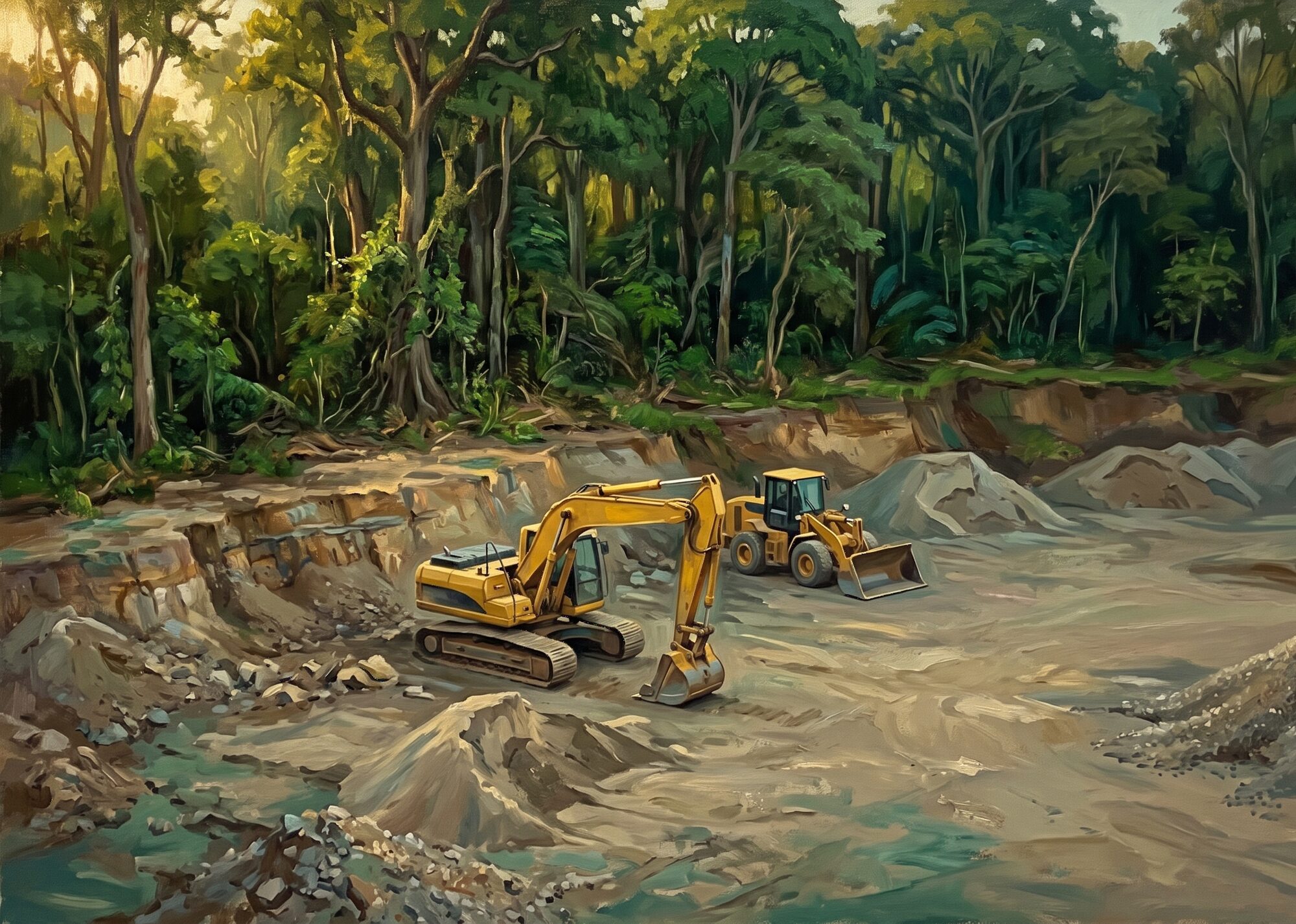
Article 19 has also stopped extraction before the forest was cleared. A company obtained a MINAE concession to remove fill, sand and stone from a quarry in Alajuela, and SETENA approved its environmental study. But about 60 percent of the concession area was forest. When the company sought permission to remove that cover, SINAC refused because Article 19 made the proposed change of use legally impossible. The company then sought ₡544 million in lost profits. In Res. 01474-2011, the First Chamber upheld the refusal as lawful and rejected the claim. The mining concession remained on paper, but Article 19 prevented the company from exploiting the forested part of it.
A road case shows what restoration can mean when demolition makes little sense. The defendant was convicted of illegal logging, change of use, invasion of a protection zone and construction of an unauthorized road through forest. The trial judgment omitted restoration, so the prosecution appealed. In Res. 00450-2003, the cassation court said physically destroying a mountain road was not viable, while damages alone would leave the offender free to use it. The court instead ordered the road closed, prohibited every form of use and required native species to be planted under administrative or judicial enforcement supervision.
Article 62 of the Forestry Law provides a separate, harsher penalty of one to three years specifically for unauthorized road construction in forest, with mandatory confiscation of equipment. Courts treat trochas (rough forest tracks) as permanent: the statute of limitations is measured from when the road is still open, not from when it was built.
Some offenders process timber on-site before authorities can intervene. Fourteen documented cases cover portable sawmills set up on-site for rapid processing without permits (eight cases), illegal furniture-wood cutting (four cases), and hidden logging masked under false agroforestry certifications (two cases). One case documented the cutting of 116 trees plus 42 additional trees inventoried for illegal cutting.
In one case, a regente forestal (licensed forestry engineer) certified an "agroforestry system" on a property with no qualifying trees, then certified 22 cedro trees for "agroforestry removal" from a system that did not exist. Eight of those trees were inside the 100-meter naciente (spring) protection zone. The regente was suspended from practice for three months, although the statute allows up to two years. Other cases show foresters certifying land as "potrero arbolado" (treed pasture) when the evidence showed "bosque tropical seco intervenido" (disturbed dry tropical forest).
Sentences for logging cases run from two to three years. Wood is confiscated, and environmental damage awards range from 15 to 40 million colones, the highest of any category.
On the coast, residential clearing reaches some of the country's most fragile forest. In the case referenced above, 116 trees were cut on a Playa Tamarindo property for an "urbanization project" in what the court described as tala rasa producing "grave perjuicio al ambiente": grave harm to the environment. The trial court acquitted the defendants because it doubted whether they knew the site was forest, but held them civilly liable, ordering restoration and ₡16,234,030 in environmental damages. On appeal, the Criminal Sentencing Appeals Court annulled the acquittal and ordered a new criminal trial while leaving the civil judgment in place. In 2014, Sala Tercera rejected the defense challenges to that ruling, leaving the new-trial order and civil remedies undisturbed. No published decision located for this article discloses the later criminal outcome.
In one case the ban even reached an illegal cannabis plantation cut into a national park. Inside La Amistad National Park in Coto Brus, a criminal organization cleared 4,443 square meters of forest across three lots at the Estación Biológica La Pittier for cannabis cultivation, cutting 58 trees of various species. The operation also invaded water-source protection zones, and corrupt MINAE park rangers facilitated it. The case combined narcotics charges with Forestry Law violations: prosecutors brought the same cambio de uso charge used for clearings converted to cattle ranches or luxury villas.

What Happens After the Forest Is Gone
A cambio de uso judgment can bring demolition, restoration, damages and confiscation as well as imprisonment.
Courts have ordered the demolition of structures on forest land even when the defendant was acquitted of criminal charges. In Barra del Colorado, the court acquitted the defendant of invading a protected area but still ordered the structure demolished, all drainage channels closed and all occupants evicted. In a Tortuguero case, the court granted an absolute acquittal but still ordered SINAC, MINAE and the Fuerza Pública to demolish the structure. Article 361 of the Código Procesal Penal (restitution) and the Article 50 constitutional right to a healthy environment provide the legal basis. In Voto 964-2007, the Tribunal de Casación Penal stated the duty directly: "Era obligación del juzgador ordenar el derribo o destrucción": it was the judge's obligation to order the demolition.
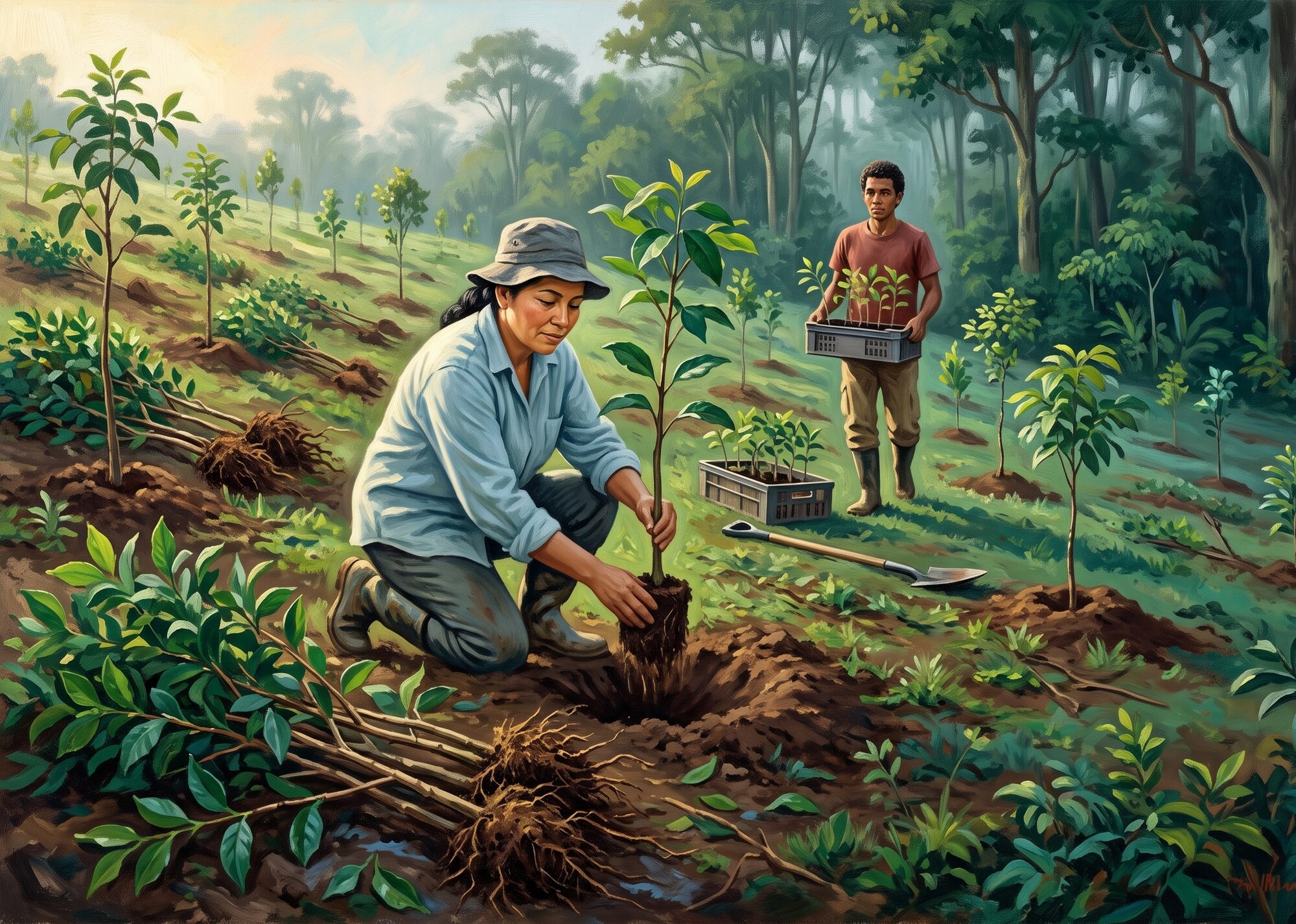
After demolition removes a structure, reforestation begins the slower work of restoring the forest. Courts have ordered defendants to replant native species under MINAE monitoring and pay the costs of restoration. Failure to comply can trigger revocation of a conditional sentence.
Courts also calculate compensation for lost ecosystem services, including carbon sequestration, biodiversity, water services, and scenic or recreational value. The awards vary with the area affected, the services lost, and the time needed for the forest to recover. Liability is objective: no proof of negligence is required.
Article 58 mandates confiscation of illegally harvested or processed timber and other forest products, as well as the machinery, transport equipment, implements and animals used to commit the offense. Chainsaws, vehicles, and heavy machinery are routinely confiscated. Regentes forestales who issue false certifications are suspended from practice, up to a statutory maximum of two years.
The remedies remove the changed use, make offenders pay for restoration and environmental damage, and confiscate the equipment used in the clearing. The decisions also shape how courts classify the land. In 2013, an appeals court (Res. 02264-2013) rejected a "potrero arbolado" defense because the site remained an integral forest ecosystem despite its registry classification. Nor does an acquittal necessarily end the duty to restore: courts ground post-acquittal restitution in Article 361 of the Código Procesal Penal and the Article 50 constitutional mandate for a healthy environment, a principle applied in Res. 1453-2019 and the 2024 Los Santos ruling above.
Article 19 often arrives after the chainsaws, bulldozers or coffee plants, when prevention has already failed. Even then, removing the trees does not legalize the pasture, road, quarry or building site that replaces them. Courts can close the road, uproot the crop, refuse the extraction permit and order native forest restored. Until restoration, the changed use remains unlawful.
Resources & Further Reading
Primary Legal Sources
The full text of Costa Rica's Forestry Law, including Article 19 (prohibition on land use change), Article 58 (confiscation), Article 61(c) (criminal penalties), and Article 62 (unauthorized road construction).
Official prosecutorial guidance on how to investigate and prosecute land use change crimes, including the permanent-effects doctrine and common defense strategies.
The controlling ruling on the permanent-effects doctrine for land use change crimes, establishing that the statute of limitations does not run while the changed use persists.
Constitutional ruling confirming the absolute prohibition on land use change in state-owned patrimonio natural del Estado, with no exceptions permitted.
The court upheld a forest restoration plan and a ban on further coffee planting after an acquittal, based on documented damage across 7,730 square meters in Los Santos Forest Reserve.
The ruling examines a two-story, 240-square-meter house built without MINAE authorization and the demolition and restoration consequences that followed an acquittal.
The decision records the underlying organized-crime prosecution involving forest clearing for cannabis cultivation in La Amistad International Park.
The court upheld eviction and demolition after an acquittal for illegal occupation and construction within Tortuguero National Park, toward Barra del Colorado.
The court upheld demolition of structures in the Río Ángel protection zone despite an acquittal and grounded restoration in the constitutional right to a healthy environment.
The court upheld a no-intervention order allowing natural forest recovery after an acquittal, even though the person responsible for the damage had not been identified.
The Chamber held that environmental civil liability is objective: proving fault or intent is unnecessary when environmental damage and a causal link are established.
The First Chamber upheld SINAC's Article 19 refusal to authorize forest removal within a mining concession and rejected the company's lost-profits claim.
The cassation court ordered an unauthorized forest road closed, prohibited all use and required replanting with native species.
2013 ruling rejecting a "potrero arbolado" defense and treating forest as an integral ecosystem rather than a registry classification.
The Chamber rejected the defense challenges to the order for a new criminal trial, leaving that order and the civil remedies undisturbed; the decision does not report the later criminal outcome.
Academic Sources
Case study documenting the political negotiations behind Costa Rica's 1996 Forestry Law, including interviews with René Castro, Franz Tattenbach, and Carlos Manuel Rodríguez.
Oral-history transcript in which FUNDECOR's Tattenbach describes drafting the 1996 law and its central bargain: "no land use change but compensation."
First-hand account by Costa Rica's first environment minister of the deforestation crisis, including the projection that no forest would remain by 2015.
Related Articles
The four exceptions to Article 19's land use change ban and how developers exploit them.
The irreducibility principle: why destroying a forest does not change its legal classification.
What counts as "forest" under Costa Rican law and why the definition matters for enforcement.
The historical context of Costa Rica's deforestation crisis and the policies that caused it.