The Whale Tail
In 1968, the Aluminum Company of America signed a contract to strip-mine Costa Rica's Valle del General and ship the ore from a port at Punta Uvita. The students who fought it lost. The company that won never dug a single hole. The valley became a city. The port became a national park. The story is stranger than either side remembers.
You arrive at Uvita in the late morning, when the heat is already serious. The first parking lot sits next to a dilapidated colonial house, its yard overgrown, the paint long gone to gray. Jorge is waiting there, leaning against the fence. He is mid-40s, broad-shouldered, a guide who grew up in the valley on the other side of the coastal range. He wears a faded cap and carries nothing except a water bottle. Before you are even through the gate, he nods toward the front yard of the house. Two stone spheres sit in the grass, half-sunk in the earth. Diquis, he says. Pre-Columbian. They were here before the house.
Past the entrance gate, a woman is selling coconut water from a cooler in the shade. The path drops through a band of mangroves and coastal forest and opens onto sand so pale it looks bleached. The Pacific is flat. A line of pelicans crosses low over the water, heading south toward the Osa. Jorge points at the sea and says the tide is going out. The sandbar will be walkable until well after lunch.
What the low tide reveals at Uvita is one of the most photographed landforms on the Pacific coast: a tombolo, a sandbar that extends several hundred meters from the beach and then curves into two symmetrical arms around a rocky reef. Seen from above, the shape is a whale's tail. That coincidence of geology and imagination is why this coast draws visitors from everywhere, and why the national park is called Marino Ballena. The humpback whales that breed offshore, in the warmest calving waters on Earth, named the park. The tombolo, seen from above, named the beach.
Before the tombolo, the path crosses a shallow river channel. You kick your shoes off and wade through, the water cold against your ankles. On the other side the sand is flat and wet, and the clouds above are reflected in it, a second sky underfoot.
You walk out along the spine of the tombolo. For fifteen minutes there is only sand, firm and wet where the tide has pulled back, the bay broadening on either side as the arms of the whale tail curve away from you. A slight breeze blows in your face, tempering the heat from the sun. The rocky headland at the end looks small until you realize how long you have been walking. Then the sand gives way to tide pools and rock: thin beds of dark shale and sandstone, the strata tilted at steep angles, marine sediment that spent thirty million years on a deep ocean floor before the Pacific plate drove it skyward. Frigatebirds seem to hover overhead, surfing the thermals. Small fish scatter in the shallows. At the end, where the two arms curve apart, the water is knee-deep and warm. You can see the reef flat extending beneath the surface, green and brown, colonies of coral the size of car tires.
Jorge stands with his hands on his hips, looking at the reef. He gestures at the rock and water around them. "You see these reefs?" he says. "In 1968, an American company bought almost 900 hectares here." He rolls his eyes and grimaces. "That's more than the real estate company from New York owns these days." He turns serious again. "All of this. They called it Hacienda Bahía. The legislators who debated the contract said these reefs were ideal for building a port."
He lets that sit. You look at the water, the reef, the whales' breeding ground.
"Not for tourists," he says. "For aluminum."
He turns and gestures toward the mountains, the green wall of the Fila Costeña that separates this coast from the Valle del General, where his family farmed coffee for two generations. "They wanted to strip-mine the valley. Open pits. Twenty thousand hectares. And ship the ore out right here, where we're standing."
You look at the whale tail differently. Jorge starts talking.
The Geologists in the Valley
"You have to understand what the valley was like," Jorge says. He means the Valle del General, the broad lowland that runs between the Talamanca mountains and the coastal range in southern Costa Rica. San Isidro del General is the capital of Pérez Zeledón, the cantón that covers most of it. In the 1950s, the valley was frontier. The Inter-American Highway had connected it to San José only since the 1940s. People grew coffee, raised cattle, and farmed small plots. It was isolated and agricultural and poor.
What the farmers knew about the dirt under their coffee was that it was red. Not the dark volcanic soil of the Central Valley, and not the black clay of the lowlands. A particular red, the color of roof tiles. In 1943, a Costa Rican geologist named César Dóndoli studied the valley and determined that this red earth was laterite, soil with a high concentration of aluminum oxide. That made it bauxite. Bauxite is the ore from which aluminum is refined, and the Valle del General sits on deposits that extend across 200 to 250 square kilometers of Pleistocene alluvial fans.
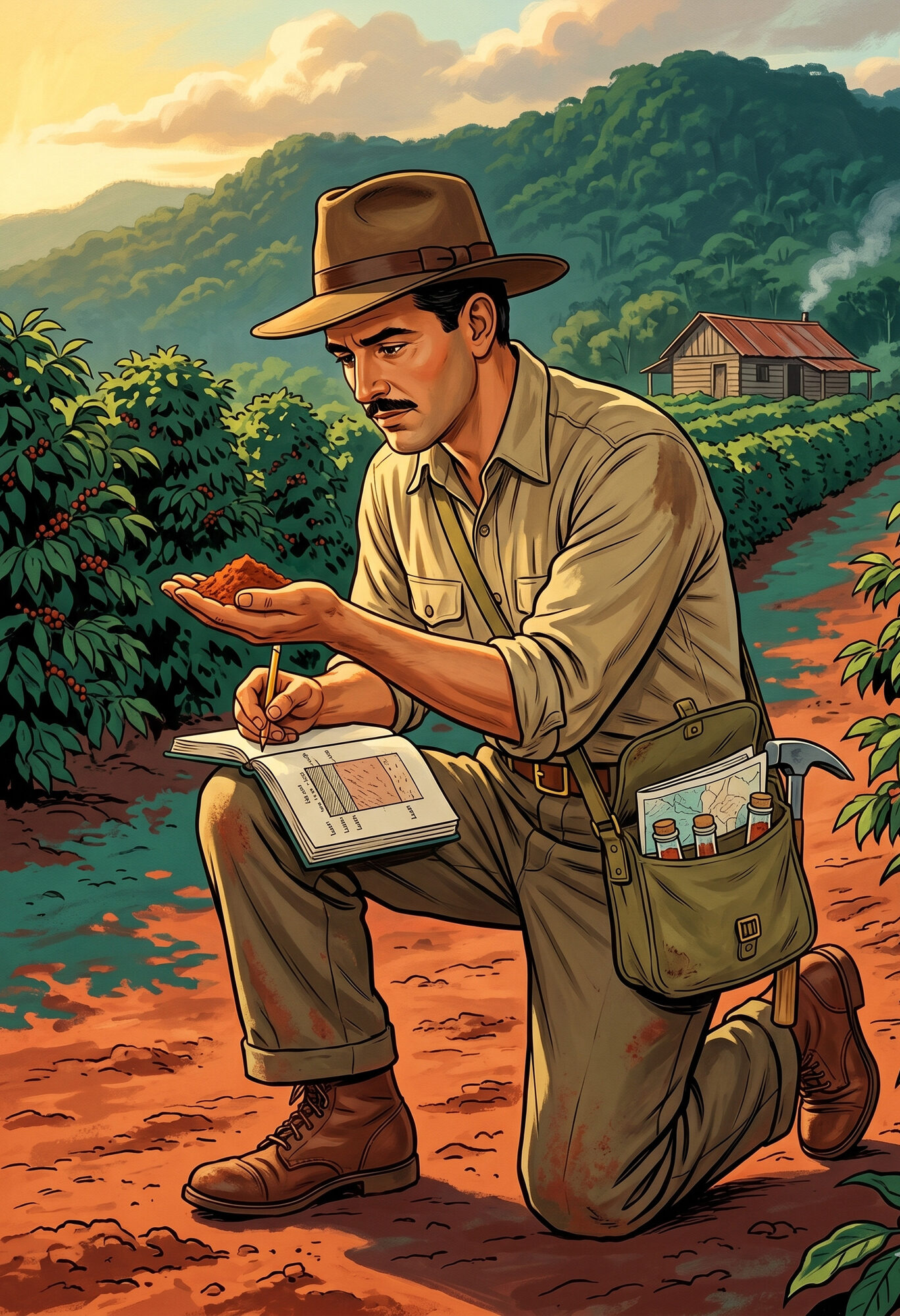
"Bauxite is just the red dirt under the coffee," Jorge says. "That's what the Americans wanted."
In the mid-1950s, geologists arrived in the valley. By 1956, the Aluminum Company of America, ALCOA, had requested exploration permits for bauxite in Pérez Zeledón. A German geologist from the University of Hannover named Harras Schneider surveyed the deposits between 1956 and 1958. In February 1964, an ALCOA representative named Willard Colegrave applied for an exclusive exploration concession. In November 1964, the Minister of Industry, Hernán Garrón Salazar, traveled to Pérez Zeledón and denied the request. The terms ALCOA proposed included tax exemptions and a 50-year concession period, double the constitutional limit. Colegrave notified the government of a "loss of interest" in July 1965.
Then, in August 1968, ALCOA came back. The company returned under the presidency of José Joaquín Trejos Fernández with a new representative, Robert Overbeck, and a powerful ally inside the government: Manuel Jiménez de la Guardia, the Minister of Industry and Commerce, who was also the principal shareholder of La Nación, the country's most influential newspaper. La Nación launched a vigorous campaign in favor of the contract. On November 19, 1968, Trejos signed it.
"The first people to react were the campesinos," Jorge says. "The farmers in the valley could read. They knew what open-pit mining meant. Somebody had published an article back in 1959, a guy named Salazar Navarrete, warning about the United Fruit Company precedent. Everybody knew that story."
The communists also reacted quickly. The PVP, Costa Rica's communist party, had opposed ALCOA's presence since the early 1960s. Through their weekly newspaper Libertad, they initiated systematic opposition from August 1968 onward. A chemistry professor and PVP militant named Fernando Chaves Molina began writing what would become the most widely distributed document of the entire movement.
The Contract
Jorge walks you through the terms of the contract the way a mechanic walks you through what is wrong with your car. Clause by clause, with a kind of patient disbelief.
The contract was between the Republic of Costa Rica and Alcoa de Costa Rica, Sociedad Anónima, a subsidiary incorporated in Wilmington, Delaware. It granted ALCOA an exclusive concession to mine 120 million metric tons of dry bauxite across 20,000 hectares of the Valle del General. ALCOA was obligated to build an alumina refinery near San Isidro del General with a minimum capacity of 400,000 metric tons per year, consuming approximately 1.3 million tons of bauxite annually.
In exchange, the state would borrow up to $11 million to build a highway from Palmares de Pérez Zeledón to Punta Uvita, designed for 50 vehicles per lane per day with a 50-year lifespan, and an export port at Punta Uvita. If costs exceeded $11 million, ALCOA would advance the difference, and the state would repay ALCOA using the tax and royalty revenue the project generated. The infrastructure existed to serve ALCOA's operations, and the state paid for all of it.
The royalties were twenty cents per ton to the state, five cents per ton to affected landowners, and five cents per ton to municipalities. At 1.3 million tons per year, the total royalty revenue came to $390,000 annually. And if ALCOA had advanced any infrastructure costs beyond the initial $11 million, the state's share of that revenue, along with income tax receipts exceeding $5.02 per ton of alumina, would be diverted to repay the company. ALCOA had purchased lands from private owners at 0.25 colones per ton of earth, which critics described as far below market value.
The tax provisions were comprehensive. ALCOA was exempt from all import duties on machinery, equipment, materials, vehicles, and supplies for the first 15 years, renewable to 25. The company received accelerated depreciation privileges and could carry forward losses indefinitely at 20% per year, exceeding the standard five-year limit. It received a 5% depletion deduction on net taxable income. A most-favored-company clause guaranteed that if the state gave any other mining company better terms, ALCOA automatically received those same terms.
ALCOA could expropriate private land within the concession area using a rapid procedure. For the first year of operations, the company had no obligation to meet minimum Costa Rican worker percentages from the Labor Code. After that, the requirements phased in slowly: 75% of payroll for years two through five, then 85% of payroll and 90% of workers thereafter.
Then there was the supremacy clause. The contract declared that its terms would prevail over any law existing or that might exist in the future. It was a contrato-ley, a contract ratified as legislation that could only be altered by another law. And ALCOA retained the unilateral right to terminate at any time. The state did not.
"They wrote themselves a country inside our country," Jorge says.
He looks at you to make sure you understand the weight of that. Then he tells you what ALCOA had done in other places.
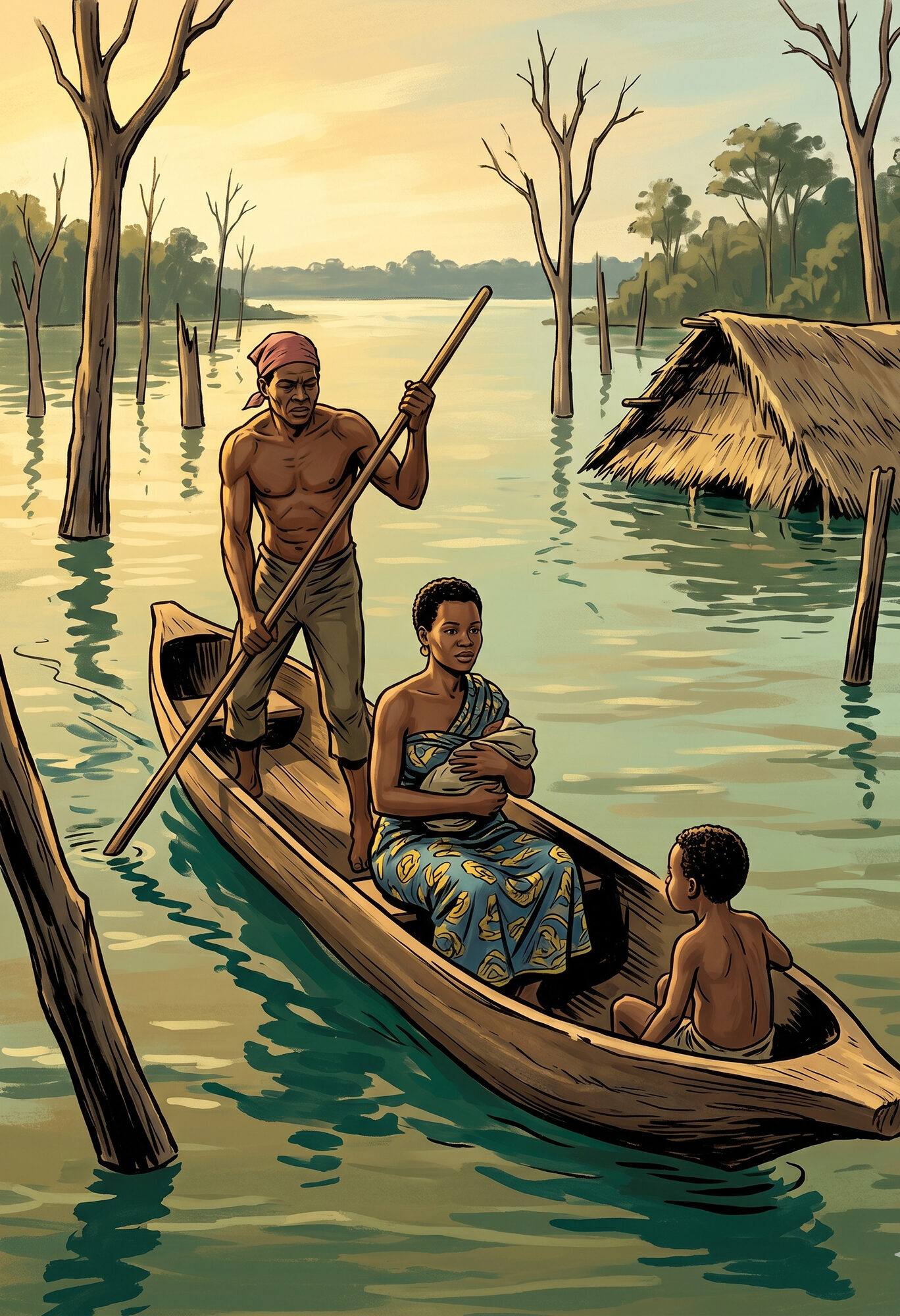
In Suriname, ALCOA's subsidiary Suralco signed the Brokopondo Agreement in 1958 and built the Afobaka Dam to power an aluminum smelter. The dam flooded 1,560 square kilometers of tropical forest and displaced approximately 6,000 Saamaka Maroon people from their ancestral territory. The government refused to recognize traditional land ownership. Families received roughly three dollars per household in compensation. Twenty-five new villages were built to relocate them. The forest beneath the reservoir was never cleared, leaving dead trees obstructing navigation for decades. Red mud from alumina processing created toxic waste sites, with cleanup costs estimated between $225 and $500 million. In Jamaica, ALCOA and five other transnational aluminum companies extracted bauxite for decades before Michael Manley imposed a bauxite levy in 1974 that raised government revenues from $25 million to $180 million. By then, the landscape was already scarred.
This was the pattern. Costa Rica was next.
A Law Student Reads the Fine Print
Jorge pauses here and says he wants to tell you about someone most people have forgotten.
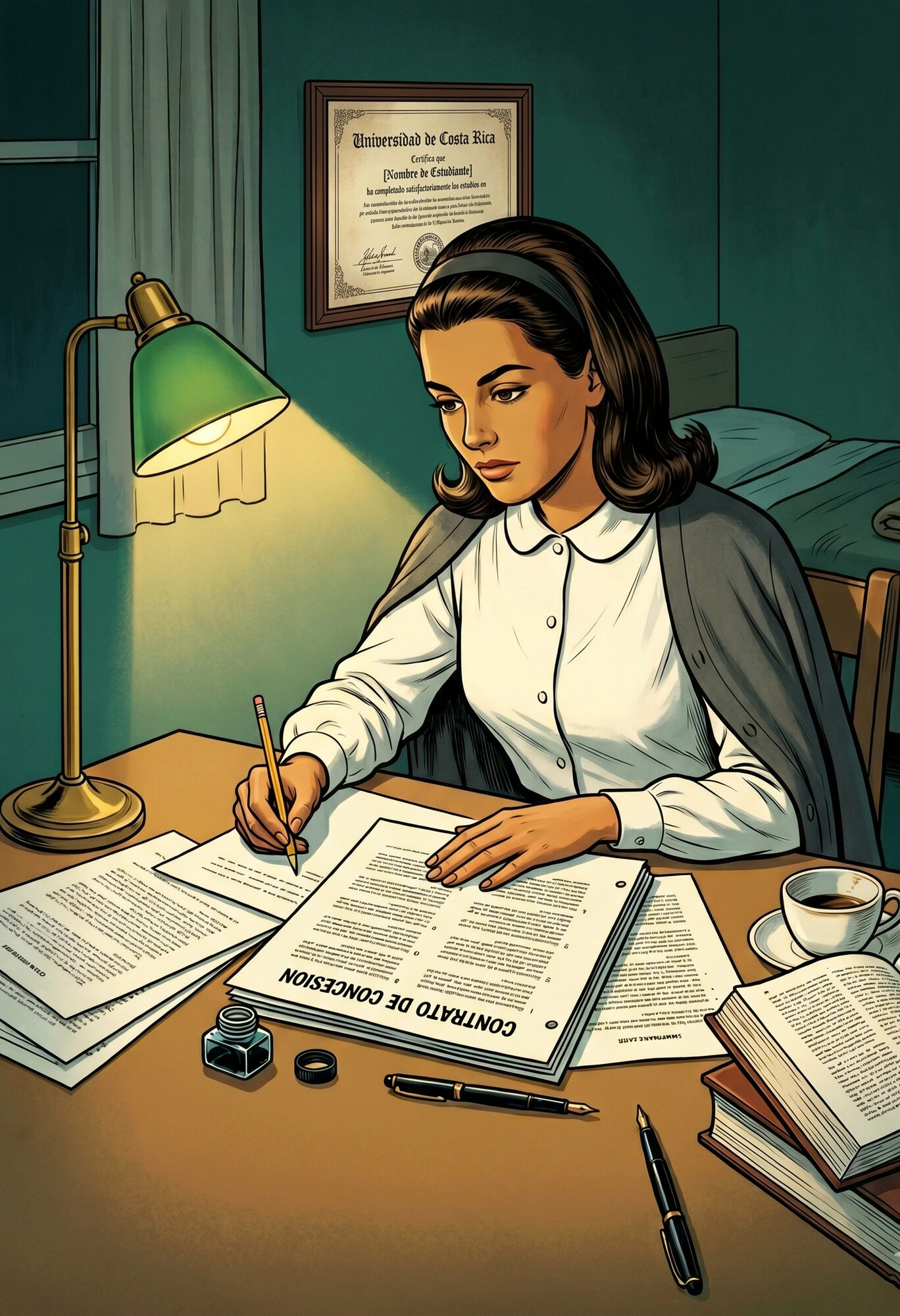
Iris Navarrete Murillo was 23 years old in 1969, a student of law and political science at the Universidad de Costa Rica. She was a member of both the PLN youth wing, the Juventud Liberacionista, and the Catholic student organization, the Juventud Universitaria Católica. She was not a radical. She was a serious student from a moderate political background, and she was assigned to study the ALCOA contract as coursework.
She read it. All of it. The clauses, the annexes, the fiscal provisions, the expropriation procedures. She and a fellow student named Vernor Cruz Morúa conducted an independent legal analysis. What Navarrete concluded was that the contract was, in her words, "un adefesio jurídico," a juridical monstrosity. She identified 39 specific legal objections.
On March 27, 1969, at the XI Congress of University Students, Navarrete presented a formal motion with those 39 considerations against the contract. She proposed that the student federation organize a seminar to study the terms, and she called for a march when the legislative debate began. The motion passed unanimously. The students applauded.
In May 1969, the FEUCR held the seminar Navarrete had proposed. The student federation published her and Cruz Morúa's legal analysis as an official document. It concluded that the contract "should not be approved." The analysis became the intellectual foundation for everything that followed.
Then the men took over. The research was published without her name. The male leaders of the student federation and the political parties built a national movement on the legal arguments she had assembled, and they never credited her. Her name does not appear in any memoir written by any male leader of the ALCOA protests. She was erased from the story for nearly fifty years.
When the historian Randall Chaves Zamora tracked her down in 2017 for his book on the ALCOA protests, she told him: "Los de siempre, se apoderaron de nuestro trabajo y lo explotaron como propio." The usual people took our work and exploited it as their own.
The Movement Builds
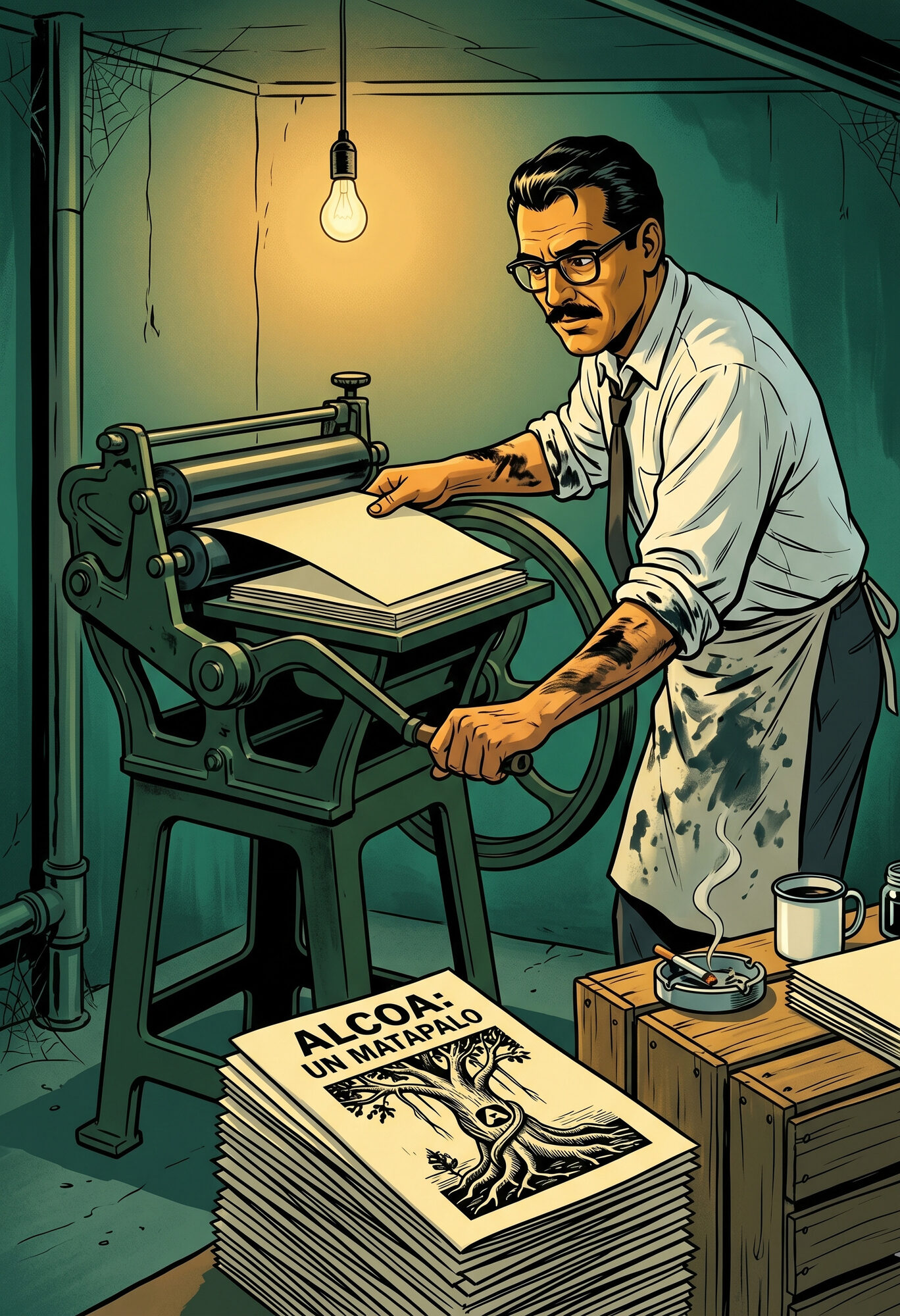
Jorge picks up the political story. Fernando Chaves Molina, the chemistry professor, published his pamphlet in 1969. He called it "ALCOA: Un Matapalo," ALCOA: A Strangler Fig. It was cheap, portable, written in plain language with technical, economic, and political arguments against the contract. Over 100,000 copies circulated across the country. In a nation of fewer than two million people, that kind of saturation was extraordinary.
The breadth of the coalition that formed against the contract was unlike anything in Costa Rica's modern political history. Eighty-two organizations signed on, from the communist PVP and its student wing, the Frente de Acción Universitaria, to the Christian Democrats, to the right-wing Movimiento Costa Rica Libre. Catholic youth groups, Protestant organizations, socialist collectives, social democrats, revolutionary Christians, and hardline nationalists all found common cause. The Frente Nacional de Lucha contra ALCOA coordinated them. Labor unions joined: the teachers' union, the public employees' association, the general workers' confederation. When communists and right-wing nationalists agree on something, the political establishment takes notice.
The Trejos government made a calculated move. It sent the ALCOA bill to the Legislative Assembly during extraordinary sessions, a period running from December through April when the legislature could act only on items the president placed on the agenda. University vacations fell during this window. The government was betting that students would be dispersed and unable to organize.
The bet failed. From January through April 1970, the FEUCR maintained permanent pickets and tent encampments in the gardens of the Legislative Assembly. At that time, no wall separated the building from Avenida Central. Students sang, performed theater, distributed pamphlets, and slept on the grounds. They built a field kitchen. When the Assembly president negotiated with them to remove the tent, they agreed, to avoid damaging the lawn, and kept everything else.
José Figueres Ferrer, the PLN patriarch who had won the February 1970 presidential election, supported the contract from Spain, where he was traveling when the crisis escalated. He told the press that the student protests had "no importance" and were driven by "a minority of kids pushed by the communist youth." He pressured PLN legislators to approve the contract before Trejos's term ended on May 8, saying he did not want to inherit the problem. He met with ALCOA's vice president and warned that the company "has waited too long and will possibly give up its plans."
Jorge pauses here. He says he wants to be fair to the other side, because the case for the contract was genuinely persuasive. A refinery near San Isidro meant 1,500 jobs in a region that had almost none. The highway from Palmares to Punta Uvita would have been the best road in Central America. The lands ALCOA wanted to mine were described as useless for agriculture, red dirt that grew mediocre coffee. Proponents framed it as industrialization arriving in a forgotten corner of the country. Figueres himself put it in terms that were hard to argue with: "Estamos cambiando arcillas pálidas por mejillas rosadas en el rostro de los niños." We are trading pale clays for rosy cheeks on the faces of children. That was the pitch that persuaded 41 deputies. It was the promise of development in a place that had been waiting for it since the highway arrived in the 1940s.
On the other side stood Rodrigo Carazo Odio. He was young, a PLN dissident who had signed the Patio de Agua manifesto in 1968, a document of 246 propositions advocating democratic reform and warning about the surrender of national resources to foreign capital. Carazo had challenged Figueres for the PLN presidential nomination, won a third of the vote, and left the party. He became the most vocal legislative opponent of the contract. On March 19, 1970, Carazo met with students and told them: "Aprobar ese proyecto es vender la patria. Luchen por todos los medios." Approving this project is selling the homeland. Fight by every means.
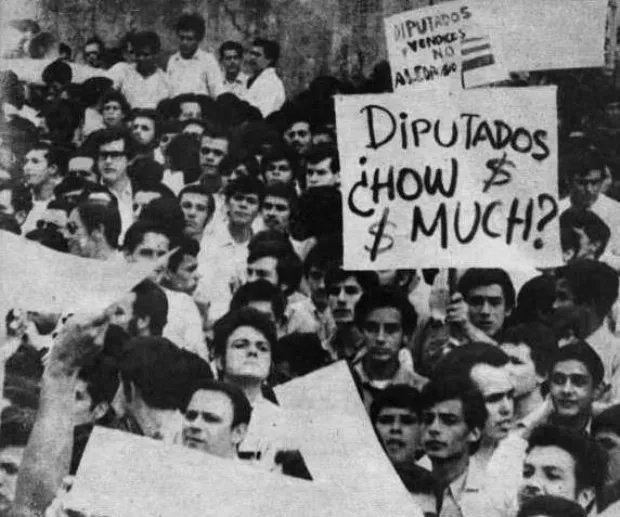
That phrase, "vendepatria," entered the vocabulary. Students shouted it at pro-ALCOA deputies. Deputies told students to go plant sugarcane in Cuba.
Behind the scenes, the PVP played a delicate game. The communist party had been the first to oppose ALCOA and had provided the intellectual framework for the entire movement. Its militants organized, wrote pamphlets, coordinated logistics. Its weekly newspaper Libertad ran systematic coverage. Manuel Mora Valverde, the PVP leader who had been elected to the Assembly in February 1970 alongside Marcial Aguiluz Orellana as the first leftist deputies in over 20 years, privately wanted the protests kept within "controllable channels." The PVP's broader strategic priorities, party legalization and diplomatic relations with the Soviet Union, depended on not destabilizing the system too dramatically. Both Trejos and PLN leadership raced to approve the contract before Mora and Aguiluz took their seats on May 1.
April 24
The vote came in three consecutive debates over three days. On April 22, the Assembly approved the contract 39 to 12. The FEUCR declared an indefinite strike beginning at 7:00 AM. Students from the Colegio Superior de Señoritas filled the legislative galleries. After the vote, they threw stones at departing pro-ALCOA deputies.
On April 23, the strike spread. 27,000 students were reported on strike: 15,000 secondary school students and 12,000 university students. Forty-five secondary schools walked out. Photographs from the day show the crowds were overwhelmingly colegiales, teenagers in school uniforms and Liceo de Costa Rica ties. The second debate passed in a 12-minute session, same margin. Students marched to the Cathedral and prayed. Then they marched to the presidential residence in Zapote, described as the largest parade in recent years. When President Trejos came out to say goodbye to the Archbishop, students surrounded his car, pushing and crowding it. Someone told the crowd that night: "Go to bed early, because tomorrow will be a decisive day."
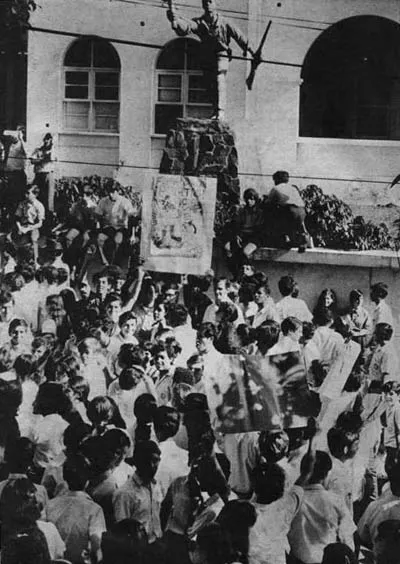
On the morning of April 24, anonymous phone threats to kidnap deputies circulated. One female and one male deputy withdrew. Another reported sick. Every colegio in the country was on strike. The UCR campus was described as "desértica." By two in the afternoon, thousands filled the streets around the Assembly. At 3:30, the parliamentary session began. Radio Universitaria transmitted the proceedings, and a PVP jeep with loudspeakers broadcast the signal to the crowd.
The crowd listened to the speeches and the vote count with what one participant later described as the passion and euphoria of following an international soccer match. Hope first, desperation after, and then fury.
At 5:31 PM, a young activist named Jorge Montoya Alvarado climbed a power pole outside the Assembly and cut the electrical lines. His father and uncles were electricians; he knew exactly how to do it. The building went dark. The radio transmission died. From the PVP jeep, the FEUCR vice-president Jorge Romero Pérez directed the crowd toward Avenida Central.
About 2,000 students surged down the Cuesta de Moras toward the Assembly. They threw rocks and broke windows. Inside, the deputies continued voting by candlelight and flashlight. At 6:01 PM, police fired the first tear gas canister. Students threw stones. Someone overturned a Meteorological Institute jeep and set it on fire. Others lit curtains on fire through the broken windows. A group reached the main door of the Assembly and tried to force it open. According to the historian Óscar Madrigal, this was the first time in Costa Rican history that a popular movement attempted to assault and burn the parliament.
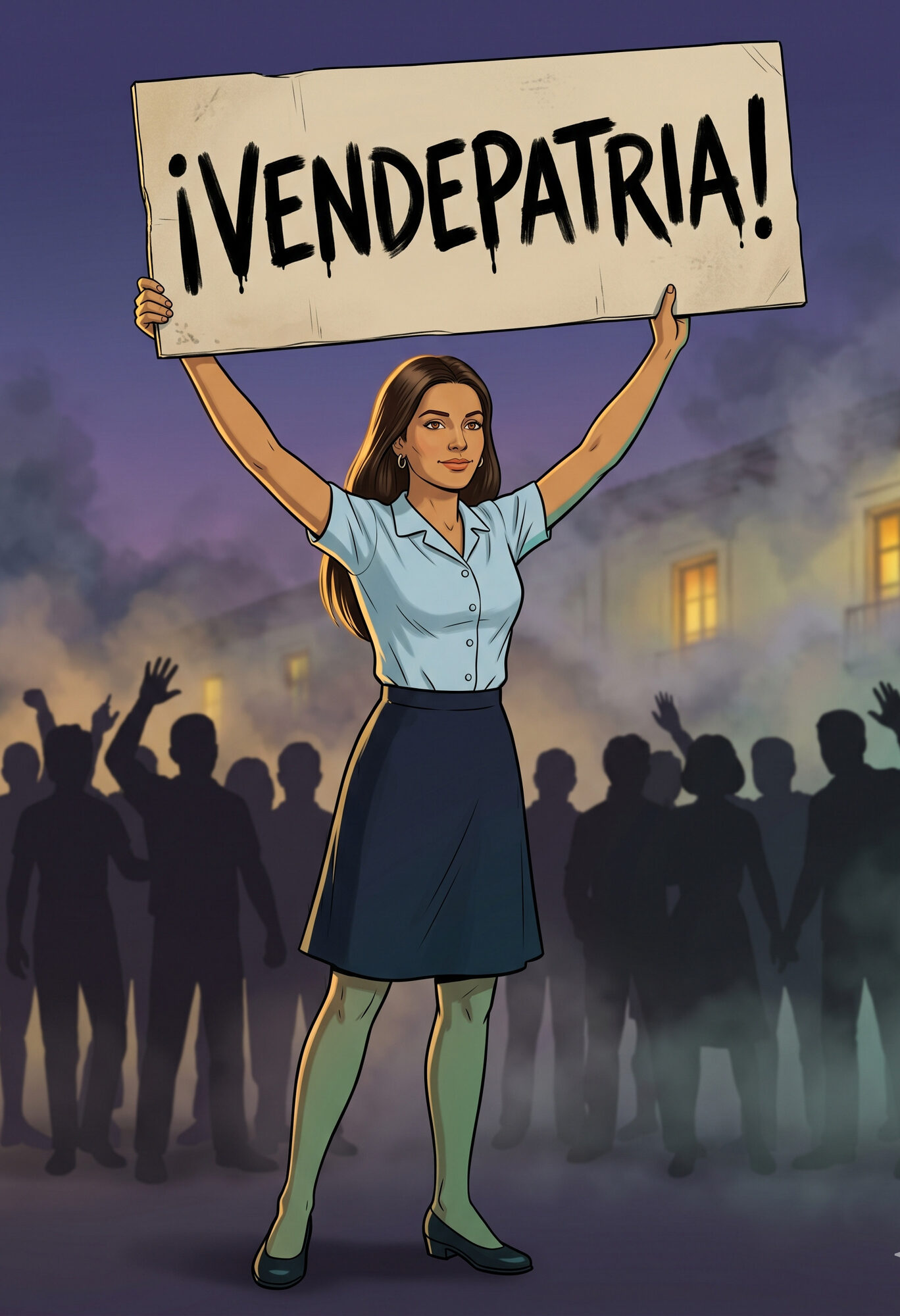
The final vote was 41 to 11. Deputies ended the session after tear gas, thrown back inside by students, made the chamber unbearable. Romero Pérez announced at 6:16 PM through the loudspeakers that students should withdraw.
They did not all withdraw. Between 6:20 and 7:00, fleeing students burned garbage cans along Avenida Central, threw stones at storefronts, and broke windows. They attacked the offices of La Nación, the newspaper whose owner had negotiated the contract as Minister. They attacked Radio Monumental and Radio Reloj, stations that had supported the deal. They broke into a financiera reportedly owned by a bishop and destroyed debtors' promissory notes. They attacked the Nicaraguan embassy, the embassy of the Somoza dictatorship. They shattered the Sears store on Avenida Central. Police established a virtual state of siege: cantinas closed at 9 PM, a prohibition on groups larger than one person. By ten o'clock, over 200 people had been detained. The next day, hundreds of parents lined up at the Guardia Civil detention center. A mother cried for her "menor inocente." A total of 348 people were arrested. Twelve remained in custody for weeks, charged with sedition, vandalism, arson, and contempt of authority. More than 600 people required Red Cross medical attention. No one was killed.
That same night, President Trejos signed the ejecútese, the executive order enacting the law. He reportedly reached his office through tunnels connecting the Assembly buildings to the presidential residence. His own son, Diego Trejos Fonseca, was the Minister of Public Security, the man who had commanded the police forces against the students.
ALCOA won. The law was Ley No. 4562.
The Law That Was Never Used
A red microlight passes over, low, buzzing lazily above the point. It circles several times, banking to take in the whale tail from above, then turns inland and disappears over the mountains.
Jorge pauses. You are standing on the small rise at the center of the whale tail. Looking back along the tombolo, the band of sand runs toward shore with ocean on either side of it. Behind the mound, on the rocks, a concrete post stands weathered, its purpose unreadable, submerged twice a day at high tide. You think of the pier that could have been here. He takes a drink of water and asks if you understand the paradox.
The contract was approved. ALCOA won the vote. The president signed the law. And then nothing happened.
ALCOA never extracted a single ton of bauxite from the Valle del General. No refinery was built near San Isidro. No highway was constructed to Punta Uvita. No port was dredged. No open pits were dug. The 900 hectares at Hacienda Bahía sat idle. The red dirt stayed under the coffee.
Multiple factors explain why. The country lacked the infrastructure the contract assumed: the roads, the electrical capacity to run a smelter, the port facilities. The social opposition, even in defeat, had demonstrated that operating in Costa Rica would mean permanent conflict. Mimi Sheller's research on ALCOA's Caribbean strategy suggests the company had expanded to Costa Rica partly because Jamaica's independence in 1962 had destabilized its operations there, and ALCOA valued Costa Rica's "political stability." The protests destroyed that calculation. Deputy Jorge Luis Villanueva Badilla, one of the twelve who voted against the contract, had said during the debate that ALCOA was treating the concession as a strategic reserve, with no intention of immediate extraction: "They weren't putting up money here, and everything had to be built for them."
Costa Rica's deposits were also minor by global standards. Jamaica's bauxite reserves were estimated at two billion metric tons. ALCOA's 120-million-ton concession in the Valle del General was a rounding error by comparison. The quality was moderate: drill cores from 1968 showed 41% aluminum oxide content, decent but not exceptional, and the best deposits were located under land that was rapidly urbanizing as San Isidro grew.
ALCOA voluntarily terminated the contract in 1975. When Daniel Oduber, who was by then president, met with the company's executives, he declared the terms "obsolete" and said the negotiation "cannot be maintained, due to a series of changes in the world and in Costa Rica in economic matters." The law sat on the books until deputy José Manuel Salazar Navarrete introduced the repeal. Ley 5990, signed November 15, 1976, formally derogated the contract. It passed, in the words of one historian, "without fanfare, even for university students."
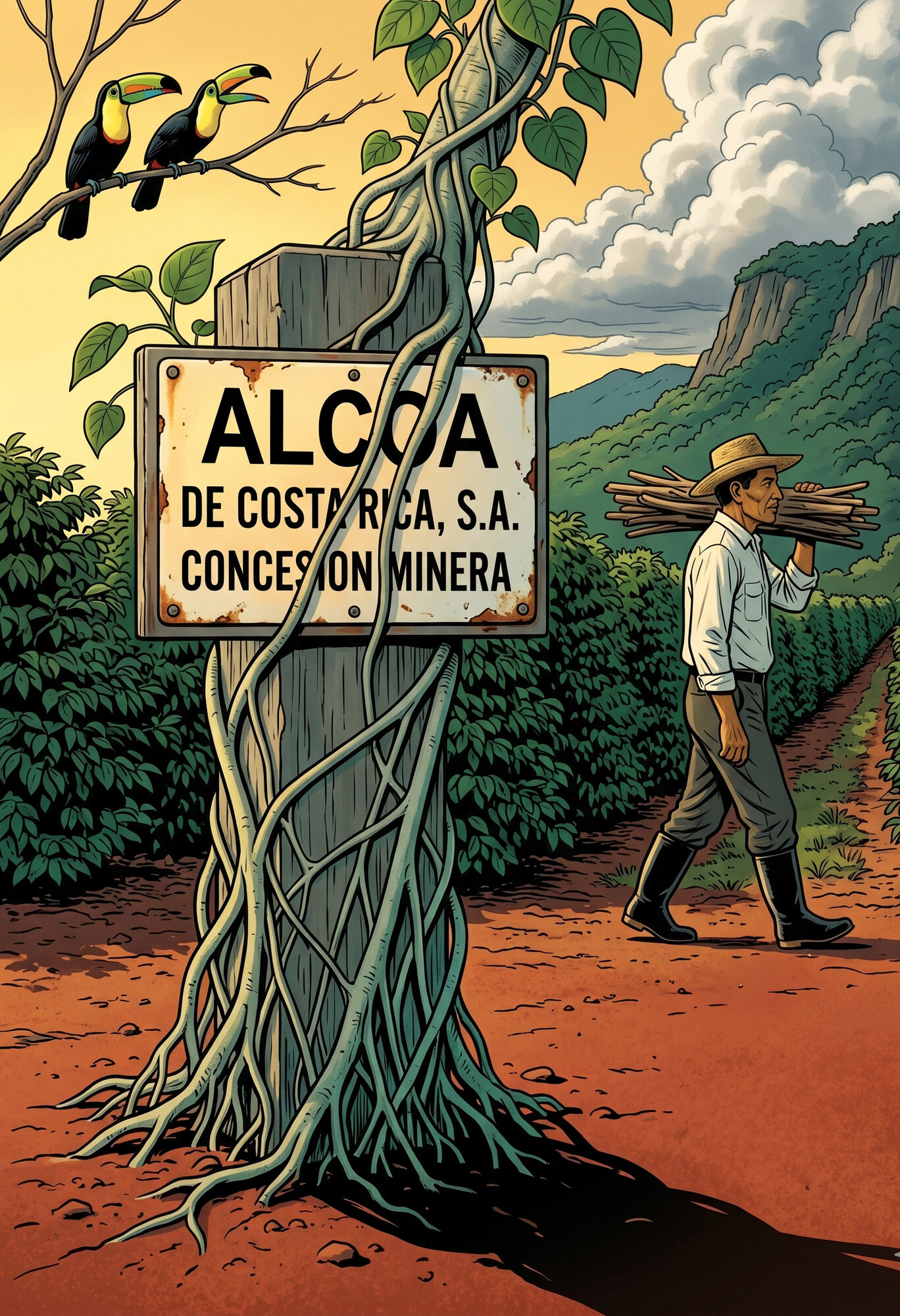
The students had lost the fight and won the war without knowing it. ALCOA had won the vote and never used the prize. The government had signed a law that governed nothing. The country spent six years with a statute authorizing the strip-mining of an entire valley and the industrialization of an entire coast, and the statute produced zero activity.
What the fight did produce was institutional. The contrato-ley mechanism, the legal device that had made the ALCOA contract superior to all other law, was abolished through constitutional reform in 1975. Article 10 of the Constitution was amended by Ley 5701 to declare that the legislative power established in Articles 105 and 121 inciso 1 could not be renounced or limited through any contract. A companion reform, Ley 5702, amended Article 124 to add that legislative approval of administrative contracts would not give them the character of laws. Daniel Oduber presented a reform lowering the citizenship age from 21 to 18, passed in 1971 with 46 votes in favor and 4 against. April 24 was declared Día del Estudiante Universitario Costarricense, and the FEUCR named a plaza at the heart of the UCR campus "Plaza 24 de Abril," installing a plaque that read: "Violar la ley de imperio es defender los derechos del pueblo." To violate the law of empire is to defend the rights of the people. On the same day as the protests, the Comité para la Defensa del Patrimonio Nacional was founded, the first Costa Rican organization dedicated to defending national resources from foreign exploitation.
The Beach Again
You are walking back along the tombolo. Dozens of people are coming the other way: families, couples, groups with children and cameras, moving out toward the point in a steady stream, as if in a pilgrimage. The tide is turning. The sand under your feet is narrower than it was an hour ago. Water is beginning to cover the reef flat on both sides, and the arms of the whale tail are slowly thinning. In a few hours, the whole formation will be underwater, invisible, just another stretch of ocean.
Jorge tells you what happened to the people. Fernando Cruz Castro, the law student who conducted the most rigorous legal analysis of the ALCOA contract, became President of the Supreme Court. Vladimir de la Cruz, a student leader from the FAU, became a historian, a university dean, a deputy, and ambassador to Venezuela. He spent five decades making sure the ALCOA story was remembered, teaching it at UCR from his faculty position, though always his version of it, always with certain names missing. Rodrigo Carazo, the deputy who told the students to fight by every means, became President of the Republic in 1978. He ran on the political capital he had accumulated as the most visible anti-ALCOA legislator.
And Iris Navarrete Murillo, the law student who started it all, who read the contract and called it a monstrosity, who presented the 39 considerations that became the intellectual foundation of the movement? She was forgotten. Her name appeared in no memoir, no commemorative article, no anniversary speech, for nearly fifty years. When scholars finally recovered her story in the 2010s, it was through archival work, not through any acknowledgment by the men whose careers the movement had launched.
Jorge says he should tell you that there are other versions. Rolando Araya Monge, who was there that day as a 23-year-old engineering student and went on to become PLN secretary general and presidential candidate, wrote in his 2014 memoir that April 24 "quedó como una leyenda heroica por muchos años. Hasta hubo quienes quisieron controlarla a su manera para ser vistos como héroes, como si hubieran tomado las montañas para hacer una revolución. Lo del 24 de abril fue solo un zafarrancho." It remained a heroic legend for many years. There were even those who tried to control it in their own way to be seen as heroes, as if they had taken to the mountains to make a revolution. April 24 was just a brawl. And Alberto Cañas Escalante, the novelist and PLN intellectual who had founded the Ministry of Culture and Youth after the protests, assessed it even more harshly decades later. In his view, "el movimiento contra ALCOA no tuvo consecuencias," and the generation that came of age in 1970, his own political heirs, governed with "un contenido pavorosamente entreguista y de sumisión a Washington." The movement against ALCOA had no consequences, and the generation was terrifyingly submissive, surrendering everything to Washington.
Jorge lets those voices stand. A brawl. No consequences. A generation that sold out. He has heard all of it. He does not argue with Araya Monge or with Cañas Escalante. He just looks at the water and the reef and the coast where there is no port, and he lets you hold all the versions at once.
The valley was never strip-mined. The richest bauxite deposits, the ones with the lowest silica content, the most commercially viable concentrations of aluminum oxide, were paved over by the growth of San Isidro del General. The city expanded across the alluvial fans where ALCOA's drill cores had found the best ore. What was once going to be an open pit is now a provincial capital of 50,000 people, with streets and schools and supermarkets sitting on top of laterite that will never be extracted.
Punta Uvita, where ALCOA planned its export port, became the heart of Parque Nacional Marino Ballena. The park protects 5,160 hectares of marine territory and 171 hectares of land, including coral reefs, rocky headlands, and the warm breeding waters where humpback whales from both the Northern and Southern Hemispheres come to calve. The reef you walked over this morning, the tide pools, the whale tail itself, all of it sits on the coastline ALCOA bought for industrial shipping.
Jorge stops at the edge of the surf. He wants to say something he considers important about how the story is remembered versus what it actually was.
"The movement against ALCOA was nationalist," he says. "It was about sovereignty. The students were not environmentalists. That word did not even exist in Costa Rica in 1970. They were fighting against a foreign company taking the country's resources on exploitative terms. The arguments were about imperialism, about the United Fruit Company precedent, about dignity. 'Vendepatria,' remember? Sell-the-homeland. The environment was in the story, the red earth, the valley, the coast, but nobody was talking about ecosystems or biodiversity or conservation. The historian Chaves Zamora calls it 'nacionalismo de contenido ambiental,' nationalism with environmental content. The land figured in the argument because it was the national patrimony being sold, not because anyone was thinking about ecology."
He watches the water. "But the land was saved anyway. That is the thing. They fought for sovereignty, and they accidentally preserved a valley and a coast. They could not know that this beach would become a national park, or that the whales would keep coming, or that the reef would still be alive. They were arguing about royalties and tax exemptions and constitutional law. And the result, fifty years later, is that the whales are here and the aluminum company is not."
When President Trejos Fernández was asked in a 1997 interview why the students had opposed the contract, he listed the economic benefits, the jobs, the refinery, the highway, the tax revenue. Then he stopped and confessed: "¿Cómo explicar eso? Yo no he encontrado una explicación razonable." How to explain it? I have never found a reasonable explanation.
Jorge stands at his car, as you finish your conversation. The colonial house, paint gone gray. In its yard, the two stone spheres half-sunk in the grass. Behind the coastal range, a wall of black cloud over the valley.
Resources & Further Reading
Academic Sources
The definitive academic study of the ALCOA protests and the construction of their memory. Winner of Honorific Mention, Cleto González Víquez National History Prize, 2022. Essential reading for understanding the gap between the events and their mythology.
Academic article analyzing fifty years of public memory construction around the ALCOA protests, including the systematic exclusion of women and secondary school students from the narrative.
The legal analysis of the ALCOA contract by the law student who later became President of the Supreme Court, based on his 1976 thesis.
Historical overview of the organizations, tactics, and political dynamics of the anti-ALCOA movement.
Academic analysis of ALCOA's operations in Suriname, the displacement of Saamaka Maroon communities, and the environmental consequences of the Afobaka Dam.
Critical analysis of the intellectual construction of Rodrigo Carazo Odio's heroic image, centered on his role in the ALCOA protests and his later presidency.
Geological study of the bauxite deposits in the Valle del General, using ALCOA's own 1968 drill data. Found 590,616 metric tons of probable reserves with 41.1% alumina content in just 10% of the study area.
Primary Legal Documents
The complete text of the contract as approved by the Legislative Assembly and signed by President Trejos Fernández, via Costa Rica's SCIJ legal database.
The 1975 reform that established that the legislative power cannot be renounced or limited through any contract, the direct legal response to the ALCOA contrato-ley mechanism.
Complete list of all amendments to the 1949 Constitution, including the two 1975 reforms (Ley 5701 to Article 10 and Ley 5702 to Article 124) that together abolished the contrato-ley mechanism.
Testimonies and Journalism
The recovery of Iris Navarrete Murillo's role as the catalyst of university opposition to the ALCOA contract, based on archival research and her own testimony.
First-person account by a PVP Central Committee member revealing the communist party's strategic calculations and PLN's attempted co-optation of the movement.
Detailed journalistic reconstruction of the ALCOA affair, drawing on interviews with participants and archival sources.
Reflections by a key participant who later became President of the Supreme Court, on the legal and political dimensions of the ALCOA contract fifty-one years later.
First-person account by the FAU student leader who later became historian and ambassador, detailing the organizational structure and Cold War context of the ALCOA movement.
Comprehensive journalistic overview of the ALCOA protests on the 50th anniversary, including the founding of the Comité para la Defensa del Patrimonio Nacional and the abolition of the contrato-ley.
Structured conflict entry documenting the ALCOA case with technical project details, mobilization groups, environmental impacts, and conflict outcomes.
Comparative analysis of Costa Rica's three great popular mobilizations (ALCOA 1970, Combo ICE 2000, TLC 2007), by a participant in all three.
Analysis of the FEUCR's use of paid newspaper advertisements (campos pagados) as a protest tactic, and worker and church solidarity declarations.
UCR Institutional Sources
UCR's 53rd anniversary coverage with historian Randall Chaves Zamora, covering Cold War context, Iris Navarrete's role, and institutional consequences of the movement.
50th anniversary expert analysis by Chaves Zamora during the COVID-19 pandemic, contrasting the "generation of ALCOA" with the "generation of COVID."
40th anniversary analysis including the link between the ALCOA project and the Río Grande de Térraba hydroelectric plans.
44th anniversary article covering the FEUCR's formal report to the Legislative Assembly and the student congress that launched the opposition.
Parque Nacional Marino Ballena
Official park data including the 1989 creation decree, 171 hectares terrestrial and 5,160 hectares marine, and the 15 km of coastline that includes the tombolo at Punta Uvita.