Part III: Two Systems, Different Physics
Mass tourism and ecotourism aren't two points on a spectrum. They're different systems with different rules. One extracts value until the resource degrades. One generates value by maintaining what visitors pay to see. Carrying capacity determines which system is possible in a given place. In ecosystems like Corcovado, the physics only permit one.
On January 20, 1993, five Canadian tourists checked into a new ecolodge on Costa Rica's Osa Peninsula. The property had no road access. Guests arrived by small plane or boat. The owners, Karen and John Lewis, former Peace Corps volunteers who had served in Kenya in the 1960s, had purchased 1,100 acres of rainforest three years earlier with a conviction: "No matter how you cut it, a rainforest left standing is more valuable than one cut down."
Six weeks later, on March 1, they opened a school. Local women had approached them about education: their children had no school nearby. The Lewises started by organizing transport, moving 22 children to Puerto Jiménez for classes. Then they contributed materials, and community members pitched in labor, paying about $7 monthly for tuition, often in produce rather than cash. Escuela Carbonera opened with 22 students enrolled by February and 26 within a week of opening.
The lodge hired exclusively from nearby communities. Not because local workers were more skilled than the hospitality professionals available in San José, but because the Lewises discovered something counterintuitive: it was faster to train willing workers from scratch than to retrain experienced staff in sustainable practices. Employees arrived with no hotel experience. They left with English fluency, hospitality expertise, and concrete floors in homes that previously had dirt. In 2013, the Lewises placed 930 acres under a conservation easement with The Nature Conservancy, the first such agreement by a business in Central America, prohibiting mining, logging, and hunting in perpetuity.
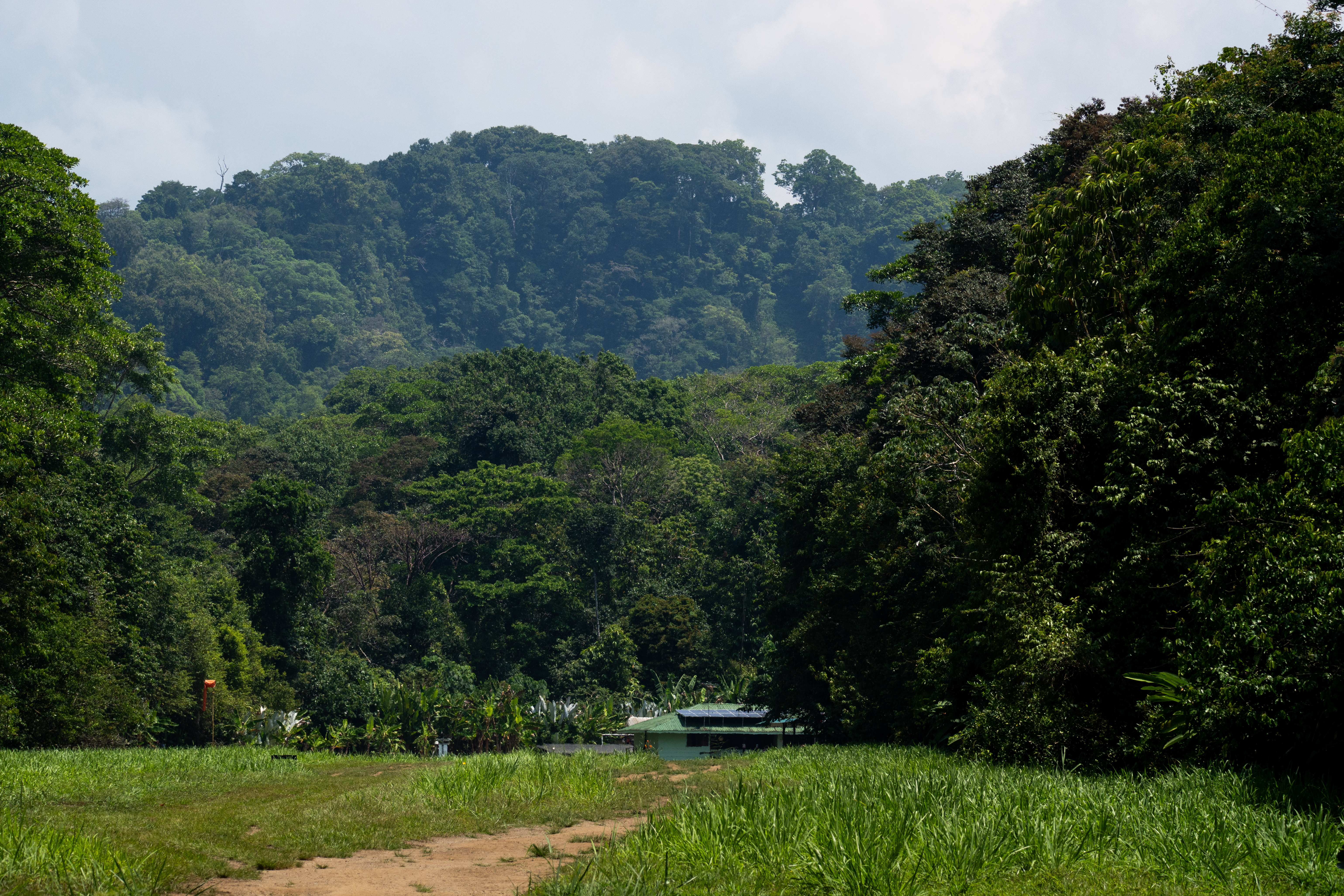
Today, the 1,000-acre reserve employs its entire staff from nearby communities. Most management positions are held by women, including the lodge manager, kitchen leader, and concierge director. Guests pay a $25 conservation fee that funds park rangers, environmental education, and coral restoration. The reserve functions as a wildlife corridor connecting Corcovado National Park to other protected areas through the AmistOsa Biological Corridor, where engineers have installed 27 arboreal bridges so animals can cross roads safely. Camera traps on the property have captured 80,000 photographs documenting 21 large mammal species and five of Costa Rica's six native felines. Biologists discovered Sangrillo Colorado, an extremely rare rainforest tree documented nowhere else, not even in neighboring Corcovado.
How Money Moves Differently
Lapa Rios is one lodge, but the model extends across the peninsula. A 2014 study by the Center for Responsible Travel interviewed 128 workers across the Osa Peninsula and found that ecotourism workers earned $709.70 per month, nearly double the $357.12 average in other sectors. 63% of ecotourism workers reported their positions improved their financial circumstances, compared to 48% in other sectors. Household income was 1.6 times higher for families with a tourism worker. Workers described their positions as pathways to running their own operations.
When a guest stays at Lapa Rios, the room rate pays staff who live in Puerto Jiménez and Carate. Those staff spend their earnings at local shops. The $25 conservation fee funds park rangers from the community. The lodge buys produce from nearby farms. Guests visit local artisans and eat at family restaurants. Each transaction generates another, because the people earning the money live where they spend it.
In Rancho Quemado, a visitor hires Alfonso for a dawn birdwatching walk; $30 goes into his pocket and he'll spend part of it at the hardware store in town. Breakfast at Doña María's soda: rice, beans, eggs, fresh juice, $6. The morning tour to Don Carmen's trapiche costs $25, paid to the cooperative that built the community soccer field. At the trailhead, Juan Cubillo teaches gold panning in the streams where he once mined illegally; $20. Lunch is at a farmhouse where the family raises tilapia in ponds they dug themselves; the wife cooks, the husband explains how they switched from cattle. The afternoon cooking class with three women who started teaching volunteers and now run a business: $15 to learn tamales and arroz con leche. Dinner at the only restaurant, run by a former park ranger's family. The room for the night is in a house where the daughter went to hospitality school on a scholarship funded by lodge conservation fees. Every transaction goes to someone who lives here, and they spend part of it on someone else who lives here. This is what economists mean by a local multiplier effect.
The large-scale resort development concentrated in Guanacaste follows a different logic. Many resorts are foreign-owned, with revenue flowing to investors abroad. Guests arrive at a resort compound, eat meals prepared in the compound kitchen with ingredients shipped from elsewhere, swim in the compound pool, and depart without the surrounding community having captured much of the expenditure. The Paradise Papers, a 2017 leak of 13.4 million financial documents, revealed that Guanacaste resort investments were routed through Cayman Islands, Bahamas, and British Virgin Islands. The structure extracts value, minimizes local retention, and offshores profits.
None of this means the Osa Peninsula has escaped poverty. The region faces a 35 percent poverty rate, education levels below national averages, infant mortality above Costa Rican norms. Ecotourism has not made the peninsula wealthy. The comparison isn't prosperity versus extraction. It's two models operating in poverty contexts: one distributing limited gains through the community, one concentrating them among foreign owners while treating workers as interchangeable seasonal inputs. And this alternative only exists because the Osa operates within limits that make it possible.
The Physics of Carrying Capacity
The Osa model depends on something the extraction model ignores: the ecosystem that visitors pay to experience. Jaguars need territories of 25 to 150 square kilometers. Tapirs require movement between forest patches. Scarlet macaws follow seasonal food sources across landscapes. If the reserve at Lapa Rios were fragmented by development, or if the corridors connecting Corcovado to surrounding protected areas were severed, the wildlife would disappear. And with it, the reason anyone visits.
Carrying capacity describes something measurable: the maximum visitors an ecosystem can sustain without exceeding its regenerative capacity. Scientists calculate it using the Cifuentes framework, first applied in the Galápagos in 1984 and later adopted by the International Union for Conservation of Nature. The methodology works in three stages. Physical Carrying Capacity measures the theoretical maximum based on space and time: how many people can physically fit on a trail during operating hours. Real Carrying Capacity applies correction factors: slope, erosion risk, vegetation sensitivity, wildlife behavioral patterns, water availability, seasonal conditions. Each factor reduces the number. Effective Carrying Capacity accounts for management constraints: available rangers, infrastructure limits, emergency response capacity. The output is specific to each site. Not a policy preference. A measurement.
A trail operating at 90% of capacity might show minimal wear. At 110%, damage accelerates. The difference isn't proportional - it's a cliff. Below the threshold, ecosystems absorb the pressure. Above it, they degrade faster than they can recover. Soil compaction from foot traffic can occur in a single busy season, but restoration takes years. Vegetation trampled off trails regenerates over multiple growing seasons. Coral destroyed by boat anchors requires decades to regrow, and damaged reefs may never return to their original state. Once the threshold is crossed, damage accumulates rapidly, and by the time it becomes visible, the trajectory is already set. The question then becomes whether to close completely and wait years for recovery, or to continue operating and watch the asset disappear.
This constraint isn't just ecological. It's economic. If Sirena Station can sustainably host 120 visitors per day, that determines how many guides, cooks, drivers, and lodge workers the ecotourism economy can support. The Osa model produces better wages and higher local retention than mass tourism. But it cannot employ everyone. Carrying capacity limits jobs, not just visitors. For the roughly 20,000 people on the Osa Peninsula, ecotourism is part of the answer. It cannot be the whole answer.
What the Evidence Shows
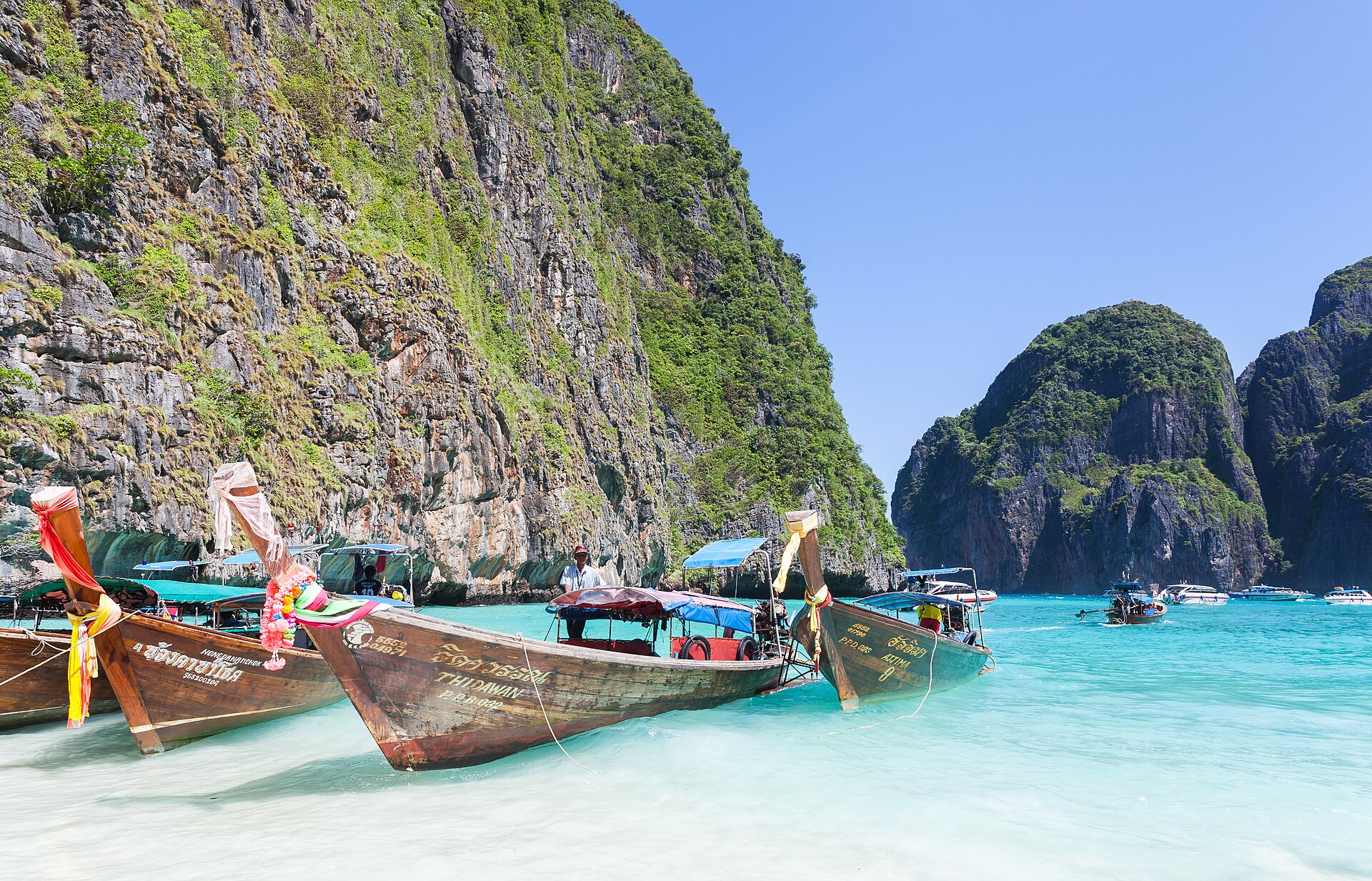
Maya Bay in Thailand provides the clearest demonstration. The bay became globally famous after serving as the filming location for "The Beach," a 2000 movie in which Leonardo DiCaprio's character searches for an unspoiled paradise hidden from mass tourism. The film's success brought mass tourism to the location. By 2018, the bay was receiving 6,000 visitors daily - several times what scientists estimated it could sustain. The mechanism of destruction was straightforward: boats needed somewhere to anchor, and anchors destroyed coral. By the time authorities acted, anchors had destroyed 50 percent of the bay's coral cover. Marine life fled. The sand eroded from the constant foot traffic and boat wash.
Thailand closed Maya Bay completely in June 2018. Not reduced hours, not higher fees, not more rangers. Complete closure. Conservation teams spent more than three years replanting 30,000 coral fragments. About half survived. Slowly, fish populations returned. Then, for the first time in years, blacktip reef sharks reappeared in the bay. When Maya Bay reopened, it reopened with strict enforcement: 300 tourists per round, one-hour visits, eight speedboats maximum. These limits reflect what the science calculated before the damage occurred. The closure proved that recovery is possible and enforcement works, but it also proved what recovery costs. More than three years of zero visitors. Massive intervention. The tourism economy of Maya Bay didn't shrink during that period. It ceased to exist entirely, and only returned when the ecosystem could support it again.
Maya Bay is a carrying capacity story: exceed the limit, destroy the asset, close for recovery. But it's also part of a larger pattern. When tourism becomes the economic engine, pressure to grow can overwhelm whatever limits exist—ecological limits at natural sites, social limits at urban destinations. The phenomenon has a name: overtourism.
The World Tourism Organization defines overtourism as tourism that "excessively influences perceived quality of life of citizens and/or quality of visitor experiences in a negative way." The phenomenon isn't new - researchers have studied tourism crowding for decades - but the term entered public debate around 2017, when anti-tourist protests erupted in Barcelona, Venice, and other cities overwhelmed by visitors. Worldwide, 80 percent of travelers visit just 10 percent of destinations, concentrating pressure on a handful of famous places. The result is predictable: the very qualities that made these places famous erode under the weight of visitors drawn by that fame.
The Galápagos Islands should be immune. The archipelago operates under UNESCO World Heritage protection with some of the strictest environmental protocols on Earth. Visitors must remain two meters from wildlife. Certified naturalist guides supervise every excursion. Entry fees fund dedicated conservation staff. A permitting system was designed to balance cruise berths with land-based hotel beds at a one-to-one ratio. If anywhere could balance tourism with preservation, it should be here.
Instead, visitor numbers grew from 41,000 in the early 1990s to over 330,000 by 2023. The permitting ratio collapsed from one-to-one to roughly one-to-five. Unlicensed Airbnbs exploded from 56 listings in 2015 to over 1,300 today, dwarfing the 300 legal hotels. The reason is economic: tourism generates 80 percent of the Galápagos economy, and that dependency creates political pressure to grow regardless of what the science says. Ecuador agreed to a "zero growth" tourism model with UNESCO but never implemented it. In 2014, park director Arturo Izurieta completed a report identifying 242,000 annual visitors as the sustainable cap and 2017 as the point of no return. Two months before Ecuador's new Galápagos law passed, the environment ministry fired him without explanation. His report has been on a shelf ever since. Research now shows marine iguanas at heavily-visited sites have suppressed immune function and compromised wound healing compared to protected populations. Of 20 critically endangered endemic species in the Galápagos, 16 live on the four islands receiving the most visitors. The damage is underway.
The pattern repeats worldwide. At Machu Picchu, UNESCO recommended 2,500 daily visitors as sustainable. Peru has set the limit at 5,600—more than double—and expects 1.5 million visitors this year. The ancient site sinks 2-3 centimeters annually from the weight of foot traffic. A new international airport opening in 2026 will double passenger capacity. UNESCO has repeatedly threatened to place the site on its endangered list. Urban destinations show different symptoms: Venice caps cruise ship arrivals while its residential population collapses below 50,000; Barcelona imposes tourist taxes while entire neighborhoods empty of permanent residents. Whether the limits are ecological or social, the dynamic is the same: economic dependency on tourism makes them politically unacceptable—until the damage forces them.
Maya Bay and the Galápagos illustrate two sides of the same problem. Maya Bay had no protocols; when the damage became undeniable, Thailand closed it completely for more than three years and it recovered. The Galápagos has the world's best protocols, but those protocols couldn't overcome the pressure to grow. Both cases point to the same conclusion: carrying capacity science can calculate the limits, but science alone doesn't protect a destination. Political will does. And political will requires either a catastrophe severe enough to force action, like Maya Bay, or institutions strong enough to resist economic pressure before the catastrophe occurs.
What Crossing the Threshold Feels Like
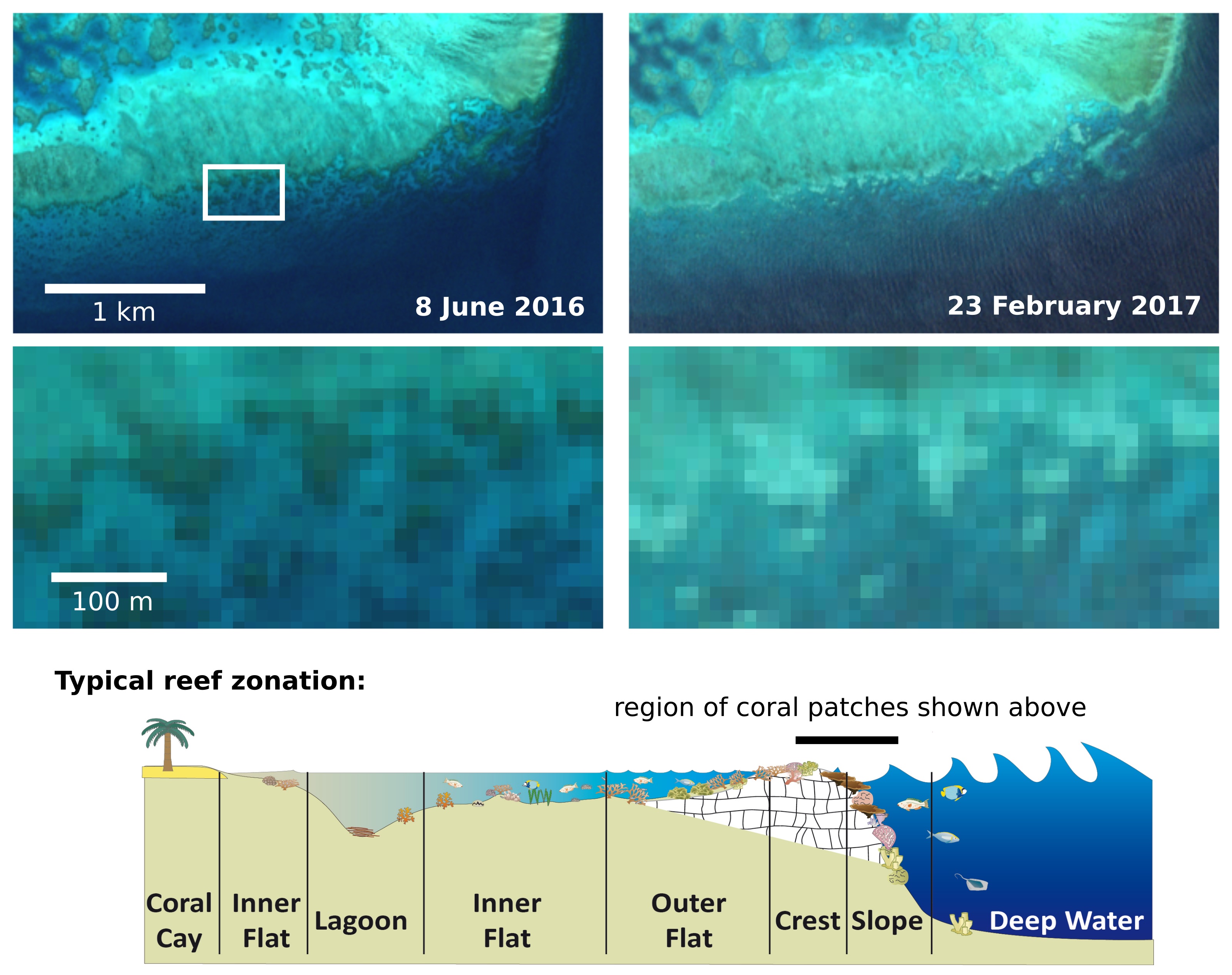
The Great Barrier Reef stretches 2,300 kilometers along Australia's northeast coast. It is the largest living structure on Earth, visible from space, home to 1,500 species of fish and 400 types of coral. It supports 64,000 jobs and generates $6.4 billion annually for the Australian economy. It is also dying—killed by rising ocean temperatures. The reef experienced its fifth mass bleaching event in eight years in 2024. Seventy-nine percent of surveyed reefs showed bleaching. Some coral species experienced 95 percent mortality. In 2025, hard coral cover declined by 14 to 30 percent across the entire system.
Researchers surveying nearly 4,000 people connected to the Great Barrier Reef asked them to rate their agreement with a single statement: "Thinking about coral bleaching makes me feel depressed." Half of tourists, residents, and tourism operators scored 8 to 10 on a ten-point scale. When the researchers analyzed who was grieving, they found a pattern: people who derived personal identity from the reef, who felt strong attachment to its health, who valued its biodiversity for its own sake. The reef had become part of who they were.
Nadine Marshall, the senior social scientist who led the research, has become an unexpected counselor. People call her to share what they've lost. "People tell me about their childhoods spent spearfishing in clear blue waters," she says, "but now the water is murky and the fish have gone." She hears from dive operators who built careers showing tourists underwater gardens that no longer exist. From residents who raised families beside a reef their grandchildren will never see healthy. "When people have no control over the future of their homes," Marshall observes, "they tend to get depressed and disengage from society. They may feel like there is no point anymore."
A separate study captured the paradox from the visitor side. Seventy percent of Great Barrier Reef tourists in 2016 were "strongly motivated" to see it "before it's gone." Researchers call this "last chance tourism" or "doom tourism." The visitors know the reef is dying. That knowledge is part of why they came. But the same study found that tourists don't associate their own travel with the damage. The flight that brought them, the boat that carries them, the infrastructure that supports their visit. They see themselves as witnesses to loss, not contributors to it.
This is what it looks like when an industry built on a living ecosystem watches that ecosystem die. The Great Barrier Reef's $6.4 billion tourism economy depends on coral that rising ocean temperatures are bleaching to death. Corcovado's ecotourism economy depends on forest that development pressure could fragment. The causes differ—global emissions versus local carrying capacity—but the dependency is identical. The people who remain feel helpless, disengaged, grieving. The people who visit feel they're watching something die. Nobody feels like they're causing it. Everybody is.
The Constraint and the Threat
The evidence points in one direction. In ecosystems like Corcovado, ecotourism generates higher wages, greater local employment, and stronger community benefit than mass tourism alternatives. The CREST study documented this. The Rancho Quemado example illustrated it. Lapa Rios proved it could last for decades. Where the model operates within carrying capacity limits, it works.
But the same science that validates ecotourism also constrains it. Carrying capacity describes a physical limit, not a policy preference. Sirena Station can sustainably host 120 visitors per day because that's what the trails, water systems, and wildlife corridors can absorb without degrading faster than they regenerate. That number determines how many guides the park can employ, how many lodges the peninsula can support, how many families can make a living from tourism that depends on intact forest.
"A consistent increase in the depletion of natural resources," a 2024 review in the International Journal of Tourism Research concluded, "calls for balancing economic aspirations while controlling the adverse impact on the environment and society." This is the bind. Ecotourism produces better outcomes than mass tourism, but it cannot produce mass tourism's volume. It cannot employ everyone. It cannot solve a 35 percent regional poverty rate by itself. The Osa model is part of the answer for the roughly 20,000 people who live on the peninsula. It was never designed to be the whole answer.
The global pattern is clear. When destinations exceed their limits, the damage compounds until the attraction that drew visitors disappears. Some close for years and attempt recovery. Others lose what made them valuable and never recover it. The sites that avoid this fate do so by enforcing the limits before the damage begins, not after.
"Governments around the world traditionally just didn't think they had a role in managing," observes Randy Durband, CEO of the Global Sustainable Tourism Council. When overtourism occurs, he argues, it's fundamentally about "lack of management." Costa Rica has the science, the methodology, and the case studies to know exactly what Corcovado can sustain and what happens when limits are exceeded. The knowledge has never been the obstacle. The obstacle is political will, the pressure to treat Corcovado like Guanacaste, to chase volumes that the ecosystem cannot absorb, to import a model designed to extract value rather than circulate it through the communities that live alongside the forest.
That conflict is already underway. What it looks like, who is driving it, and what communities are doing to resist it, is the subject of what follows.
Key Sources & Resources
Osa Economic Model
Study of 128 workers: ecotourism workers earn 1.9x monthly income ($709.70 vs $357.12), 58% local residents versus 35% in other sectors.
Founding story, conservation easement (first in Central America), Escuela Carbonera serving 50+ children, 100% local staff.
1,000-acre private reserve, $25 conservation fee funds rangers and education, wildlife corridor to Corcovado.
Community tourism initiative with 40+ microenterprises. Three trail routes: Gold, Forest, Water.
Cooperative consortium with 19 years experience. Technical assistance, training, marketing for community tourism.
90% recyclable construction, built on metal stilts (no trees cut), rainwater capture, drinking water from property springs.
Maya Bay: The Resurrection
30,000 coral fragments replanted, blacktip sharks returned within 3 months of closure, 100+ sharks now use bay as nursery.
Reopened after 4-year closure: 300 tourists per round, 1-hour visits, 8 speedboats max, boats banned from bay.
6,000 daily visitors at peak, 80% coral destroyed, boat anchors main cause of damage, $300M annual revenue foregone during closure.
Galápagos: When Management Isn't Enough
Arturo Izurieta fired after completing tourism impact report. 2017 identified as point of no return. Report sitting on shelf ever since.
Sea lions in plastic, tortoises with plastic in droppings, 2.5 tons trash collected in 8-day cleanup (weight of 10 giant tortoises).
Invasive species brought by visitors, West Nile virus expected within years via mosquitoes on airliners, green iguana captured in Puerto Ayora.
Avian vampire fly devastating land birds since 1960s, feral cats threaten pink iguana, blackberry covering 30,000 hectares.
Machu Picchu & Great Barrier Reef
14 tons garbage daily, 1 liter cooking oil pollutes 1,000 liters of sacred Urubamba river, UNESCO threatened World Heritage status.
Carrying capacity study recommended 2,244 visitors; actual limits fluctuated to 6,534, currently 5,600. More than double recommended.
"Reef Grief" research: half of tourists say coral bleaching makes them depressed. People share memories of childhood spearfishing now impossible.
70% of visitors "strongly motivated" to see reef "before it's gone." Tourists don't associate their own travel with damage.
Carrying Capacity Science
Cifuentes methodology: Physical, Real, and Effective Carrying Capacity. Correction factors include slope, erosion, vegetation sensitivity, wildlife patterns.
When damage exceeds regenerative capacity, irreversible changes occur: biodiversity loss, soil compaction, vegetation deterioration.
Effects happen quickly, recovery is slow. Trail widening, soil compaction, habitat fragmentation major threats to species diversity.
"A consistent increase in the depletion of natural resources calls for balancing economic aspirations while controlling the adverse impact on the environment and society."
Randy Durband (CEO, Global Sustainable Tourism Council): "Governments around the world traditionally just didn't think they had a role in managing."
Corcovado: The Fight Over 120
Sirena Station limit increased from 120 to 240 without scientific studies. Carlos Eduardo Castro Rojas (Ecoturístico La Tarde) warned about day-trip conversion bypassing community.
Constitutional Chamber struck down increases. Ruling: lacked scientific justification, violated precautionary principle.
Legislator Robles: 120-person increase at Sirena, overnight +10, cruise quota +100. All without technical backing.
AmistOsa Biological Corridor connects Corcovado to other reserves. 27 arboreal bridges for wildlife crossing. Largest Pacific coast primary forest.
Conservation Context
Osa faces 35% poverty rate, high dropout rates, threats from palm oil, poaching, illegal logging, proposed mass tourism.
2013: First Central American business conservation easement. 930 acres protected in perpetuity with Nature Conservancy and CEDARENA.
Ongoing monitoring of tourism pressure. Previously listed as World Heritage in Danger (2007-2010).