7,885 Ways to Destroy a Rainforest
Every environmental complaint filed in Costa Rica's Brunca region from 2013 to 2026, scraped, categorized, and charted. What 13 years of data reveal about who is destroying the southern zone, how they do it, and why the system cannot keep up.
Costa Rica has a public system for tracking environmental complaints. Through SITADA (Sistema Integrado de Trámite y Atención de Denuncias Ambientales), anyone can file a complaint and anyone can search the results. Each entry includes a description, a location, a category, and a status code tracking the complaint through the bureaucracy. SITADA is not the only channel (people also report to SINAC offices directly, to the TAA, or through the courts), but it is the one that publishes everything online.
This is remarkable. Most countries in the region do not even track environmental complaints systematically, let alone publish them. SITADA makes its full database searchable by anyone.
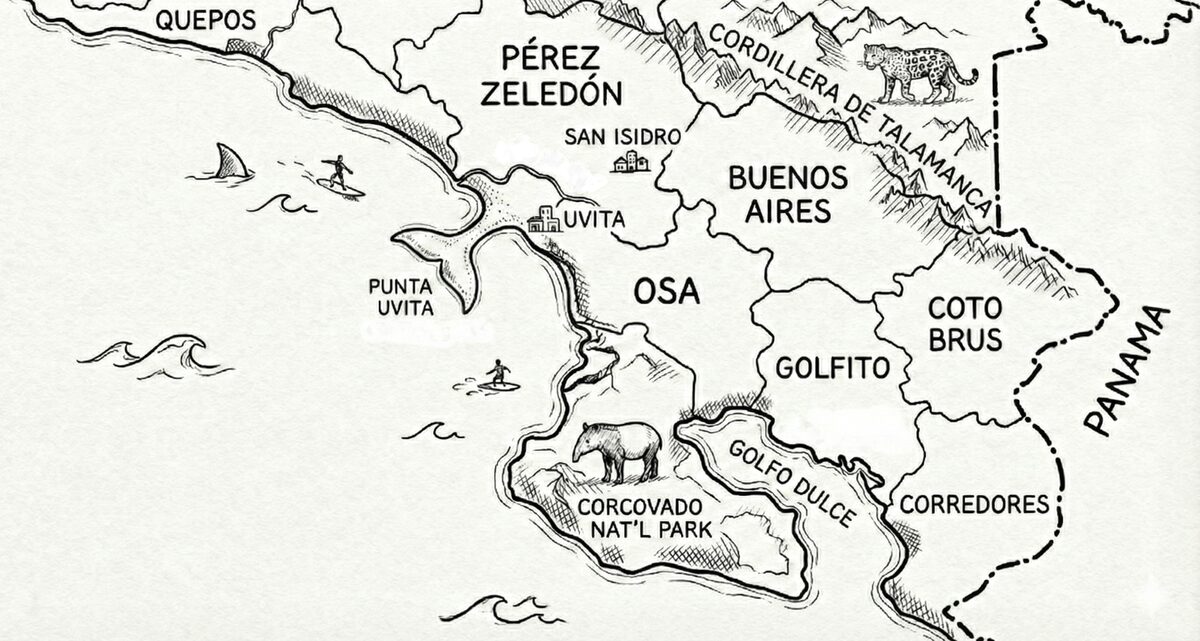
We scraped it. All six cantons of the Brunca planning region: Perez Zeledon, Osa, Golfito, Buenos Aires, Coto Brus, and Corredores. The result: 7,885 environmental complaints spanning 13 years. We then re-categorized every complaint into a scheme of 27 subcategories organized under six major categories, plus nine cross-cutting dimensions that tag the underlying drivers (construction, cattle, agriculture, heavy machinery, nighttime operations, indigenous territory, and more). This is what we found.
The Big Picture
Brunca environmental complaints by category, 2013-2025
Deforestation dominates. Over 3,200 complaints involve some form of tree cutting, forest clearing, or vegetation removal. Water violations come second at roughly 2,000, driven primarily by invasion of riparian protection zones. Wildlife crimes account for about 1,600, with captive parrots and hunting dogs as the recurring characters. The remaining complaints split among contamination, protected-area violations, and illegal mining or earthworks. (Some complaints involve multiple categories; a bulldozer clearing forest along a river triggers both a deforestation and a water violation, so the category totals add up to more than 7,885.)
Complaints by category and year, 2013-2025
The chart above breaks those complaints down by year and category, showing how the volume and composition of reports evolved from SITADA's launch in 2013 through 2025. The jump around 2018 is partly real and partly an artifact: adoption was slow in the early years, and the sharp increase across all cantons in 2018 suggests the system only became widely used around that time. From 2018 onward, volumes range from 643 to 1,052 complaints per year, peaking in 2021 before settling into a plateau of 800-970 per year. Deforestation leads every single year. Water violations are the steady second-place category, growing from about 15 percent of complaints in early years to 27 percent by 2024, likely reflecting growing awareness of riparian protection zone laws rather than more violations. Starting in 2021, wildlife totals are inflated by rescue coordination reports newly routed through SITADA, reflecting a change in SINAC's administrative workflow rather than an increase in wildlife emergencies.
Six Cantons, Six Personalities
Complaint distribution by canton and category, 2013-2025
Perez Zeledon (2,453 complaints) is the water battleground. One in three complaints involves water: 384 riparian zone invasions, 145 cases of illegal water extraction, 165 water contamination reports. It accounts for half of all illegal water extraction in the Brunca region and 41 percent of all riparian invasions. The canton is also the largest and fastest-growing urban center in the southern zone, and its construction-driven complaints (267) are the highest of any canton. It also leads the region in captive wildlife (232 reports), almost entirely parrots and parakeets kept as household pets.
Osa (1,707 complaints) is development pressure meeting parks. The canton has the highest rate of protected-area violations (9 percent), reflecting the density of Corcovado, Marino Ballena, and the Terraba-Sierpe wetlands. It leads the region in road building through forest (61 complaints), construction-driven clearing (52), and tree poisoning (26 of 73 region-wide, or 36 percent). That tree-poisoning number is striking: over a third of all deliberate tree-killing in the Brunca region happens in Osa, suggesting a systematic land-preparation strategy by developers who inject herbicide, wait for the trees to die, then claim the land was already degraded.
Golfito (1,456 complaints) is the contamination outlier. With 215 contamination complaints, it far exceeds any other canton. Port operations and waste from the former banana zone drive much of this. It also leads in wildlife trafficking (41 of 103 region-wide, or 40 percent) and wildlife rescue (137 reports), reflecting the Golfo Dulce as both a major biodiversity zone and a trafficking corridor.
Buenos Aires (1,349 complaints) is the agricultural frontier. Over half of its complaints (53 percent) involve deforestation. It leads in commercial logging (150), clearing for agriculture (34), and clearing for cattle (32). This is also where most indigenous territory complaints are concentrated (38 of 90), in Terraba, Boruca, and Cabecar territories where logging is the dominant threat.
Coto Brus (466 complaints) and Corredores (454 complaints) are the smaller cantons with their own signatures. Coto Brus has unusually high water violations (33 percent of complaints), while Corredores has the highest proportional wildlife count (28 percent), with 65 wildlife rescue reports in a canton that seems to function as a biological corridor between Costa Rica and Panama.
The Deforestation Playbook
Deforestation complaints by method, 2013-2025
The largest bucket, "General/Unspecified" (1,747), is a terse-description problem. Many complaints simply say "corta de arboles en finca" without revealing the purpose. Of those we could classify, commercial logging (576) is the largest single subcategory and holds remarkably steady at 45-77 complaints per year from 2018 onward, with no sign of decline despite enforcement efforts.
Construction-driven clearing (203) and road building (189) together account for nearly 400 complaints, showing how development is a major deforestation driver. Construction clearing peaks in 2021 and 2023, tracking the regional construction boom. Fire complaints (296) peak in 2019 and 2024, both dry years. Cattle-driven clearing (80) is small and concentrated in Buenos Aires (32) and Perez Zeledon (20).
Then there is socola (176): clearing the forest understory without felling the canopy trees. It looks less dramatic than clearcutting, but it kills the forest just the same. The understory goes, the soil dries, the canopy weakens, and within a few years you have dead standing trees over bare ground. Perez Zeledon leads with 73 socola complaints. And tree poisoning/girdling (73): the patient strategy. Inject herbicide into the trunk, strip the bark, wait months for the tree to die. Then claim the land was degraded. Osa accounts for 36 percent of all tree poisoning in the Brunca region.
Share of deforestation complaints by canton, 2013-2025
Three cantons trade the lead from year to year. Perez Zeledon led in 2018, 2020, and 2021, peaking at 153 complaints in 2021. Buenos Aires took the lead in 2019, 2023, and 2024. Osa led in 2022 and 2025. Together, these three account for two thirds to four fifths of deforestation complaints in every year since 2018. Osa is the most consistent of the three, generating 82-96 complaints per year since 2022 with minimal variation. The remaining three cantons are shrinking in relative terms: Golfito has drifted from 15-18 percent in 2018-2020 to 12-13 percent by 2024-2025, and Coto Brus dropped from 9-11 percent in 2018-2020 to 3-5 percent since 2022.
Water Under Siege
Riparian invasion and water contamination complaints, 2018-2025
Riparian zone invasion is the largest single water subcategory (945 complaints). From 2018 onward, reports rose from 74 to a peak of 156 in 2021, settling around 111-120 per year since. This is both a real problem (construction and agriculture encroaching on the 15-50 meter buffer zones required by Article 33 of the Forestry Law) and a reporting effect (greater public awareness of protection zone requirements). Perez Zeledon alone accounts for 384 of these, 41 percent of the total. Water contamination (407 complaints) is more erratic: 26 per year in 2018-2019, spiking to 59 in 2021, dropping to 31 in 2022, then reaching 68 in 2025.
Water violation complaints by type, 2013-2025
Illegal water extraction (288 complaints) is concentrated in Perez Zeledon, which accounts for half of all cases. River modification (331 complaints) shows steady growth, reaching 52 in 2024, tied to both agricultural irrigation and construction. Wetland destruction (78 complaints) is small but accelerating: 17 in 2025 after years of single digits. Mangrove and humedal filling for development in Osa and Golfito drives this, with Osa alone responsible for 38 of 78 wetland complaints (49 percent).
Share of water complaints by canton, 2013-2025
Perez Zeledon dominates water complaints across the entire period, accounting for 30-58 percent of the total from 2017 onward. In 2020, it generated 100 of 209 water complaints (48 percent), and in 2025, 117 of 262 (45 percent). This reflects the canton's larger population, its intensive agriculture, and the density of rivers and springs feeding the General Valley. Golfito's share has been steadily rising, from 7 percent in 2018 to 18 percent in 2024, as coastal development pushes into riparian zones. Osa peaked at 21 percent in 2021, when wetland and mangrove complaints surged. Corredores and Coto Brus have fallen from a combined 9 percent of the total in 2022 to 5 percent by 2025.
Who Is Driving the Destruction
Cross-cutting drivers of environmental complaints, 2013-2025
Construction is the dominant driver across all categories: 626 complaints where a construction or development project is the underlying cause of the environmental violation. That means construction triggers logging, earthmoving, water violations, and protection zone invasion simultaneously. Construction's share of complaints held steady at 5-9% from 2013 through 2022, then jumped to 10-13% in 2023-2025. Heavy machinery (318 complaints) is the marker for commercial-scale operations rather than subsistence clearing. When a complaint mentions bulldozers, backhoes, or dump trucks, you are looking at someone with capital, not a farmer with a machete.
Nighttime and clandestine operations (257 complaints) hold steady at 20-36 per year, indicating a persistent pattern of illegal activity timed to avoid detection. Cattle ranching as a driver (212) is concentrated in Buenos Aires (79) and Perez Zeledon (72), which together account for 71 percent. Agriculture (141) includes the Pindeco pineapple corridor, coffee, and sugarcane. And in indigenous territories (90 complaints, concentrated in Buenos Aires), logging is the dominant threat: outsiders cutting timber on Terraba, Boruca, and Cabecar lands.
The Bottleneck

SITADA tracks each complaint through a pipeline: received, referred to the competent agency, investigator report filed, pending final resolution, and finally closed. The chart below shows the percentage of each year's complaints that have been closed as of February 2026.
Close rate, complaint volume, and closures by filing year, 2013-2025
Of complaints filed in 2013, 88 percent have been closed. Of those filed in 2024, only 44 percent have. Of the 917 complaints filed in 2025, only 25 have been closed, just 3 percent. These are complaints up to a year old and the system has barely touched them. The reason is straightforward: complaint volume roughly quadrupled (160 in 2017 to 972 in 2024) while institutional capacity did not keep pace. The bottleneck is a specific pipeline stage called "para Resolución Final" (pending final resolution), where complaints that have been investigated sit waiting for a decision that never comes. Of the 150 cases from 2018 that remain open, 148 (99 percent) are stuck at this stage. These are six-year-old complaints with completed investigations that no one has resolved.
The close rate also varies by canton. The bars below show the overall percentage of complaints closed in each canton across all years.
Overall close rate by canton, 2013-2025
Close rate by canton and filing year, 2013-2025
The gap between cantons is wide. Of complaints filed in 2024, Golfito has already closed 64 percent while Buenos Aires has closed 28 percent. Part of the explanation is volume: Buenos Aires went from six complaints per year to 189 while staffing presumably did not change. Golfito's caseload grew too, but something in the ACOSA Golfito office is working differently, and it would be worth understanding what, or who (and if you're reading this, thank you for your effort). The dashed line shows the average close rate across 31 cantons in the GAM (Gran Area Metropolitana), which handled 11,644 complaints over the same period. Despite higher volume, the GAM consistently closes complaints faster: 48 percent of 2024 filings are already closed, compared with 44 percent in Brunca. The difference reflects the concentration of institutional resources in the Central Valley, where MINAE regional offices, prosecutors, and courts are closer at hand.
Close rates differ by complaint type as well.
Close rate by complaint category, 2013-2025
Water violations have the lowest close rate of any category (50 percent). Half of all water complaints are never resolved. These tend to be complex cases involving riparian zone boundaries, water rights disputes, and multiple government agencies (SINAC, SENARA, AyA, municipalities). Deforestation at 57 percent means 1,405 open deforestation cases in the Brunca region alone. Wildlife cases close fastest (65 percent), because many are straightforward: captive animal seized, animal rescued, hunting patrol conducted.
Case Files
Statistics describe patterns. Individual complaints tell the stories. Here are some of the 7,885.
Narcos

In Osa and Golfito, narcotrafficking operates on state land and protected areas where enforcement is thin enough to guarantee impunity. The complaints read like warnings: "On all the state farms they have cattle, all this cattle is the product of narcotrafficking, that is why it is not branded; be careful because in the area there is a drug runway behind a state farm." "On the beach at Jitana, armed people are moving through ... they report possible hunters but that sector has narcotrafficking, so be careful." In 2018, four armed men entered Corcovado National Park at night through Piedra Arco; the complainant assumed they were moving drugs. In February 2025, two separate reports flagged a clandestine airstrip in Golfito. SINAC investigators are being warned by the very people filing complaints.
Illegal Logging
On the Navarro trail in Osa, loggers were taking out timber in shipments of 10,000 board feet at a time, with an order for 50,000 total. They placed a red doll at the trail entrance so the truck would not miss the turn. The complainant added: "in the area you have to be careful because there is narcotrafficking and they know the officials are there." In another Osa case, timber cut from the coast was being smuggled out by boat to Golfito for sale. In Golfito, a caretaker on a foreigner's property tried to stop people from cutting trees: "they keep coming to cut trees. SINAC prohibited them from clearing, but they come anyway." He reported being threatened. In Osa, on state property in the Golfo Dulce Forest Reserve, "despite the property belonging to the State, it has been heavily altered; I have spoken with community members who are afraid to report because their identity is not protected."
Gold Mining
Forty-one complaints involve illegal gold mining, concentrated almost entirely in Golfito (29) and Osa (9). The complaints tell a story of escalation. In 2013, miners were panning in the Rio Carate and diverting the river. By 2018, a Nicaraguan gold buyer was purchasing ore from miners entering Corcovado National Park; when a local resident told him to leave, "the man threatened him with death." By 2019, nine oreros were working open-pit in the Golfo Dulce Forest Reserve, and the complainant noted that previous reports to MINAE had produced no response.
Then came 2020. Gold mining complaints spiked to 11 in a single year (eight in Golfito alone) after averaging five or six per year in 2018-2019. In April 2020, 150 people attempted to invade Corcovado for extraction. The timing is consistent with the collapse of tourism employment in the Osa-Golfito corridor during the pandemic. When hotel and ecotourism jobs disappeared, people with few alternatives turned to the rivers.
By 2021, groups of 12-15 were using mercury and explosives in the Rio Tigre near Dos Brazos, including adults and children, while "multiple complaints have been filed with the local MINAE entity and even with 911 and no one has responded." On the left branch of the Rio Tigre, two miners were identified panning in the riverbed, "one known as el mudo." Another group was destroying a CNE flood-prevention dike with shovels and picks while contaminating the water with mercury. After 2021, complaints dropped sharply (four total in 2022-2023) as tourism recovered. The gold rush was temporary; the mercury in the rivers is not. Elemental mercury deposited in river sediments converts over time to methylmercury, a more toxic and bioaccumulative form; California Gold Rush mercury is still contaminating fish and sediments 160 years later.
The Social Media Hunters
A hunter in Perez Zeledon killed at least seven white-tailed deer in a single week and published the photos on WhatsApp. He carried a rifle with a telescopic sight and night-vision scope. Another killed a female deer and her fawn and posted the evidence on social media. A bee trafficker in Perez Zeledon promotes his business on Facebook and TikTok, selling and transporting native bee colonies. In Golfito, a parrot named Frank with clipped wings was spotted in a community WhatsApp group; neighbors tried to identify the owner through the chat.
The Foreign Developer Pattern
Expat buyers, often unaware of or indifferent to environmental law, appear repeatedly across the region. In Golfito, a foreigner who was apparently defrauded (sold a protected area declared as a biological corridor and water protection zone) began clearing forest understory to start building. In Osa, foreign buyers purchased a mountain covered in forest and "to develop it, they felled trees, built platforms, and cut a road." In Perez Zeledon, "a foreigner bought land in La Ceiba de Montecarlo for real estate development and is affecting the ecosystem; he already cut thousands of ceiba trees; monkeys are already relocating from the area." That complaint was filed twice, in January 2025.
The pattern extends to earthmoving and construction. In Perez Zeledon, "two Mexicans and a gringo" were opening roads and terraces with heavy machinery on steep slopes, dumping material into rivers and springs, "all without permits from the municipality." In the same canton, a foreigner's property saw clearing, socola, platform construction, and invasion of a spring's protection zone. In Buenos Aires, a 56-home development for American nationals was drawing water from a creek. In Osa, a foreigner built a landing strip on his property, diverting a creek and deforesting the area (three separate complaints in 2018). In Perez Zeledon, a portable sawmill was operating on a gringo's property, processing cedar.
Armed Encounters
Environmental crime in the Brunca region sometimes involves firearms and intimidation. One rancher in Perez Zeledon has been reported for hunting, trafficking bushmeat, and trading illegally on a property under PSA and Regime Forestal protections, over and over, for 15 years, "without any effective result." In Osa, a foreigner was clearing forest along a river; neighbors described him as "a killer" and said no one dares to report him. In Perez Zeledon, a reporter noted illegal earthmoving but added: "there are no photos for fear of reprisals."
Institutional Dysfunction
In Perez Zeledon, neighbors invaded government-owned forest on the slopes of Chirripo, and "by sheer bill of sale, they have already formed an entire town they call Tamboriana." In Osa, repeated arson attempts by condo developers who "continue expanding their lot project, obtaining municipal permits without anyone knowing how." In another Osa complaint: "The Municipality of Osa has a history of corruption." On state property in Osa, "despite the property belonging to the State, it has been heavily altered; I have spoken with community members who are afraid to report because their identity is not protected."
Jaguars, Pumas, and Crocodiles
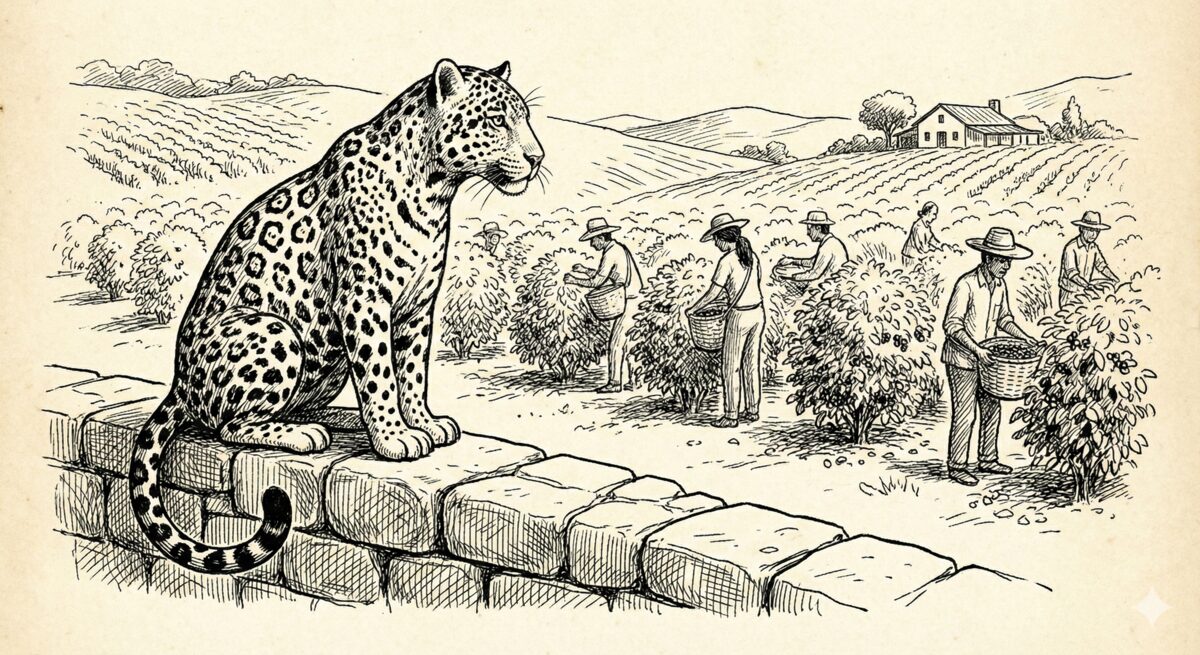
Large predator encounters trace the edge of the human-wildlife frontier. In Coto Brus in 2026: "A jaguar has been reported in the area. The cat has killed three cows. One property owner has verbally stated his intention to kill the animal." In Golfito: "A neighbor reports having seen a puma prowling around her house on multiple occasions, hunting domestic animals, and they fear for the children." In Perez Zeledon, crocodiles appeared at Laguna la Garza: residents "believe they are animals released by MINAE and fear they will be killed or that they will attack the coffee pickers." Another Perez Zeledon complaint: a puma "comes to the edge of the houses and has killed dogs, chickens, and even goats."
The Tourist and the Policeman Logger
"I am a tourist and I don't have the exact address. Some people have been cutting trees and taking the wood for more than a year." Meanwhile, in Corredores, an illegal sawmill processing prohibited timber species was reported. The complaint helpfully included GPS coordinates and noted: "The criminal is a police officer and is subject to the principle of legality."
River Poisoning for Shrimp
People poison entire stretches of river to harvest shrimp and fish from the die-off. In Golfito: "We found the river had been poisoned, with a massive die-off of shrimp and fish. A climate monitoring device we had installed was also destroyed." In another Golfito complaint: "The fauna in the stream was dead. There is strong suspicion of poisoning for shrimp extraction." On the Rio Baru in Perez Zeledon, a mass shrimp die-off from apparent poisoning was reported through social media. In Coto Brus, in all caps: "FISH ARE DYING IN LARGE NUMBERS AND WASHING UP ON THE RIVERBANK. NO ONE KNOWS WHO IS CAUSING THE CONTAMINATION."
Power Lines and Roads
SITADA has logged 42 complaints for wildlife electrocuted on power lines or killed by vehicles. The category only appears from 2021 onward, peaking at 14 complaints in 2022. This is not a new problem; it is a recently recognized one. The complaints themselves tend to be brief and grim: an animal found dead under a transformer, a monkey hanging from a cable.
"My Daughter Motivated Me"
In Perez Zeledon near Nauyaca, a parent filed a complaint in 2019: "My daughter motivated me to file the following complaint, where we are all affected; we live in a country full of biodiversity. One of our neighboring communities has protected its lands for years, and now a new buyer is felling a large number of trees. I think they want to build a business or hotel since the property is near Nauyaca, but they are destroying the forest that for years the neighbors have cared for. I grew up in this area and it hurts to lose what we have protected so much."
The Human Side
Not every complaint is a crime. In Golfito, one woman was reported by name and cedula number for handing eight sacks of vegetable waste to the garbage truck from a specific produce shop. A hiker in Parque Nacional Chirripó was caught at kilometer 9 with "a joint of apparent marijuana."
What You Can Do
SITADA exists because Costa Rica decided that environmental enforcement should be transparent. That decision matters. The system is imperfect: it lacks GPS coordinates, does not date-stamp location searches, and the "para Resolución Final" pipeline stage is clearly broken. But the data is there, and the fact that it is public is a tool.
File complaints. You can submit an environmental complaint through SITADA's website or by calling 1192 (SINAC's hotline). Complaints can be anonymous. Specific descriptions get acted on faster than vague ones. Include what you saw, when, where, and who was involved. "Corta de arboles" tells the investigator nothing; "two men with chainsaws cutting large trees on the south bank of the Rio Baru, near the bridge at kilometer 12, around 6 AM" gives them something to work with.
Follow up. A complaint that enters the system and is never checked on is easier to ignore. SITADA's public search lets you look up any complaint by number or browse all complaints in your canton by location. Check the status of your own complaints and ask SINAC about cases stuck at "para Resolución Final." Twenty-six percent of Brunca complaints are stalled at that stage: real environmental damage that was documented, investigated, and then abandoned in a bureaucratic queue. If SINAC fails to act, you can file a recurso de amparo in the Sala Constitucional. Recent rulings have ordered SINAC to fully investigate complaints within one month (Sentencia 19615-2025), holding that filing a criminal complaint does not discharge SINAC's independent duty to act administratively. You can also file a complaint with the Defensoria de los Habitantes.
Use the data. Everything in this article comes from publicly available SITADA records. Journalists, lawyers, community organizers, and municipal councils can all use this data to identify patterns, hold agencies accountable, and build cases. The data is there. Use it.
Key Sources & Resources
Data Source
-
SITADA - Sistema Integrado de Trámite y Atención de Denuncias Ambientales
Costa Rica's environmental complaint system. All 7,885 complaints used in this article were scraped from SITADA's location search for the six Brunca cantons.
How to Report
-
File a Complaint on SITADA
Submit environmental complaints online. You can also call SINAC's hotline at 1192.
Relevant Laws
-
Forestry Law 7575 (1996)
Article 19 prohibits land-use change in forests. Article 33 establishes riparian protection zones (15-50m from rivers and streams, 100m from springs). Article 61(c) provides criminal sanctions for unauthorized forest clearing.
Mercury Persistence
-
Mercury Contamination from Historical Gold Mining in California (USGS, 2005)
USGS fact sheet documenting how mercury from California's 1860s Gold Rush still contaminates fish and sediments over 150 years later. The extraction methods used then are essentially the same as those used in modern artisanal gold mining.