Uvita’s housing divide: a place to invest, a place to live
Around Uvita, development is adding luxury houses dedicated to short term rentals while local workers struggle to find a home. Investor wealth and tourist income are shaping the coast, with more forest at stake in the next round of building.
In Ojochal, some of the people who build and service houses travel to work from San Buenaventura, Coronado, Punta Mala and Ciudad Cortés. Others rent the few small houses and rooms they can afford, or units in a low-cost mini-apartment building. Resident Noemi Delgado described those options to researcher Luis Gutiérrez Galera in January 2024. In neighboring Bahía Ballena, construction permits had risen 166% between 2019 and 2023, according to municipal records cited in his study.
For buyers seeking rental income and resale gains, the value of a house extends beyond living in it. Wealth from abroad and expected tourist earnings let them pay more for coastal land than local wages will support. Airbnb gives commercial operators access to guests on a global scale. That gives developers a market for new houses even when nearby workers cannot afford them.
Full-time foreign residents have told Coalición Floresta that they are the only people still living permanently in neighborhoods otherwise given over to Airbnbs. They have made their homes here, yet find themselves surrounded by accommodation for people passing through. These are often already gringo enclaves, separate from the neighborhoods where Costa Ricans live.
We decided to see how extensive the rental house market was, and were surprised by the results. We found 2,451 Airbnb and VRBO listings across Uvita, Ojochal, Dominical and the surrounding hills, excluding hotels and rooms. These homes are not full-time residences: some are used by their owners for part of the year, while others are devoted entirely to tourism.
As developers assemble more land in the surrounding hills, Costa Ricans must decide whose housing needs that land will serve, if it even can be built out.
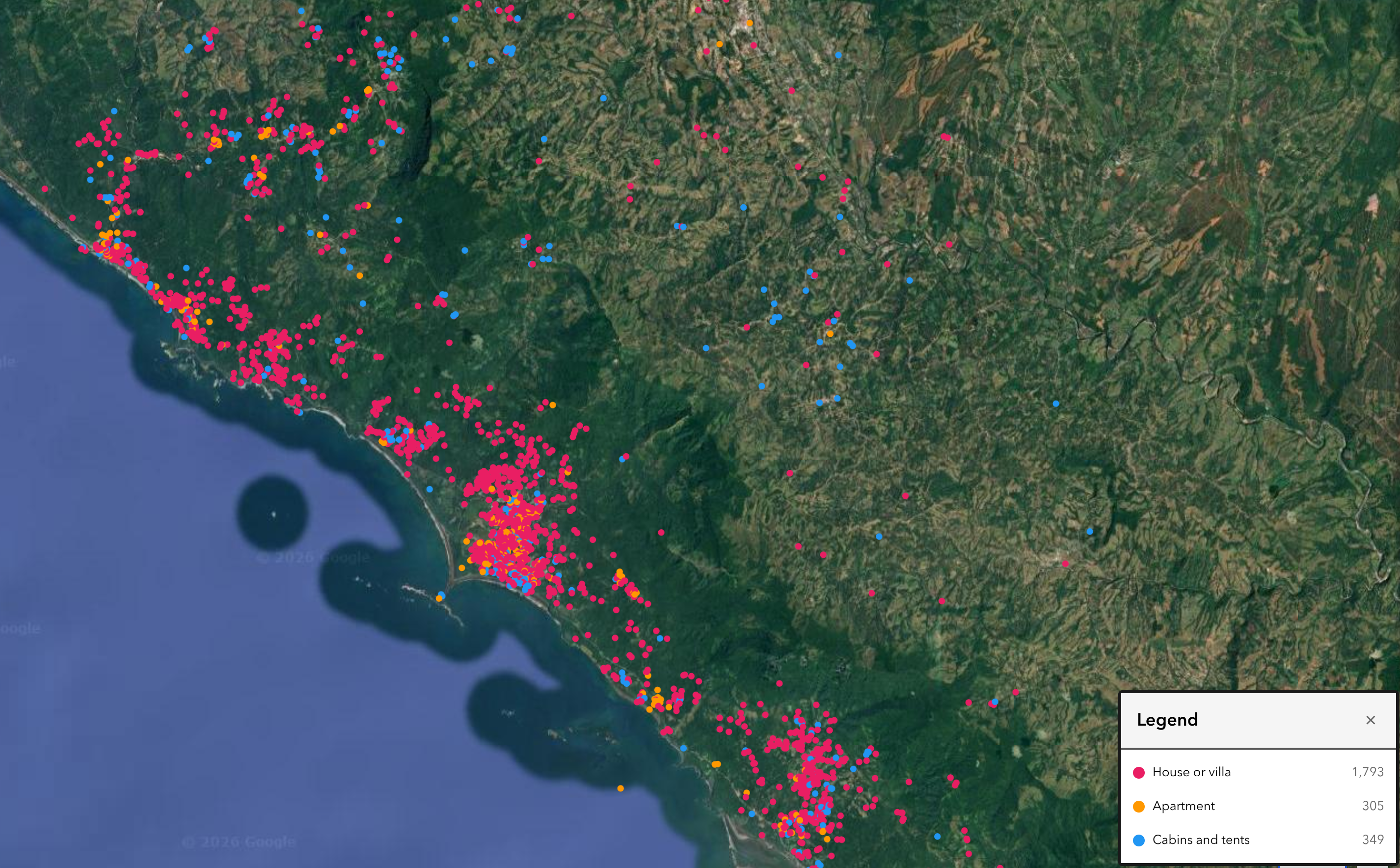
Homes priced beyond local wages
Ownership can keep a family on the coast even as buying a home there becomes harder for its children. In Dominical, Gutiérrez Galera records a resident's account of descendants living on small house plots after larger family holdings were sold. In Guanacaste, young adults and poorer newcomers unable to buy coastal land relied on relatives for a plot, rented small homes or moved inland. Femke van Noorloos documented these choices during fieldwork in 2008–2011.
Financing for coastal housing development often comes from foreign investers. Of 98 Guanacaste projects for which van Noorloos obtained financing information, about two thirds had wholly or partly US or Canadian capital, and 40% wholly or partly Costa Rican capital. (Joint financing meant those groups overlapped.)
The expectation of tourist income encourages developers to build houses expressly for that market. In April 2026, the tourism observatory at Costa Rica's National University (UNA) described exclusive developments in El Coco, Nosara and Tamarindo built to generate rental income, separated from the neighborhoods where tourism workers live. Its researchers mapped roughly 2,400 Airbnb listings, from houses and apartments to rooms and hotels, during the 2025 low season, with new construction concentrated near beaches and on hills with ocean views.
In his worldwide study of Airbnb's active listings in 2019, geographer Czesław Adamiak found that profiles advertising multiple listings supplied 58.9% of the total. Entire homes offered by those profiles alone accounted for 41.5% of all listings.
For permanent tenants, tourist demand can mean losing a home to short stays or paying more for the rentals that remain. Kyle Barron, Edward Kung and Davide Proserpio studied the 100 largest US metropolitan areas from 2011 to 2016 and found homes shifting from long-term rentals into the short-term market. Their study, published in Marketing Science, estimated that Airbnb alone accounted for about one fifth of annual rent growth in the median postal area studied.
In a coastal tourism destination, short stays can take up much of the space zoned for residents. For example, the University of Hawaiʻi's 2025 Housing Factbook reports that 59% of housing units in Maui's apartment-zoned districts were in the short-term rental market in 2023.
As homes fill with visitors, permanent residents lose the everyday company of neighbors. A 2025 study of Bear Lake, a rural tourism destination in Utah and Idaho, drew on interviews with 28 residents. Interviewees described children losing nearby playmates as houses became tourist rentals, along with noise, parking and trash problems. Business owners described difficulty hiring workers who could afford to live nearby.
For owners who live here, protecting the neighborhood means protecting their own daily lives: the water they drink, the roads they use and the forest around their homes. Van Noorloos documented permanent foreign residents helping to sustain local services and environmental organizations, but found little participation by temporary residents and absentee owners beyond their homeowners' associations. An absentee investor can favor a new road or development for the increase it brings to bookings and resale value, while people living beside it face the extra traffic, noise and clearing.
The divide extends to water and sanitation, while construction also cuts into wildlife habitat. UNA's coastal analysis describes well-served private developments alongside communities facing water scarcity and missing sewerage. Where roads and building sites cut through forest, they also destroy habitat and break the tree connections wildlife uses to move. UCR researcher Ronald Sánchez Porras describes how Tamarindo's real-estate expansion left monkeys exposed to electrocution as they used electrical wires to cross gaps in the remaining forest.
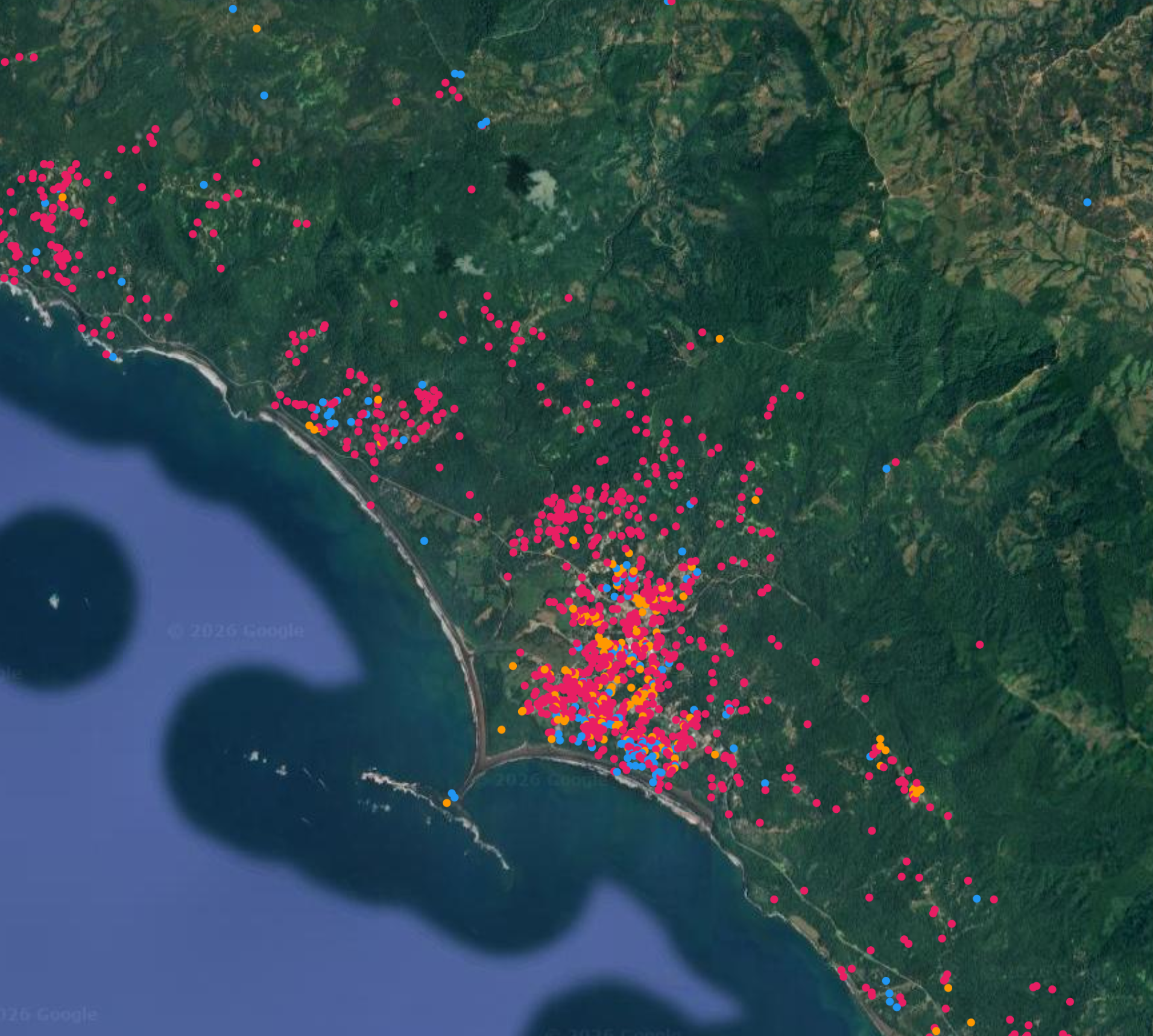
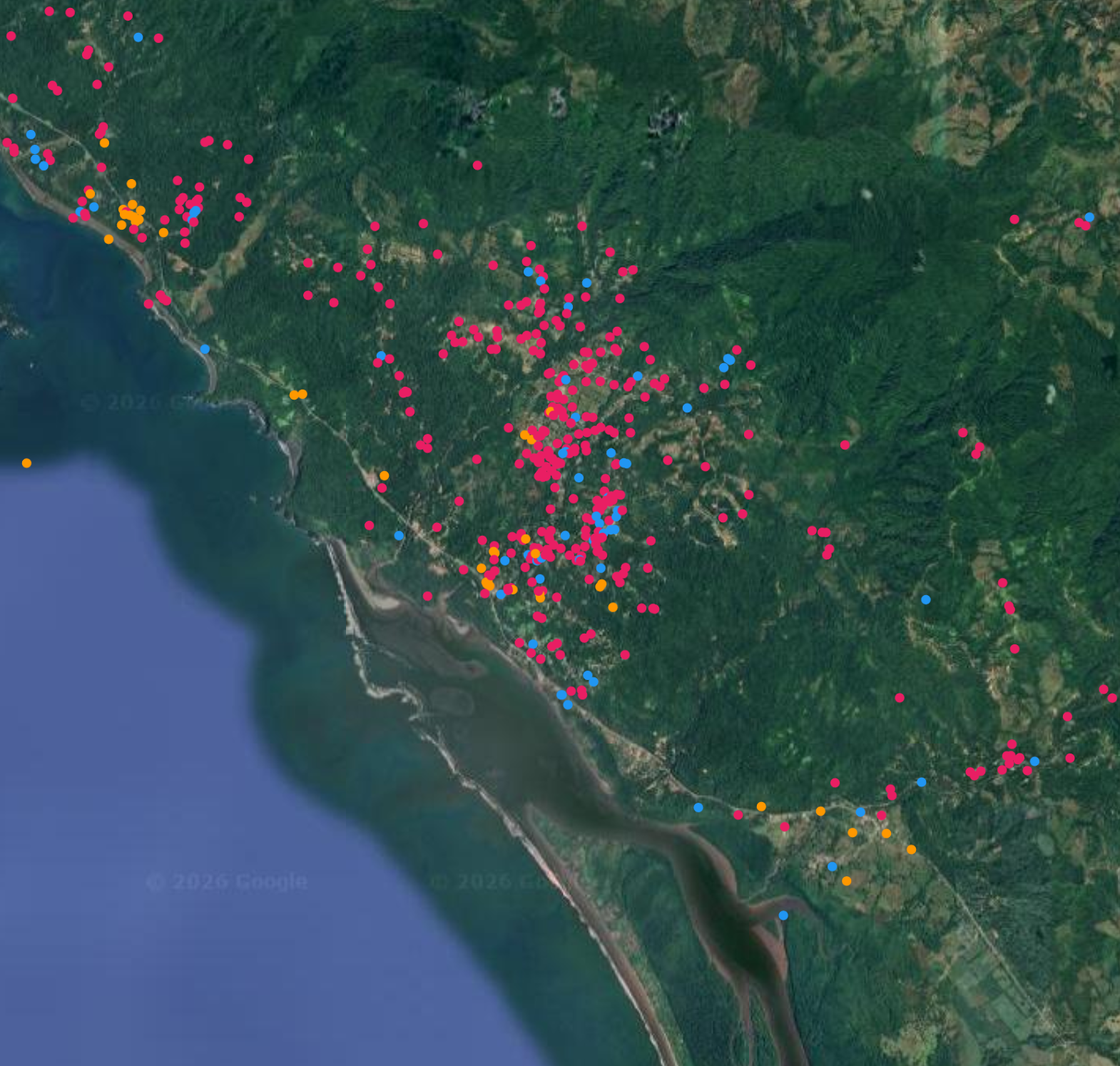
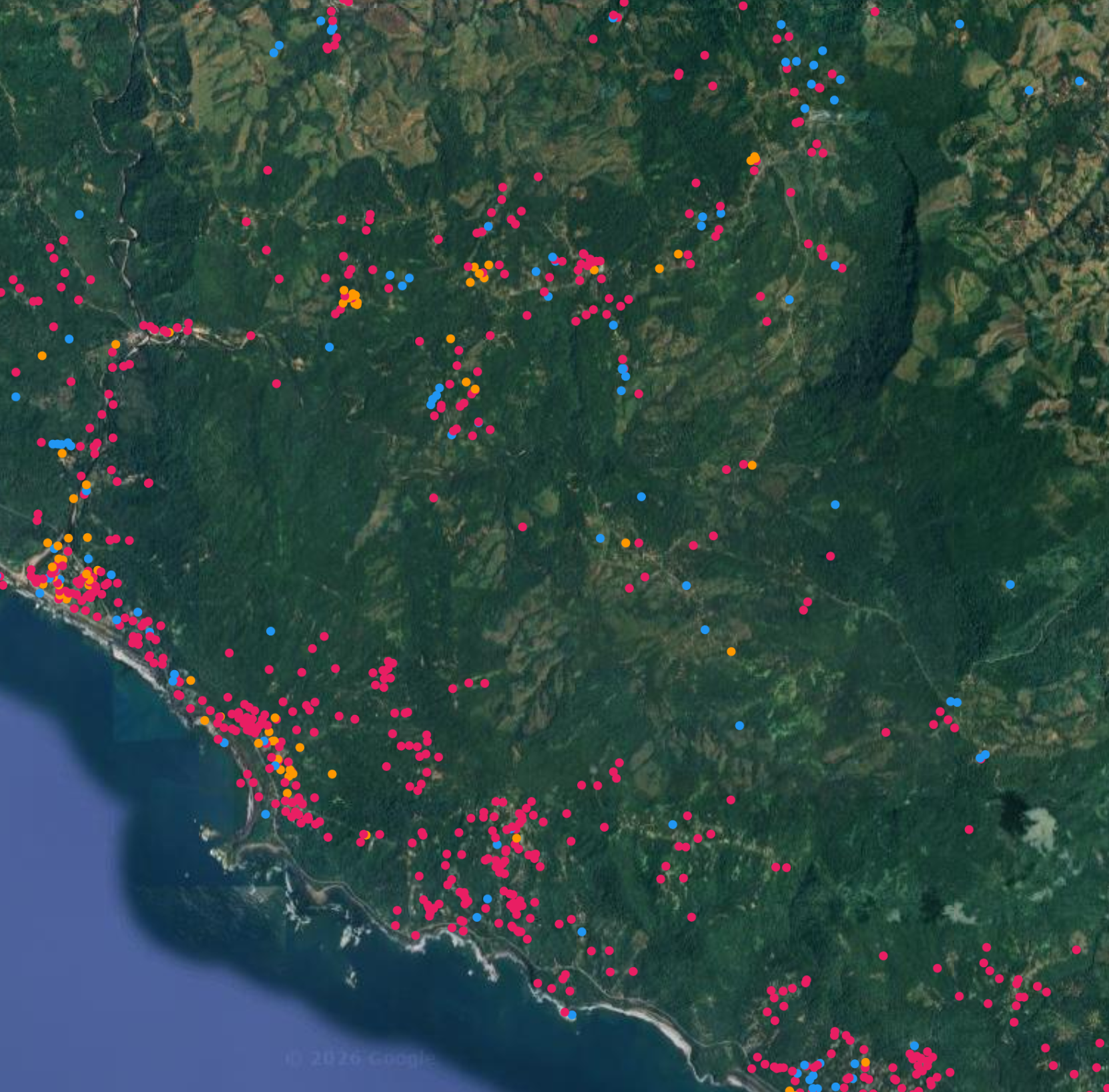
Keeping homes within reach
Costa Rica has spent decades attracting foreign residents and tourism investment. A special residency programme for foreign retirees and people living on investment income began in 1964. In Guanacaste, foreign investors bought large coastal properties during the agricultural crisis of the 1980s, anticipating tourism growth. International hotel investment followed in the 1990s; the expansion of Liberia's airport and North American flights helped fuel residential development in the 2000s. Foreigners can buy titled private property without making the country their home.
Costa Rica also has a constitutional responsibility to house its people. Article 65 directs the State to promote housing for people on modest incomes and help workers establish property for their families. Under the Urban Planning Law, municipalities must consider present and future housing needs in their plans.
Short stays in Costa Rica are subject to 13% VAT and income-tax obligations, while Law 9742 requires providers to register with the Costa Rican Tourism Institute, ICT. One Airbnb host who spoke to Coalición Floresta anonymously had received a government warning letter and hired an accountant in Uvita to handle compliance. Yet in February 2025, ICT director Gustavo Alvarado told Diario Extra that the institute had no direct penalty for failing to register.
Two bills introduced in 2023 proposed opposing changes to the requirements for short-term rental businesses. Carolina Delgado, a National Liberation Party (PLN) legislator, architect and former tourism-ministry adviser, chaired the Assembly's tourism committee that year. Her bill 23.766 proposed fines for failing to register with the ICT, meet minimum lodging standards or issue digital invoices. It also required liability insurance covering guests and won the hotel chamber's support. Carlos Felipe García, a political scientist and legislator from the Social Christian Unity Party (PUSC), proposed removing ICT registration and the health operating permit through bill 24.061. In March 2025, the host association ASOHOST backed his proposal and opposed Delgado's.
Costa Ricans have called for regulating land sales. In a 2024 survey by UNA's Institute of Social Studies in Population, IDESPO, 82.4% of the 733 people who answered the question agreed that Costa Rica needed a law regulating sales of land with scenic beauty.
On January 17, 2025, Costa Rican protesters gathered outside the Legislative Assembly, collected signatures and called for action against gentrification. They called on their elected representatives to act against gentrification in their communities.
Registering hosts and collecting taxes does not immediately secure homes for workers. Costa Rica needs limits on foreign investment purchases and on the accumulation of homes as rental assets. A foreign buyer who intends to settle here could be allowed to buy a home on condition that they live in it. Any additional homes they buy for tourist rentals could remain subject to those limits.
In Vancouver, investment from China helped push home prices far beyond what local incomes could support. Justin Trudeau's Liberal government announced a temporary nationwide ban on foreign home purchases in 2022; it took effect on January 1, 2023. His government extended it in 2024, setting January 1, 2027 as its expiry date. The ban is therefore due to lapse unless renewed, despite a 2025 Research Co. poll finding 76% support and 13% opposition. Mark Carney's Liberal government now proposes, in its November 2026 budget, to extend the ban on existing homes to January 1, 2029, while exempting new homes.
New Zealand links one route for overseas homebuyers to living in the purchased house and spending more than 183 days in the country during a twelve-month period. After restrictions introduced in 2018, the share of home transfers to people without New Zealand citizenship or a resident visa fell from 2.7% in the year to March 2018 to 0.4% in the year to March 2024, according to Stats NZ.
An earlier proposal to let overseas buyers purchase existing homes above NZ$2 million met more opposition than support: a 2023 1News Verian poll of 1,002 eligible voters found 46% opposed and 39% in favor. Yet since March 2026, qualifying investor-visa holders have been able to obtain consent to buy one property costing more than NZ$5 million. That exception lets the wealthiest overseas buyers bypass the home-residence requirement. Treasury's 2025 assessment anticipated a small, temporary price increase for homes around or above that threshold.
Governments can also limit a home's use as visitor accommodation. In New York City, a host generally must remain in the home during rentals of less than thirty days, with no more than two paying guests; entire permanent residential apartments generally cannot be rented for such stays. Platforms must verify registration before processing covered bookings. Amsterdam limits annual vacation-rental nights, with a lower limit in eight neighborhoods under serious tourism pressure. Lisbon restricts new registrations where tourist accommodation is concentrated.
Zoning can reserve residential neighborhoods for people who live there, excluding tourist accommodation, including short-term rentals. Honolulu confines new short-term rentals to designated areas, while allowing some older rentals to continue under permits. Hawaiʻi County prohibits new unhosted vacation rentals in single-family residential zones outside its designated resort areas.
Osa has gone decades without a comprehensive plan regulador, the land-use plan that could establish such zones. The CFIA's 2025 municipal report lists only a partial plan dating to 1997. Costa Rica could set a deadline for a local plan and have INVU, the national housing and urban-planning institute, put binding interim zoning in place if the municipality misses it. The Urban Planning Law already authorizes INVU to prepare plans and issue rules where municipal provisions are absent.
National lawmakers and municipal planners need to protect permanent rental housing and access for new households when they set the terms for further development.
More houses for whom?
A development can provide construction, cleaning, maintenance and hospitality jobs without giving those workers the means to live nearby. But Airbnb and VRBO turn bookings for Costa Rican homes into revenue for foreign technology companies. When owners also live abroad, rental profits can go overseas too. This extracts wealth from a local economy that supplies the land, water, roads and labor. When authorities weigh the promised jobs, they also need to ask whether the wages will let a family stay.
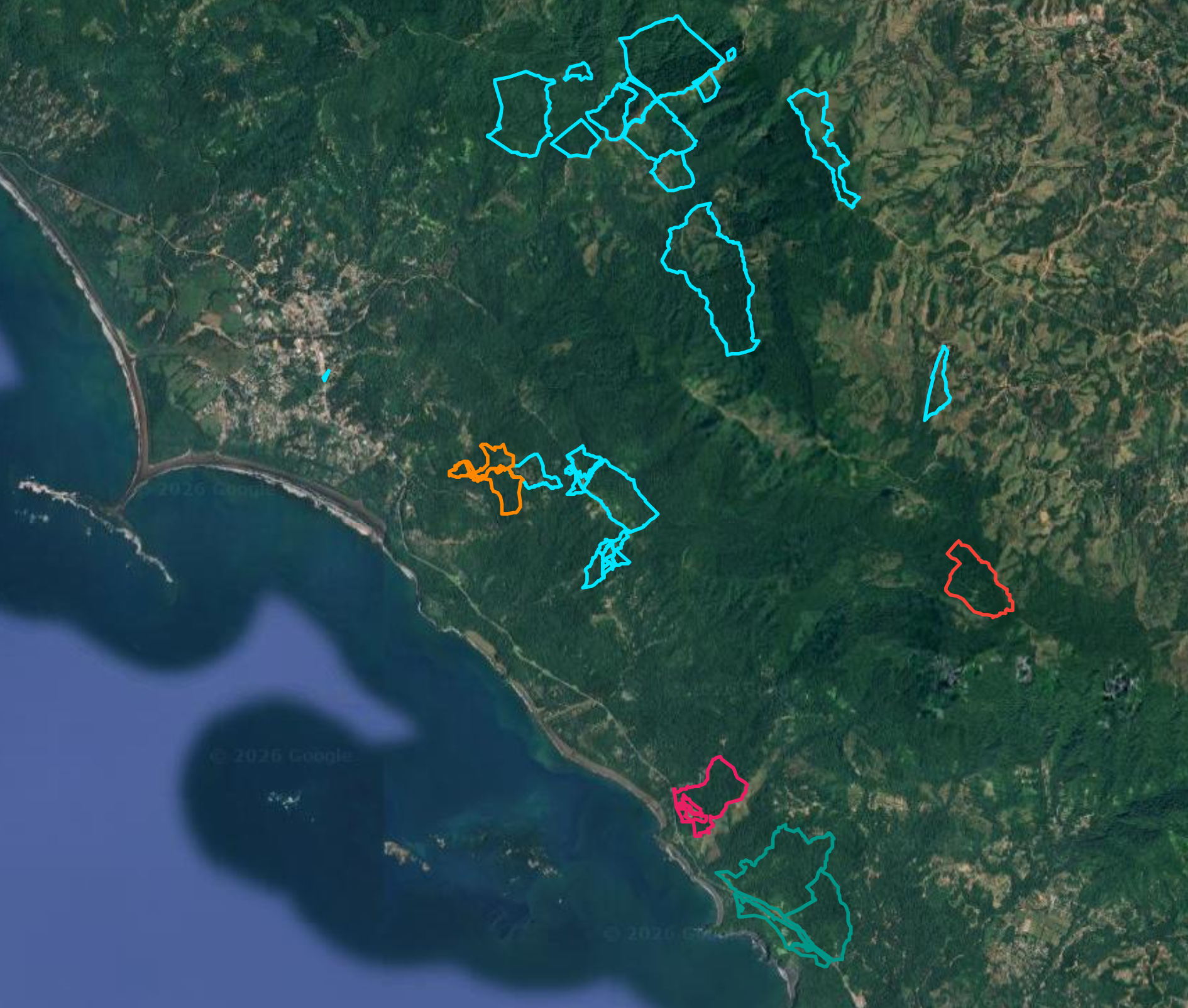
Uvita is a hotspot for developers. The map above shows a handful of currently active examples, and there are many more. Costa Familia (blue), on an acquisition spree financed by New York investors, has so far built only a handful of houses at La Unión and has no active applications with SETENA, Costa Rica's environmental assessment agency, yet advertises development opportunities on its website.
Ballena Sunsets (orange) has been denied approval by SETENA but has appealed. Clyton (dark orange), developed by the same company behind the blocked Portalón project, has had its environmental licence suspended because SETENA retroactively identified possible additional forest areas and public waterways that would affect the previously approved layout.
Ballena Bay (pink) has already cleared forest under a SETENA-approved development but now faces a legal challenge from Osa Vive; Coldwell Banker is selling it as "the best development opportunity" in the area. Ventanas–Piñuelas (green) is seeking approval for a large housing project that would spread development throughout the forested property. These holdings show how much land is being assembled for further development in a market where the people building and servicing luxury homes already struggle to afford somewhere to live.
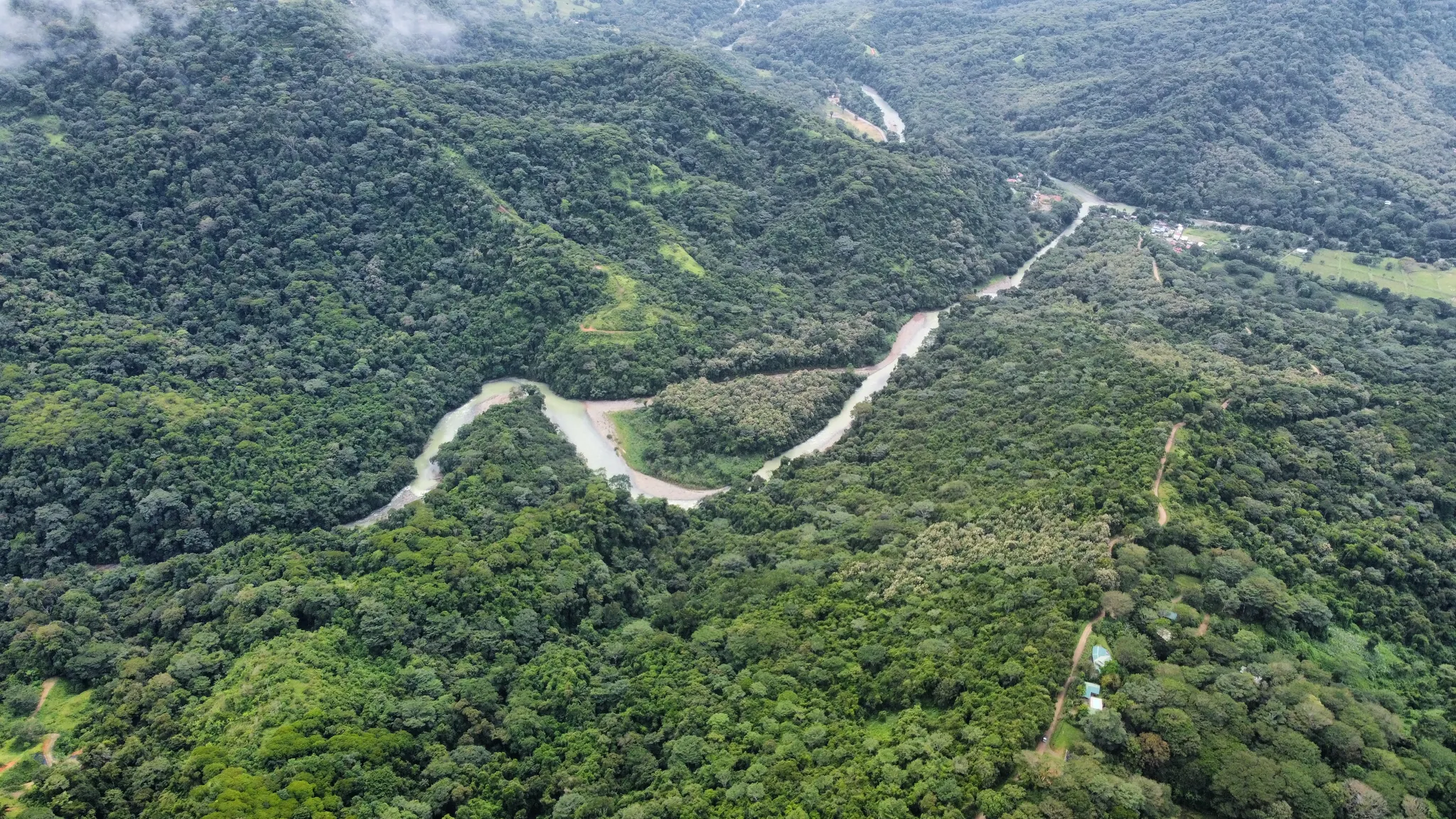
Farther north, near Dominical, Puente Pico would add 99 residential lots and approximately 22 hotel cabins in the Río Guabo valley. Its developers plan to sell the lots with complete home designs for construction through selected builders.
Approving Puente Pico would commit more forest to private building lots and hotel stays. Roads and building sites would fragment wildlife habitat, while traffic, light and noise would affect the forest left standing as well. The need for affordable homes gives public authorities no reason to accept that destruction for another luxury development.
Uvita's growth should give the people who work here the means to make a home and raise a family on this coast. Costa Ricans can demand housing and ownership policies that keep homes available to year-round residents, and reject forest destruction for another wave of luxury rentals. A child growing up here should have a future beyond building, cleaning or tending someone else's investment.
 Stop Puente Pico
Help protect the Río Guabo valley.
Support the campaign
Resources
The inventory and community effects
Researchers can contact Coalición Floresta to request the JSON inventory used for these maps.
Study of 3.58 million active listings in 167 countries in 2019, including the share offered by profiles with multiple listings.
Marketing Science study of US metropolitan housing markets from 2011 to 2016.
Housing data, including short-term rental use in Maui's apartment-zoned districts.
On the Guanacaste coast, Costa Rica's Centro de Estudios del Turismo counted 7,727 active short-term rental listings in Santa Cruz canton, which includes Tamarindo, Flamingo and Conchal, and 1,537 in Nosara. Its August 2026 study used AirDNA market data for the year ending June 2026.
2025 study based on interviews with 28 residents of a rural tourism destination in Utah and Idaho.
Peer-reviewed local study; worker housing and commutes on page 19, and construction permits on pages 31 and 36.
April 2026 analysis of El Coco, Nosara and Tamarindo, based on mapping during the 2025 low season.
Analysis of real estate, tourism, water and infrastructure inequalities in coastal communities.
University researcher's account of forest fragmentation, development and electrocution, including Tamarindo.
The platform's explanation of fees charged on confirmed bookings.
Official documentation identifying Expedia Group as the collector of the traveler service fee.
2013 study of coastal Guanacaste, including foreign property investment, tourist rentals and absentee ownership.
2013 Alba Sud report drawing on 2008–2011 fieldwork, including project financing, younger households' access to coastal land, and the history of tourism investment and infrastructure in Guanacaste on pages 10–13. Her Sustainability paper dates the pensionado/rentista residency programme to 1964.
Report published in January 2025 on a 2024 survey; page 32 gives the responses on regulating sales of land with scenic beauty.
The platform's instructions for sharing listing management, guest communication and rental earnings with cohosts.
Reporting from outside the Legislative Assembly on demonstrators' signature collection and demands for legislative action.
Restrictions abroad
Canadian Public Policy, March 2020. Examines how foreign wealth drove housing prices beyond local incomes, including the wave of capital from China after 2014.
Federal Act, with exceptions set out in the regulations. Trudeau's April 2022 announcement included the ban among housing affordability measures; a Finance Department backgrounder gives its January 1, 2023 start date. The February 2024 extension moved expiry from 2025 to 2027; sections 236–237 of the Budget Implementation Act, 2022, No. 1 contain the sunset clause. Budget 2026, chapter 3 proposes extending the ban for existing homes to January 1, 2029, while exempting new homes.
Online survey of 1,002 Canadian adults, April 7–9, 2025: 76% supported the ban, 13% opposed and 11% were undecided. Results were weighted by age, gender and region.
Schedule 2 sets out the main-home residence route; section 19E provides the 2026 route for qualifying investor-visa holders buying a property costing more than NZ$5 million.
September 2023 poll of 1,002 eligible voters: 46% opposed and 39% supported allowing overseas buyers to purchase existing homes above NZ$2 million. This poll concerns that earlier proposal, not the NZ$5 million investor-visa rule introduced in 2026.
April 2024 release with annual data to March: transfers to people without New Zealand citizenship or resident visas fell from 2.7% in 2018 to 0.4% in 2024. Corporate-only transfers are a separate category. These figures measure transfers, including transactions other than sales, rather than prices or affordability.
November 6, 2025 assessment forecasting a small, temporary price increase around or above NZ$5 million. This is a forecast, not a measured post-reform effect.
Official guidance on host presence, guest limits, registration and booking-platform requirements.
Official 2026 notice reducing the annual vacation-rental limit in 8 neighborhoods.
December 2025 regulation linking restrictions on new registration to accommodation concentration.
Costa Rican housing law and lodging policy
Official guidance confirming that nationality does not restrict ordinary property purchases. The article refers to titled private property.
The State's responsibility to promote housing for people on modest incomes and help workers establish property for their families.
Articles 15–17 establish municipal planning powers, housing needs and public-hearing requirements; article 28 prohibits uses incompatible with zoning. Transitional provision II authorizes INVU to prepare plans and issue rules where municipal provisions are absent. The proposed deadline and interim zoning are policy choices, not an existing order for Osa.
Section 5.1, PDF page 25, lists Osa's plan as partial and published in 1997. Semanario Universidad's May 2025 reporting records community demands for a comprehensive update.
Honolulu's planning department explains permitted areas and older rentals with nonconforming-use certificates. Hawaiʻi County's official application guide, pages 1–2, distinguishes permitted districts from areas closed to new unhosted vacation rentals.
March 2026 explanation of tax obligations for Airbnb and other rental platforms.
Legal framework for providers, registration and residential-area conditions.
The institute's registration guidance and procedures.
The 2023 text proposing stronger enforcement and guest-protection requirements.
The as-filed 2023 text proposing to remove ICT registry provisions and simplify requirements.
Her account of her architectural training, environmental consulting and earlier tourism-policy roles. A July 2023 interview identifies her as chair of the Assembly's tourism committee.
Party, province, education and prior work.
The host association's statement reproduced by Periódico Mensaje on March 5, 2025.
February 2025 reporting with tourism-management director Gustavo Alvarado.
February 2024 reporting on the chamber's support for Delgado's bill, its five-night proposal and William Rodríguez's opposition to that minimum stay.
Development proposals and the campaign
December 3, 2025 resolution suspending the licence pending official determinations of forest areas and waterways; pages 16–17 explain the grounds.
The company's Selva Commercial listing promotes hospitality, retail and mixed-use development in Uvita.
The broker's active listing promotes Ballena Bay as the best development opportunity in the Southern Zone. Wording verified November 8, 2026.
Residential lots, hotel cabins and the proposed construction model.
Drawings showing proposed roads, building sites and forest intervention.
Project filings, including the August 2026 environmental management plan.
Support the campaign to reject the proposal and protect the Guabo valley.